
Gauteng Building Price Guide
Where metro demand, estate standards, and suburb-level expectations push quotes higher
Quick answer
Gauteng building prices – estate specs, hail, clay and dolomite pockets, plus suburb-level rate differences across JHB, PTA and the Rand.
Cities & areas

Johannesburg Building Cost Guide
Suburb variation, renovation demand, access constraints, and premium residential quote pressure

Pretoria Building Cost Guide
Family homes, estate builds, extensions, and practical residential budgeting across Tshwane

Centurion Building Cost Guide
Estate rules, family additions, finish expectations, and mid-to-upper residential planning

East Rand Building Cost Guide
Family-home upgrades, practical renovations, industrial-area logistics, and mixed suburb rates
Cost topics

Gauteng Building Cost Per Square Metre
Rate bands by finish level for Joburg, Pretoria, Centurion, and the East and West Rand

Gauteng Renovation Cost Guide
Metro labour pressure and estate standards can turn similar renovations into very different quotes

Gauteng House Extension Cost Guide
Extensions need careful quote checks where structure, roof tie-ins, services, and estate finishes overlap

Gauteng Boundary Wall Price Guide
Wall quotes shift with suburb access, footing depth, height, finish, and the choice between precast and brick
11 min read
On this page
Are you ready to discover what it really costs to build a home in Gauteng today? Our platform gives clear, practical guidance so you can plan a realistic budget from the start.

We use 2026 market data that shows an average construction cost of R15,000 per m² as a useful benchmark. This figure helps you gauge likely expenses, but final costs depend on site size, material quality, labour and finishes.
Our pricing guidance explains how we model estimates and how we connect you with independent contractors. You may request up to three quotes to compare project fees and professional charges before you commit.
Visit buildingpricessouthafrica.co.za to access the quote request process and our guide. Whether you plan a new estate plot or a suburban property, the right data keeps your project on track.
Understanding Building Prices Gauteng and Market Trends
Recent market checks peg the average per square metre construction cost in the province at about R15,000 — a starting point that shifts with design, quality and site complexity, and one of many across our provincial price guides. Costs also vary by province — see building costs by province.
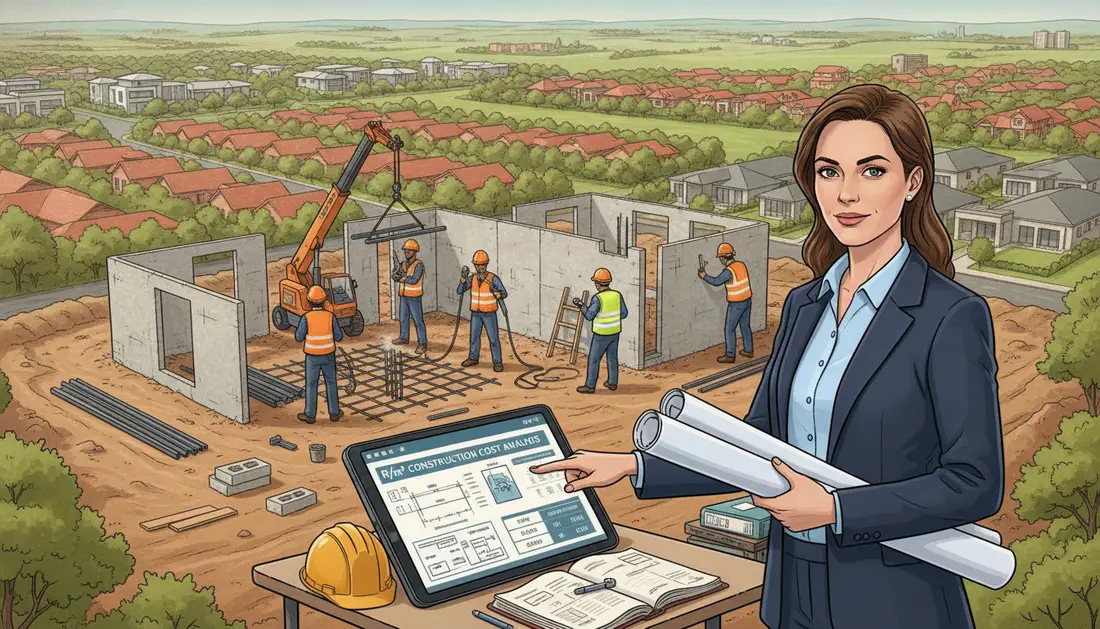
Current Cost per Square Metre
Basic residential rates in Pretoria start from roughly R9,500 per square metre. Higher-spec homes with premium finishes can push the average much higher.
Building Versus Buying
Expect that building a home usually costs 20–30% more than buying an existing property in South Africa. You do, however, avoid transfer duty and reduce immediate maintenance expenses on a new property.
- Labour typically makes up 25–30% of total costs.
- Location, size, materials and design quality drive final expenses.
- Use per square figures as a basic metric, then get tailored quotes to compare options.
Core Factors Influencing Your Construction Budget
A clear budget starts with understanding the elements that drive cost per square and total construction cost.
Labour is a major line item: expect labour to account for 25–30% of total costs on a standard house project in South Africa.
Professional fees matter too. Architect fees can reach up to 8% of the total construction cost, so allow for them early in your budget.

“Set aside a contingency of 10–15% to manage surprises without derailing your plans.”
Material quality and finishes determine whether your project sits in budget, standard or premium categories. The size of the house, measured per square metre, is the primary driver of your total expense.
- Include professional fees and confirm inclusions and payment timelines in writing.
- Plan for higher transport and labour charges in remote locations.
- Complex design elements increase both labour and material costs.
Navigating Regional Environmental and Soil Challenges
Regional soil and weather can change your project cost and timeline in ways that many first-time clients don’t expect.
Assess site risks early. A geotechnical report will reveal dolomite pockets near Centurion and expansive clay zones. These findings shape foundation design and affect your per square metre estimates.
Highveld summers bring hail that can damage standard roofs and skylights. Specifying reinforced roofs and durable skylights reduces long-term maintenance costs and improves quality.
Highveld Weather Impacts
Summer hail increases material wear and may add to labour time for repairs. Plan for resilient roofing and higher testing rates when budgeting.
Managing Dolomite and Clay
Dolomite requires specialised geotechnical work. Expansive clay needs tailored foundations to avoid cracks and settlement. Both raise construction costs but protect property value.
Site Access and Logistics
Restricted access raises labour costs and extends time on site. Check for underground services and the physical condition of land before finalising your budget.
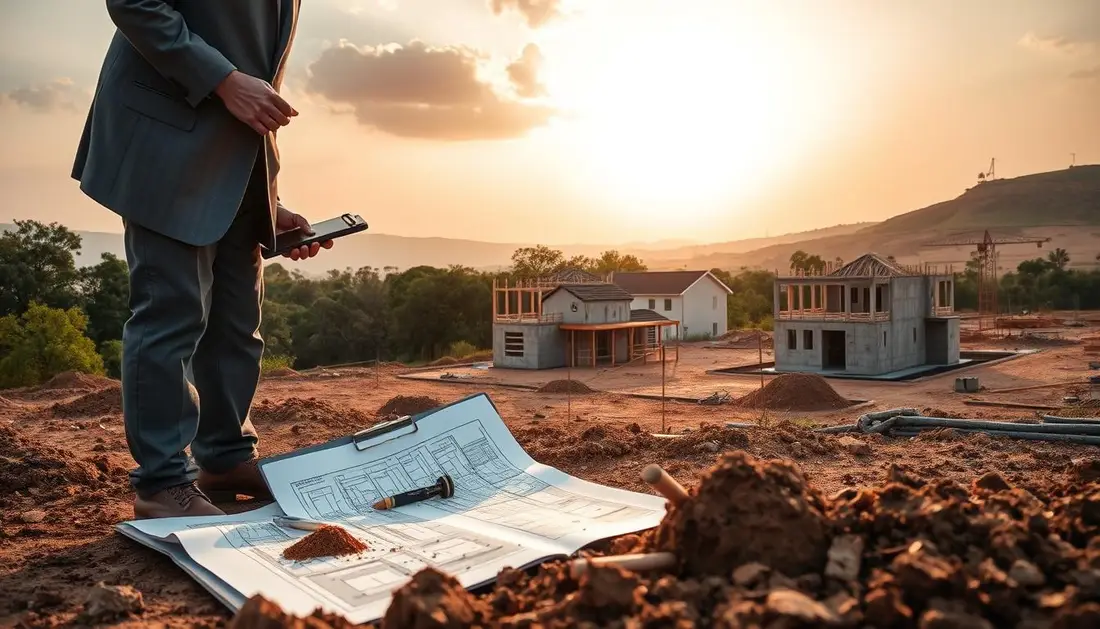
“Proper site preparation prevents long-term maintenance issues and protects the structural integrity of your home.”
- Commission a geotechnical report for risk-specific design.
- Include contingency for specialised foundations and robust roofing.
- Factor site access into your cost per square estimate and timeline.
| Issue | Required Action | Likely Cost Impact | Timing Effect |
|---|---|---|---|
| Highveld hail | Reinforced roofs, durable skylights | Moderate increase in material costs | Minor delay for specialised installs |
| Dolomite pockets | Geotechnical survey, specialist foundations | High increase to construction costs | Possible delay for investigations |
| Expansive clay | Engineered footing solutions | Moderate to high, depending on size | Extra design time, longer build phase |
| Restricted access | Logistics plan, staged deliveries | Increased labour costs and fees | Longer site set-up and mobilisation |
Estate and Suburb Specific Requirements
Local homeowners’ association (HOA) mandates can add specific material choices and extra fees to your cost plan.
Many estates require specified face brick or tile profiles. That affects choices for materials and the per square metre calculation you use when estimating costs.

Security and Access Protocols
Security spend is a real line item. High walls, electric fencing and gate systems add to construction costs and to ongoing maintenance.
Estates enforce strict access protocols. Contractors usually need deposits, registration and may face work-hour limits. These rules can extend labour time and raise project cost per square.
- Design rules: face brick or tile profiles often mandated — confirm finishes for kitchen and bathroom early.
- Security: budget for walls, electric fencing and access control systems.
- Site access: deposits, registration and time windows can affect timeline and labour costs.
Always verify the estate’s compliance rules and fee schedules before signing a contract to avoid delays or penalties.
Professional Fees and Regulatory Compliance
When you add professionals and council fees, the true per square metre cost becomes clearer and more reliable.
NHBRC registration is mandatory for all new residential dwellings. Factor this in before finalising your budget.
Municipal compliance for plan approvals and inspections normally sits between R10,000 and R20,000 for a standard home. Add this to your construction costs early.
- Architect, engineer and quantity surveyor fees must form part of your total construction cost breakdown.
- A structural engineer typically charges about 2% of the total construction cost for certifying designs.
- Include labour costs for specialised trades — electrical and plumbing — in professional fee planning.
Confirm regulatory requirements with your local municipality to avoid unexpected expenses and delays. Proper documentation helps secure your home loan and protects long-term value.
| Item | Typical Rate | Impact on Costs | Action |
|---|---|---|---|
| NHBRC registration | Mandatory | Small administrative cost | Register before construction starts |
| Municipal approvals | R10,000–R20,000 | Moderate addition to expenses | Budget and schedule plan submission early |
| Structural engineer | ~2% of construction cost | Ensures safety; raises professional fees | Engage at design stage |
| Specialised labour | Variable | Affects labour costs and timelines | Get trade quotes and confirm inclusions |
Tip: Use our platform to find professionals familiar with local compliance and to request up to three quotes for a clearer cost per square estimate.
Financing Your Custom Build
Securing finance for a custom house in South Africa starts with understanding staged payouts and how they affect your cash flow.
Most banks pay out in phases. Funds are released when agreed construction milestones finish. This keeps the lender and you protected.
A typical deposit is around 10% of the total construction cost. You should aim for pre-approval so you know your budget before selecting materials or finishes.
- Maintain a credit score preferably above 670 to access better fees and terms.
- You must supply a signed building contract and proof of the contractor’s NHBRC registration.
- Understand the payment schedule to manage costs per square and overall project cash flow.
“Link payments to verified milestones and keep a contingency to avoid delays or extra costs.”
| Requirement | Typical Expectation | How it Affects Costs |
|---|---|---|
| Deposit | ~10% of total construction cost | Reduces initial lender risk; sets cash-out needs |
| Staged payouts | Linked to site, foundations, roof, finishes | Controls cash flow; delays can pause payments |
| Documents | Signed contract, NHBRC proof, plans | Required for loan approval and drawdowns |
| Pre-approval | Recommended before final design | Defines budget per square metre and scope options |
We guide you on how to approach banks and compare finance options. Get pre-approved, confirm the payment schedule in writing and ensure your contract ties payments to verified construction milestones.
Taking the Next Steps Toward Your New Home
Now is the time to turn per square estimates into clear decisions about size, finishes and schedule. Fix a simple budget that includes contingency for site work, labour and professional fees.
Use our guide to check the main factors that affect construction cost: scope, materials, design complexity and access. Compare quotes to understand true building costs and the average cost per square metre for your design.
Visit buildingpricessouthafrica.co.za to request up to three quotes from independent contractors. Confirm timelines, warranties and material specifications in writing before you start your project.
Explore these guides
Where we cover. Local cost guidance is available for building costs in Centurion, building costs in East Rand, building costs in Johannesburg, and building costs in Pretoria.
Rate & topic guides. For the numbers behind a project here, see boundary wall prices gauteng, building cost per square metre gauteng, house extension costs gauteng, and renovation costs gauteng.
FAQ
What is the average cost per square metre in Gauteng for a new home?
Costs vary by suburb, finishes and size. Expect a typical range from modest to mid‑range finishes; higher-spec homes in gated estates push the rate up. Confirm whether quotes include foundations, slabs, services, and VAT before comparing.
How do current market trends affect the cost per square metre?
Material shortages, transport costs and labour demand drive short‑term increases. Market trends also reflect interest rates and property demand in specific suburbs. Ask contractors for a recent cost break‑down to spot inflationary items.
Should I build or buy an existing home in Gauteng?
Build if you need custom layout, modern energy efficiency or site optimisation. Buy if you want immediate occupancy or to avoid site risks such as poor access, dolomite or high excavation costs. Compare total cost, time and scope for both options.
What are the core factors that influence my construction budget?
Main cost drivers are scope and size, quality of finishes, structural complexity, site conditions, access and labour rates. Professional fees, municipal connections, and contingency for unforeseen issues also affect your budget.
How does Highveld weather affect construction and costs?
Summer storms and seasonal wind can extend schedules and increase temporary protection costs. Thermal design and insulation needs for winters raise material and labour costs. Plan for weather‑related delays in the contract timeline.
What are the risks and cost implications of dolomite or clay soils?
Dolomite requires specialised geotechnical investigation and possibly reinforced foundations or void filling, which adds significant expense. Expansive clay needs appropriate footing design and drainage to prevent movement. Always commission a soil report before finalising designs.
How much do site access and logistics add to the overall expense?
Restricted access, long haul distances, steep stands or estate security procedures increase time and labour costs. Expect higher crane, skip and delivery fees where manoeuvring is limited. Get site‑specific cost items listed in quotes.
Do estates and suburbs have special requirements that affect price?
Yes. Gated communities often impose design covenants, finishing standards and contractor access rules. These can require additional security, insurance or specific materials, raising both direct costs and admin fees.
What professional fees should I budget for?
Allow fees for an architect or draughtsperson, structural engineer, quantity surveyor and, where needed, consulting geotechnical and civil engineers. Municipal plan approval and document handling fees are additional. Ask each professional for a clear fee schedule.
What compliance and approval costs are typical in Gauteng?
Plan submission fees, water and sewage connection charges, compliance certificates and municipal inspections create predictable costs. Estate levies and road or servitude upgrades may apply. Confirm which approvals the contractor includes in their quote.
How can I finance a custom build and what should I prepare?
You can use a home loan, construction loan or bridging finance. Lenders usually require a detailed cost estimate, signed building agreement and progress claims schedule. Prepare proof of land ownership, approvals and contingency funds.
What contingency should I set aside for unexpected costs?
Set aside at least 10–15% of the construction budget for unforeseen items such as site conditions, design changes, or material price increases. Complex sites or high‑spec projects may need a larger contingency.
How do I get reliable quotes and how many should I request?
Request up to three quotes, or up to five options where available, from independent contractors. Ensure each quote lists scope, exclusions, materials, payment terms and timelines. Arrange site visits so contractors price the same scope.
What should be confirmed in writing before work starts?
Confirm scope, payment schedule, completion date, warranties, listed exclusions and penalties for delays. Include who is responsible for temporary services, site security, and municipal compliance. Never proceed on verbal promises.
How do finishes affect the per square metre cost?
Finishes can dramatically change the rate. Standard finishes keep costs predictable; premium kitchens, imported tiles, bespoke cabinetry and specialised fittings raise per‑metre costs substantially. Itemise finish levels in the brief for accurate quotes.
Can I reduce labour costs without compromising quality?
Use a reputable contractor who manages skilled trades efficiently and sources materials competitively. Avoid cutting corners on structural work or waterproofing. Consider phased or simplified designs to reduce on‑site labour time.
Which materials most influence the overall budget?
Foundations, roof structure, windows and doors, kitchen and bathroom fittings, and external finishes typically account for the largest material cost shares. Local availability and transport affect pricing, so source quotations for major items early.
How long does a typical new home project take from start to finish?
Timelines depend on size, complexity and approvals. A modest house often takes 6–9 months; larger, custom homes can take 9–18 months. Allow extra time for municipal approvals, specialist contractors and seasonal weather delays.
Start with certainty