Mpumalanga Building Cost Per Square Metre
Rate tables for Mbombela, eMalahleni, and the escarpment, where finishes swing the number
Quick answer
Mpumalanga building cost per square metre – Mbombela, eMalahleni and escarpment rate tables where finishes swing the number.
11 min read
On this page
How much should you budget when planning a new home in Mpumalanga? That question matters more now than ever as market prices shift and design choices widen.
At our platform we present clear pricing guidance and regional data to help you plan. In 2026 the estimated rate sits around R10,400 per square meter for typical builds in the province.

Understanding the cost per square metre is the first step in estimating total construction cost for your project. We explain how labour, materials, design and location affect final prices.
Visit buildingpricessouthafrica.co.za to access reliable figures and compare costs before you commit to any major financial decision. Our pricing guidance aims to make budgeting straightforward and realistic.
Understanding the Building Cost Per Square Metre Mpumalanga Market
Regional market shifts and material price moves are central when you plan a new home; short supply, labour pressure and transport fees all influence the rate, within wider Mpumalanga building prices.

Economic Trends in Regional Construction
Our platform tracks how national and local trends change construction costs — rising material prices and labour shortages can lift the rate by season, measured against the national cost per m² to build.
Property Value Context and Investment Potential
Building a home typically costs 20–30% more than buying one, but it can reduce long-term maintenance and boost resale value when quality is right.
- Our pricing guidance shows how labour, materials and land affect the total construction cost.
- By comparing cost per square metre and costs per square of similar homes, you can test the investment case for your project.
- Use the tools on our platform to check likely fees, material choices and design complexity before you finalise plans.
Decisions made early on—site, quality and scope—have the biggest effect on price and resale potential.
Regional Pricing Variations Across the Province
Local access, logistics and market demand create clear pricing bands across the region.

Below is a concise breakdown of typical rates you should expect when planning a new home in south africa. These figures influence your total construction estimate and set realistic budget expectations.
| Area | Average R/m² |
|---|---|
| Mbombela (urban) | R11,500 |
| eMalahleni (industrial hub) | R10,800 |
| Escarpment (remote access) | R13,500 |
- Mbombela rates reflect urban labour and easy material access.
- eMalahleni is slightly lower thanks to logistics and supply chains.
- Escarpment attracts higher expenses due to site access and transport.
We help you compare quotes and confirm inclusions so you can set a realistic budget and avoid surprises.
Environmental and Site-Specific Cost Drivers
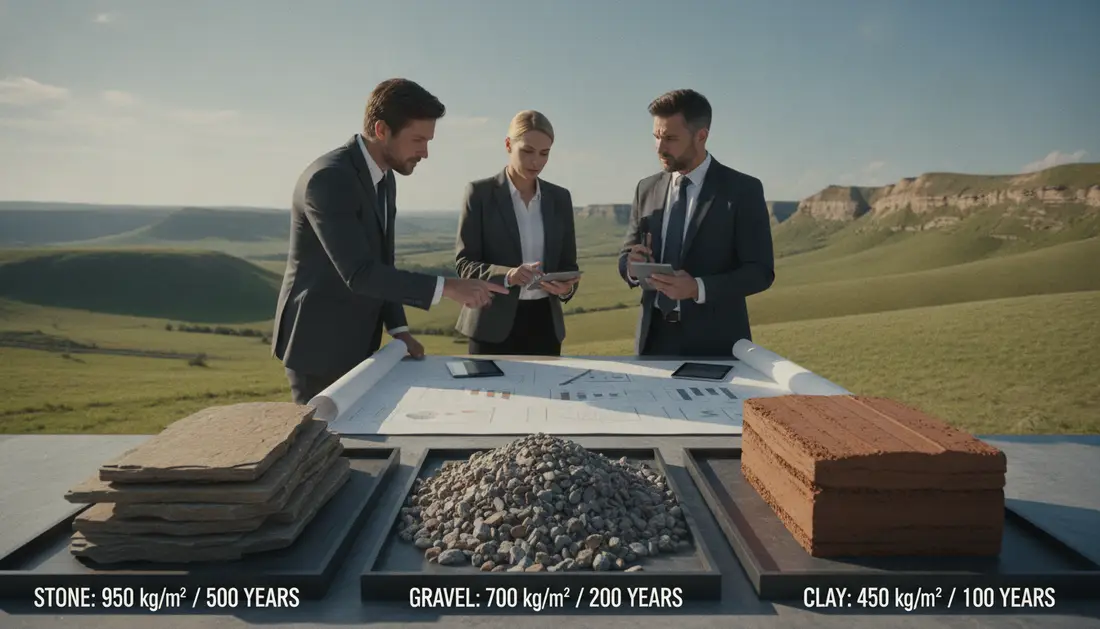
Escarpment sites change how you plan a construction project. High rainfall and strong wind make durability the priority for any house design on this terrain.
Escarpment Weather Considerations and Material Durability
Reinforced roofing and moisture-resistant insulation are essential for long-term performance. These choices increase the per square metre figures but reduce repairs later.
- High rainfall and wind demand stronger roofs and durable external cladding.
- Soil quality and slope can add site preparation fees and trenching work.
- Quality materials improve longevity, though they raise initial expenses.
Our platform links you with independent contractors experienced in these conditions across south africa. Use our quote request process so the contractor includes drainage, slope stabilisation and labour costs in the first estimate.
Plan a 10–15% contingency for unexpected site works. Proper site assessment is the practical step that ensures your budget reflects true construction requirements and avoids later surprises.
Comparing Standard Family Builds and Lodge-Style Finishes
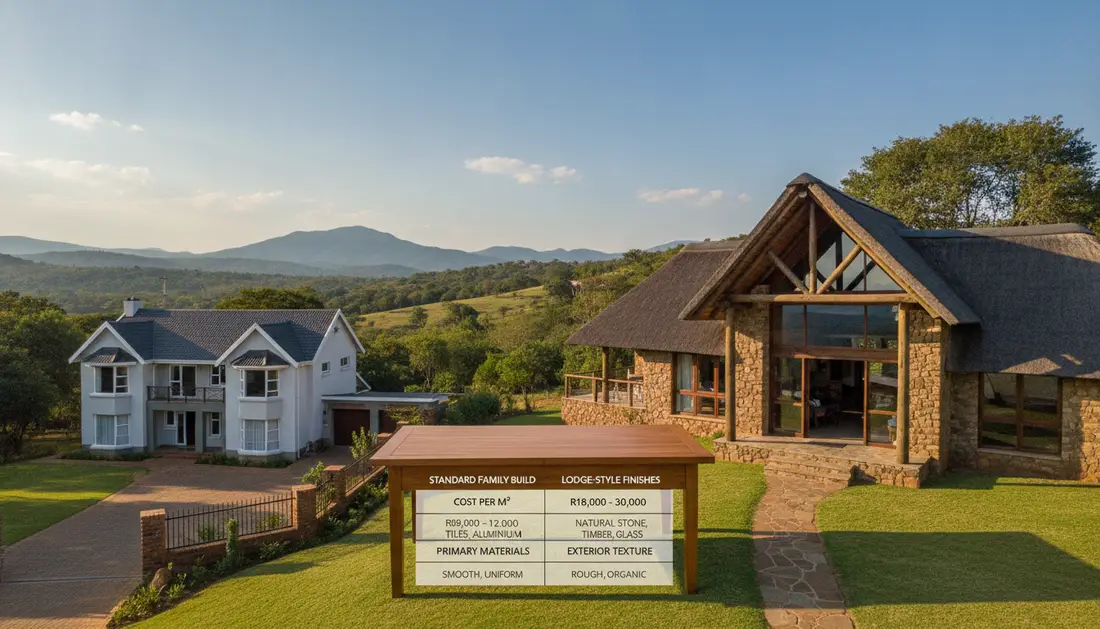
A like-for-like floor area can deliver very different totals when standard finishes are swapped for lodge-style features.
Worked example: a standard family home typically sits at R10,500 per square metre. A lodge-style finish on the same footprint sits at R16,500 per square metre due to premium timber, stone and bespoke joinery.
Use our platform to request quotes that reflect your chosen finish level. Specifying finishes early helps contractors give accurate figures for labour, materials and fees.
| Specification | Standard Family Build | Lodge‑Style Finish |
|---|---|---|
| Typical rate | R10,500 / per square metre | R16,500 / per square metre |
| Materials | Mid‑range finishes, standard cladding | Premium timber, stone accents, bespoke fixtures |
| Typical focus | Functionality and budget control | Design, texture and high quality detail |
- Define your design goals early to control final price and labour needs.
- Compare quotes on our platform to confirm what is included for both standard and premium options in south africa.
- Clear specifications let contractors break down construction costs and help you manage your budget.
Essential Components of Your Construction Budget
A clear budget starts with itemised rates for materials, labour and site work. Break totals into lines so you see where funds go and what you must confirm in writing.
Material Expenses and Sourcing
Material expenses vary widely by supplier and finish. Ask your contractor to list materials and confirm quality in writing.
Tip: insist on a materials breakdown stated as cost per square metre where relevant. This makes comparisons fair and transparent. For indicative ranges, see building cost per square metre.
Labour Allocations and Contractor Rates
Labour typically accounts for 25–30% of total building costs. That makes labour one of your largest expenses.
Use our quote request process to ensure contractors provide a clear labour and material split. That helps you spot mark-ups early.
Unexpected Contingencies and Site Preparation
Allow a 10–15% contingency for poor soil, access issues or hidden repairs. Proper site preparation reduces delays and surprises.
“Include NHBRC registration and site works in the initial quote; it avoids later exclusions.”
| Component | Typical share | What to confirm |
|---|---|---|
| Materials | 40–50% | Grade, brand and cost per square metre |
| Labour | 25–30% | Hours, rates and scope of work |
| Site & contingency | 10–15% | Soil work, access, drainage and buffer |
- NHBRC registration is mandatory for all new homes in South Africa — include fees in the initial quote.
- Confirm that quotes state cost per square and any additional fees for approvals or specialist work.
- Use our platform to compare independent contractors who provide transparent pricing and written breakdowns.
Navigating the Building Loan and Approval Process
Securing finance for a new home in South Africa hinges on clear documentation and staged lender payments.
Most lenders pay out loans in phases as each construction stage finishes. Expect to supply a 10% deposit when you apply.
- Provide a signed construction contract and proof that your contractor is NHBRC-registered.
- Submit detailed plans and professional cost estimates so the lender can assess the project and building costs.
- Confirm timelines and draw schedules in writing to match bank payouts and manage your cash flow.
Municipal plan submissions and approval fees add to your expenses and should be included in any cost per square estimate.
“Ask your contractor for staged invoices that match the lender’s drawdown schedule to avoid cash shortfalls.”
Our platform helps you prepare documentation and request professional estimates. Use our quote request process to get clear cost per and construction figures that lenders accept.
Professional Fees and Regulatory Requirements
Professional fees and approvals are a predictable part of any project and should be budgeted early.
Architects typically charge up to 8% of the total construction cost for design and municipal plan submission. Structural engineers commonly charge about 2% for design checks and site inspections.
Land surveyor charges can reach up to 5% when site complexity is high. Quantity surveyors often bill up to 4% to manage estimates and control variations.
Plan these items into your estimate and treat them as essential services, not optional extras.
- Account for consultants—design, structure, quantity and survey services affect timelines and approvals.
- Regulatory work such as municipal compliance and inspections is mandatory and must be included.
- Confirm all fees in writing before work starts to avoid unexpected invoices.
| Professional | Typical share |
|---|---|
| Architect | Up to 8% |
| Structural engineer | About 2% |
| Land surveyor | Up to 5% |
| Quantity surveyor | Up to 4% |
We recommend you ask contractors for written fee schedules and confirm which approvals are included in their quote.
Final Steps to Benchmark Your Mpumalanga Construction Quote
Use direct comparisons to verify that every quote reflects the same scope and quality. This keeps your plan realistic and lets you spot omissions quickly.
Checklist:
- Compare at least three independent quotes to confirm a fair market rate.
- Ask for a detailed breakdown of materials, labour and professional fees to avoid later surprises.
- Confirm NHBRC registration and past project references for each contractor.
- Get all agreements, timelines and payment schedules in writing to protect your interests.
Visit buildingpricessouthafrica.co.za to request quotes and benchmark a Mpumalanga quote today. Do this before you sign any contract to safeguard your budget and timeline.
FAQ
What are current Mpumalanga building price ranges for a standard family home?
Typical regional ranges depend on finish level. Expect basic, no-frills homes at the lower end, mid-range turnkey homes in the middle and high-end lodge-style finishes at the top. Confirm what’s included — foundations, plaster, roofing, finishes, services and external works — before comparing quotes.
How do regional variations across the province affect final quotations?
Location drives labour availability, access and transport charges. Urban centres have more contractors and competitive pricing. Remote escarpment sites add delivery and mobilisation fees. Always ask contractors for a location allowance and a breakdown for travel, accommodation or plant hire.
Which site conditions in Mpumalanga most often increase expenses?
Steep slopes, rocky substrate and poor access are common drivers. Extensive excavation, retaining walls, soil stabilisation or long service runs for water and electricity add cost. Also budget for drainage solutions in high-rainfall or runoff-prone areas.
How does the climate on the escarpment influence material choices and lifespan?
Higher rainfall and humidity demand durable cladding, corrosion-resistant fixings and robust roof systems. Invest in quality waterproofing and ventilation to avoid long-term maintenance spend. Cheaper materials can cost more over time through repairs.
What is the price difference between a standard family build and a lodge-style finish?
Lodge-style work usually adds significant premium for higher-spec finishes, custom joinery, exposed beams and stonework. Expect a notable uplift for luxury fittings, bespoke landscaping and enhanced energy solutions compared with a standard specification.
What should I include when budgeting materials and sourcing locally?
List primary items: concrete, brick or blockwork, roofing, windows, doors, plumbing, electricals and finishes. Request separate material and labour lines in quotes. Where possible, source long-lead items locally to reduce delivery and exchange-rate risk for imported materials.
How do labour rates and contractor allocation influence the total?
Labour varies by trade, skill level and demand. Specialist trades command higher rates. A well-specified contract with clear timelines and daily rates prevents scope creep. Check whether contractors include site supervision, apprentices or sub-contractors in their pricing.
What contingency allowance should I set aside for unexpected site issues?
We recommend a contingency of 7–12% for typical projects in the province, higher for complex sites. This covers unforeseen groundworks, latent defects, design changes and minor scope additions. Keep contingency funds separate and approve changes in writing.
How do approvals and municipal fees affect my project budget?
Local authority charges, plan approvals, services contributions and compliance certificates add to the budget. These vary between municipalities. Request an itemised fee schedule from your principal agent and confirm permit timelines before committing to start dates.
What professional fees should I expect for design and project management?
Architects, quantity surveyors and engineers charge according to scope — fixed fees, percentage of contract sum or hourly rates. Expect additional fees for detailed specifications, site visits, variations and tender administration. Always get fee proposals in writing.
How can I benchmark quotes to ensure fair pricing across contractors?
Use a standard specification and scope for all tenders. Compare material quality, allowances, provisional sums and lead times. Look for detailed labour schedules and exclusion lists. Ask for two to three competitive quotes and verify contractor references and examples of completed work. This follows why location changes the price.
Are there financing or loan considerations unique to projects in the province?
Lenders require detailed budgets, timeframes and certificates of completion. If building on undeveloped land, expect stricter lending criteria. Factor in interest during construction and request staged payments tied to milestones to protect cash flow.
What practical checks must I confirm in writing before signing a contract?
Insist on a written scope, fixed or measured price breakdown, start and completion dates, retention, warranty terms and a variation process. Confirm who takes responsibility for site safety, temporary services and snagging after practical completion.
How do I handle inflation and material price volatility during a long project?
Negotiate price validity periods, include escalation clauses for specific imported items and secure supplier lead times. Consider early procurement of high-cost items and ask contractors for bulk-buy discounts. Keep contingency for market shifts.
Where can I get independent quotes and verify contractor credibility?
Request up to three quotes, or up to five where available, from independent contractors. Check CIDB grading, SARS tax status, recent client references and physical site examples. Meet contractors on site to discuss access, services and expectations before signing.
Related building cost guides
Ready to compare?