Building Costs on the Garden Route
George, Mossel Bay, Knysna and Plett – semigration demand, coastal specs and contractor availability
Quick answer
Garden Route building costs – George, Mossel Bay, Knysna and Plettenberg Bay – semigration demand, coastal specs and booking realities.
11 min read
On this page
Curious how much it will really take to build a home on the coast? We ask that question because the answer shapes your budget and your choices.
At buildingpricessouthafrica.co.za we gather local data so you can plan with clarity. Our pricing guidance covers a range of South African properties and helps you estimate the total construction cost before you commit.

Whether you aim to renovate a house in Knysna or start a new home in George, our tools simplify the process. We connect you with independent contractors so you can compare quotes and manage your budget.
We focus on transparency: scope, labour, materials, finishes and approvals. This makes it easier for you to spot likely cost drivers and make informed decisions for your South Africa project.
Understanding Building Costs Garden Route Dynamics
Knowing the likely price per square metre is the first step to a realistic home budget, read alongside the wider Western Cape price guide. Costs for this are set out in western cape building cost per square metre.
In 2026, building a house in South Africa can start at around R9,500 per square metre for a small economic home.
By contrast, Luxliveproperty reports a Western Cape estimate of R14,800 per square metre for 2026. These figures show how price changes by area and finish level. For what this typically costs, see building costs in the Western Cape.
We help you read these numbers. Our pricing guidance explains what the cost per square metre includes and what it omits. Costs for this are set out in building cost per square metre.
- Use the lower R9,500 as a baseline for simple homes.
- Expect Western Cape figures to trend higher because of demand and finishes.
- Confirm the final price by checking local suppliers, access, and approvals.
The total construction price for your home will vary by area. Compare local estimates to plan a realistic budget and ask contractors to itemise the per square rate.

Key Variables Influencing Your Construction Budget
Many factors shift your final budget long before the first brick goes down. You should plan for material choice, labour and professional fees early. These variables shape the cost per square metre and the overall budget for your home.
Material Quality and Finishes
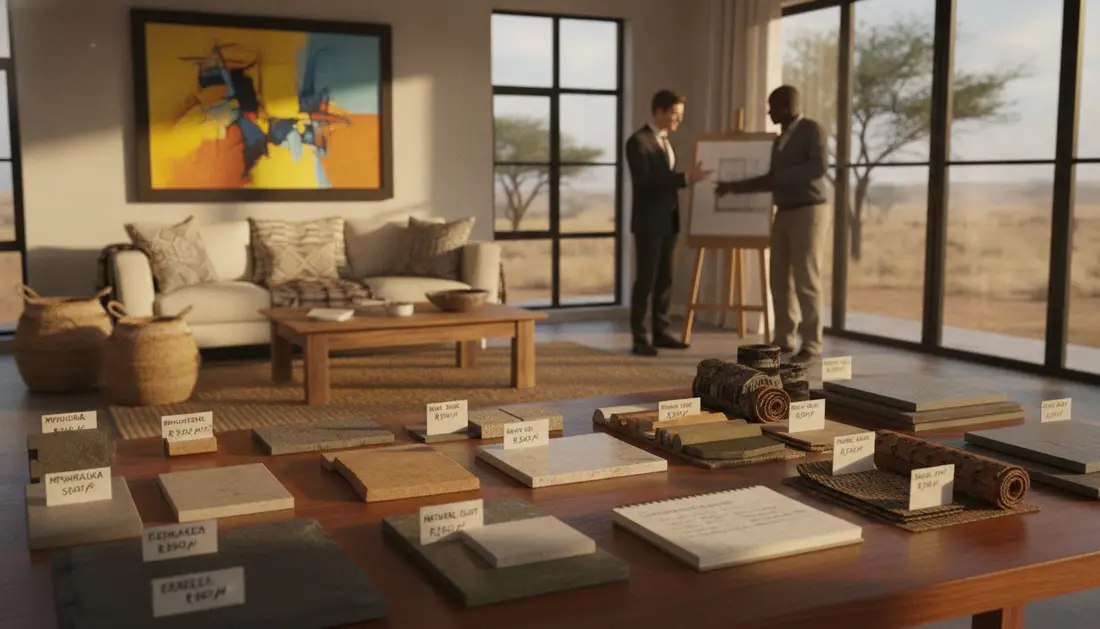
Your choice of tiles, kitchen fittings and bathroom fixtures has a big effect on the price. Higher‑quality finishes raise the cost per square metre quickly. Decide which rooms you prioritise — a generous kitchen or premium bathroom will show in the final quote.
Labour and Professional Fees
Labour typically represents around 25–30% of total expenses in South Africa and is often included in the per square rate. Architect fees can add up to 8% of the construction total, so include those in your budget.
- Size and complexity of design influence the cost per square metre.
- Site preparation and land quality affect whether you stay on budget.
- Confirm that kitchen units and bathroom tiling are in the initial quote.
Regional Environmental and Property Considerations
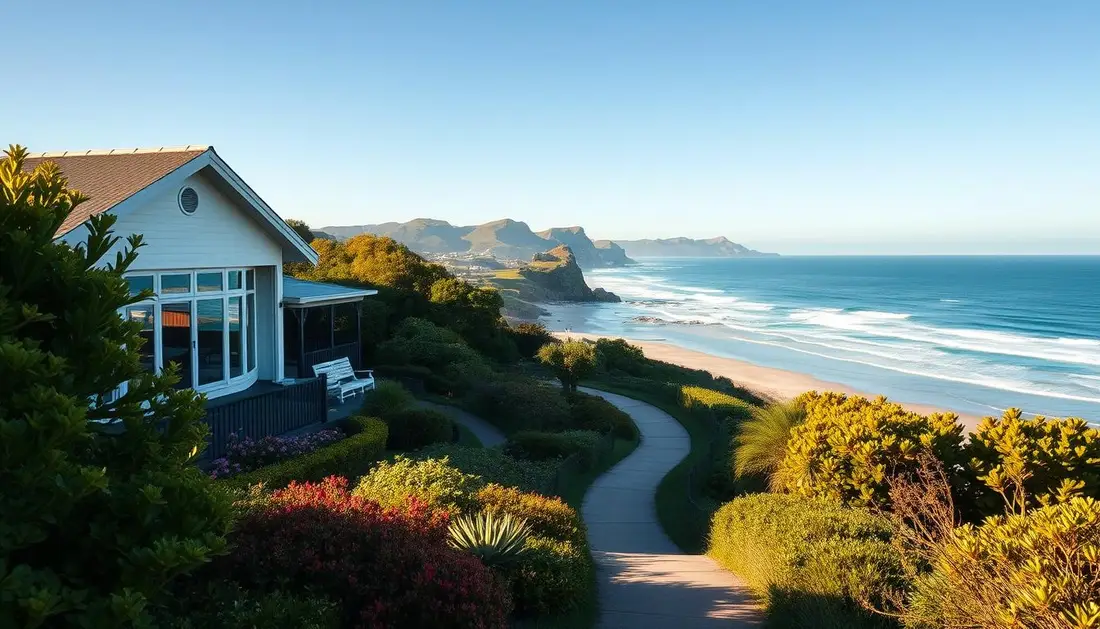
Coastal conditions shape what you must include in any South africa home design. You need to know how wind, salt and heavy rain influence material choice and long‑term durability.
Coastal Climate Specifications
Roofs must resist high winds and frequent storms. Reinforced fixings and corrosion‑resistant fastenings are essential.
Moisture‑resistant and rot‑proof materials prolong a home’s life; you should expect to specify these for coastal sites. This is a need know for any coastal project.
Timber Frame Prevalence
Timber and nutec systems are rising in popularity, especially in Mossel Bay. Some suppliers offer compliant nutec studio houses from around R85,000, showing how prefab options affect schedule and per square planning.
Timber frame homes can be quicker to erect, but they need treated timber and regular maintenance to withstand salt air.
Estate and Holiday Home Trends
Semigration has pushed demand for estate builds in George, where developers focus on high‑end finishes and fire‑aware detailing on the urban edge.
Holiday home renovations in Knysna and Plett commonly depend on the size and location of the land. Check estate guidelines: design rules and estate fees often apply and change the final cost and time estimates.
| Feature | Implication | Need to know |
|---|---|---|
| Coastal exposure | Use corrosion‑resistant fittings | Specify moisture‑resistant finishes |
| Timber/nutec systems | Faster on‑site assembly | Confirm treatment and warranty |
| Estate living | Design controls and extra fees | Review rules before tendering |
Comparing Building from Scratch versus Buying Existing Homes
Deciding whether to start a new home or buy an existing house shapes your budget and timeline.
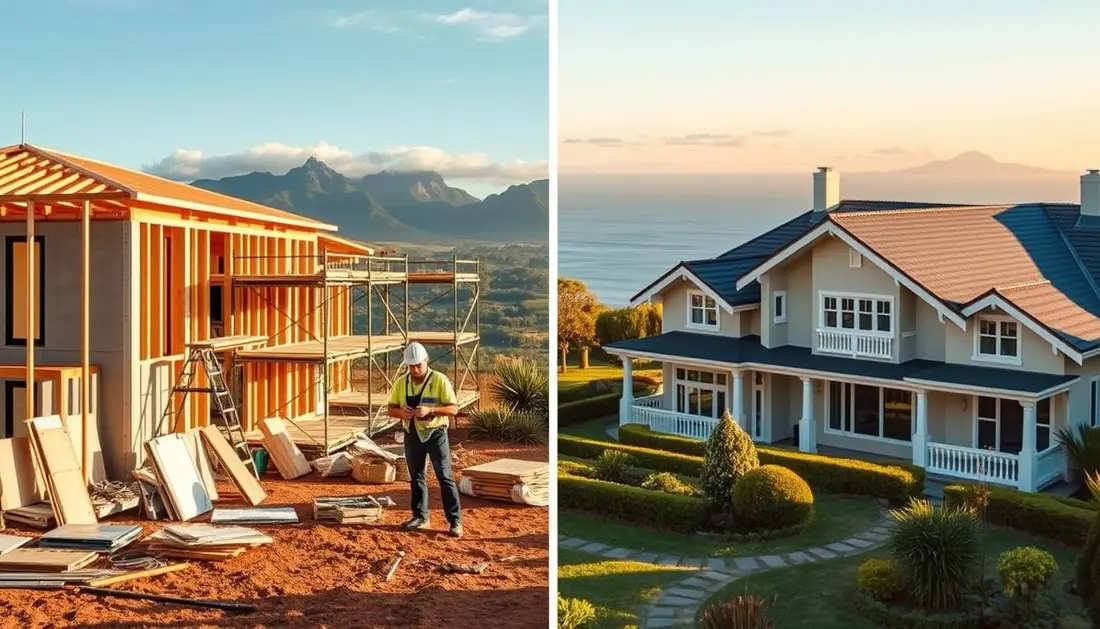
Expect a higher initial outlay: Industry data suggests building from scratch typically costs 20–30% more than buying a ready property. That extra money often pays for modern systems and fewer maintenance issues later.
One clear saving is transfer duty — you can avoid it when you construct on your own land. This offsets some of the up-front expenditure and can help your overall investment case.
- Example: a 40 square metre cottage at R11,000 per square metre gives a compact, energy‑efficient home.
- Choose location carefully — popular areas raise fees and the cost per metre through higher land and professional charges.
- Building lets you tailor the size and layout so every square metre serves your needs and lifestyle.
Bottom line: while construction cost is higher up front, the customisation and reduced maintenance often make a new home the smarter long‑term investment in South Africa.
Navigating the Financial Requirements for Your Project
Financing a new home is largely about structure: banks release funds in stages as each phase is completed and inspected.
Securing a Building Loan
Follow the bank’s process. Lenders pay out in tranches, so your contractor must show progress before the next instalment.
To qualify you need a strong financial plan and a contractor registered with the National Home Builders Registration Council (NHBRC).
- Require a detailed site plan from your architect — banks make this mandatory.
- Set aside 10%–15% of the total construction sum as a contingency for unexpected fees.
- Expect the bank to monitor progress; this protects your investment and keeps cashflow steady.
Practical tip: get itemised quotes and confirm what the lender accepts before you start. Managing your money carefully and following lender rules helps you complete the house on time and within budget.
Engaging Professionals and Contractors for Quality Results
Choose an architect and contractor who speak plainly about the plan and the fees. An architect will usually charge up to 8% of the construction cost; factor this into your budget early.
A professional contractor manages the process on site. They install walls, tiles and kitchen fittings to required standards. For example, a registered builder will confirm your bathroom and kitchen meet South Africa’s regulations.
Ask for a written two‑year workmanship warranty. This protects you after practical completion and reduces unexpected expenses in the first year and beyond.
- When building from scratch, confirm your contractor handles site assessment, council plan submission, and electrical and plumbing installations.
- Insist on itemised fees and a clear payment schedule tied to milestones.
- Communicate changes in finishes or fittings in writing to control the final cost and timing.
| Role | Responsibility | What to confirm |
|---|---|---|
| Architect | Design, plans, approvals | Fees (up to 8%), scope, delivery time |
| Contractor | Site works, walls, finishes | Registration, two‑year warranty, progress schedule |
| Engineer / Specialist | Structural and services sign-off | Reports, compliance and safety certificates |
Securing Your Path to a Successful Property Investment
Confident property investment begins with reliable, local pricing and a clear process. Use our pricing guidance to check the likely cost and set a realistic budget before you sign anything.
Our platform helps you request up to three quotes from independent contractors. This gives transparent price comparisons and helps you manage construction and site decisions.
Pay attention to finishes — the kitchen and bathroom choices shape the final price more than many realise. Also check estate rules and local regulations so you have the need know before plans are finalised.
Buildingpricessouthafrica.co.za supports your choice of home or house by supplying regional data and quote options. Visit us to start the process and protect your investment in South Africa.
FAQ
What areas does “Building Costs on the Garden Route” cover?
We focus on George, Mossel Bay, Knysna and Plettenberg Bay. These towns share coastal influences but differ in labour availability, land prices and estate rules, so expect variation in project budgets between them.
How do regional dynamics affect my quote?
Site access, terrain and local municipal requirements change time and expense. Coastal sites need corrosion-resistant fittings and enhanced waterproofing. Remote or steep sites allow fewer contractors and higher transport charges, which raises the final price.
Which variables most influence the total project budget?
Primary drivers are the quality of materials and finishes, labour and professional fees, scope of work, and site conditions. Also factor in planning approvals, services connections, and contingency for unforeseen site issues.
How do material quality and finishes change the price per square metre?
Higher-spec kitchens, engineered stone tops, imported tiles and premium fittings can double the finishing portion of your budget compared with entry-level options. Decide your finish standard early so contractors can give accurate per-metre figures.
What should I budget for professional fees and labour?
Architect, quantity surveyor and engineer fees typically sit between 6% and 12% of the project value depending on scope. Labour rates vary by trade and season; always confirm whether a contractor quotes labour-only or a full turnkey price.
How does the coastal climate affect design and materials?
Salt air accelerates corrosion and requires stainless steel, marine-grade fasteners and specialised paints. Waterproofing for bathrooms and roofing underlay needs higher-spec products. These are sensible investments to reduce long-term maintenance.
Is timber framing common here and does it change the budget?
Timber-framed homes are popular for speed and lightness, especially on sloping sites. Timber can be more cost-effective for certain designs, but expect higher maintenance and the need for treated timber in coastal zones.
How do estate and holiday-home trends influence price and resale value?
Secure estates often add levy and access-road costs to initial budgets but can improve rental yield and resale. Holiday-home finishes and additional amenities such as braai areas or pool features increase upfront spend but can strengthen investment returns if positioned correctly.
Is it cheaper to buy an existing home or build from scratch here?
Buying can reduce immediate risk and time-to-occupy, but older homes may need renovation that uncovers hidden expenses. Building lets you control design and finishes; compare total landed cost, tax implications and timeframes before deciding.
What do lenders require for a building loan on the Garden Route?
Lenders ask for a detailed contract, plans, a builder’s CIDB or contractor references, and a quantity surveyor’s cost estimate. They may release funds in stages, linked to practical completion milestones, so plan cashflow and contingency accordingly.
How should I choose and manage contractors and consultants?
Check references, view recent work and confirm insurances and warranties. Insist on a written scope, fixed-payment milestones and a dispute-resolution clause. We recommend getting up to three independent quotes, or up to five where available, to compare scope and price. More on how we compile this is in why building costs differ by province.
What approvals and site checks must be confirmed before work starts?
Obtain municipal planning approval, building plan clearance and clearance for services (water, sewer, electricity). Carry out a geotechnical report on sloping or sandy sites and confirm servitude or estate rules that might affect construction.
How much contingency should I include in my budget?
Allow a contingency of at least 10% for minor changes and unforeseen site conditions; increase to 15% for renovations or complex coastal sites. Confirm which items are provisional sums in your contract to avoid unexpected bills.
What specific fixtures and fittings should I confirm in writing?
List kitchen appliances, sanitaryware, electrical switchgear, window and door manufacturers, insulation R-values and external cladding types. Specifying brands or minimum performance levels prevents disputes and hidden upgrades on handover. This pairs naturally with building costs in Southern Suburbs.
How long does a typical new home project take in this region?
A straightforward single-storey house usually takes 6–9 months from groundworks to practical completion. Complex sites, holiday-season labour shortages and long-lead items like specialised glazing can extend timelines. For indicative ranges, see what it costs to build a house.
Can we get help comparing quotes and checking estimates?
Yes. Use a quantity surveyor for a professional bill of quantities or ask independent contractors for itemised quotes. We help you request up to three quotations, or up to five where available, so you can compare scope, exclusions and warranties. It reads well alongside cost to build in Northern Suburbs.
Related building cost guides
Ready to compare?