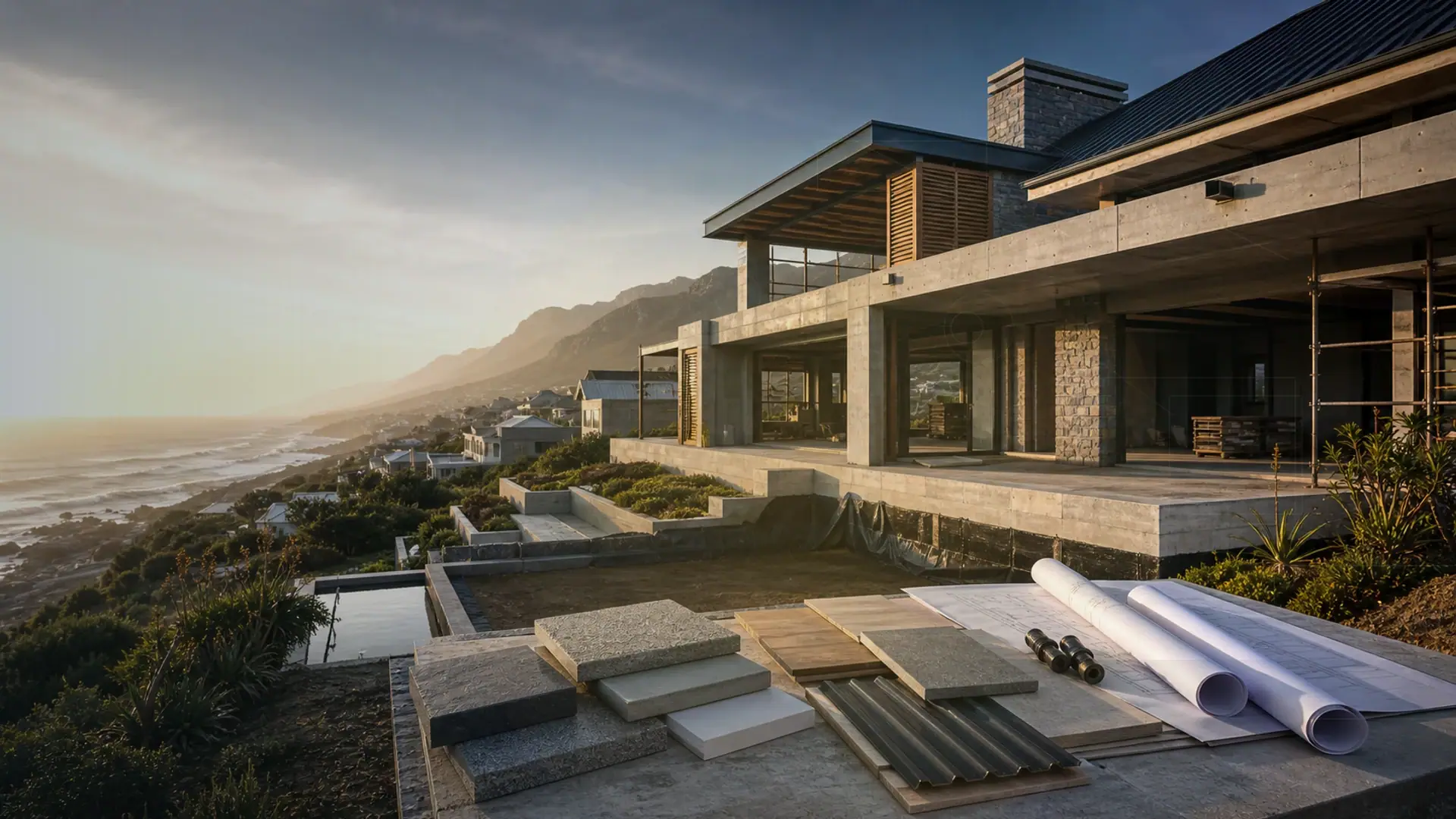
Western Cape Roofing Price Guide
Roofing quotes need closer checks where wind, salt air, waterproofing, and roof design meet
Quick answer
Roofing prices in the Western Cape – wind fixing schedules, salt-air specs and the waterproofing details that always fail first.
12 min read
On this page
How much should you expect to pay when coastal winds and salt affect your next roof?
P&L Hardware has supplied building materials since 1982, and at buildingpricessouthafrica.co.za we use that local knowledge to help you plan costs.
Understanding roofing in coastal areas matters because the climate changes material lifespan and labour needs. Our platform links you to independent contractors who grasp these local demands and can offer accurate quotes.

We do not employ builders, but our quote request system makes comparing options simple. Use the tool to request up to three quotes, or up to five where available, and set realistic expectations for your project.
Quick tip: confirm scope, access, finishes and approvals in writing so you can control cost and timeline.
Understanding Roofing Prices Western Cape Market Dynamics
Local climate and supply chains affect what you pay for a long‑lasting roof, with coastal exposure raising demand for salt-resistant products and trades — see the wider Western Cape building prices.
Local building-material suppliers offer practical advice and competitive supply — useful when you price a re-roof against the national roof replacement guide.
When you assess quotes, look beyond the headline figure: labour skill, material longevity and access all shape final cost and upkeep — as do leak repair costs when smaller fixes are all you need.

- The local industry needs specialised materials for coastal durability.
- Higher quality products often cut long‑term repair costs.
- Our guidance explains how scope and site access change your expected spend.
Cost factors at a glance
| Factor | Why it matters | Typical impact |
|---|---|---|
| Materials | Salt resistance and lifespan | Medium–High |
| Labour | Skill and local availability | Medium |
| Access & approvals | Scaffolding, permits, time | Low–Medium |
Use our quote tool to compare up to three independent contractors, and check scope, finishes and guarantees in writing.
Key Factors Influencing Your Roofing Project Costs
Costs for a roof project shift dramatically with the choice of materials and how easy your site is to reach.
Material selection determines durability and long‑term value. Higher‑grade metal sheeting costs more upfront but resists salt and wind better. Concrete or clay tiles need different underlay and fixings that affect labour time.
Material Selection
Choose for lifespan and maintenance. Confirm the grade of sheeting and underlay, and ask for product guarantees in writing.

Labour and Site Access
Labour rates change with access, roof pitch and safety gear. Complex sites require scaffolding and extend labour hours.
- Your roofing project costs are heavily dependent on the materials selected, such as specific grade metal sheeting.
- Labour costs vary based on site access; complex projects need more time and equipment.
- Confirm inclusions and exclusions in writing to avoid scope creep.
- Proper site preparation over the years reduces unexpected costs during building work.
| Service | Typical cost (ZAR) | Notes |
|---|---|---|
| Roof inspection | R1,000–R1,800 | Pre‑quote assessment saves surprises |
| General repair (per m²) | R88–R100 | Depends on material and access |
Final tip: Use our guidance to compare quotes and confirm contractor experience. A clear scope gives you control of cost and quality.
Coastal Specifications for Western Cape Roofing
Salt and wind drive the specification. Salt‑laden air and the strong south‑easter demand coastal‑grade materials, fixings and paint systems to protect your investment.

Wind and Salt Air Protection
Fixings and sealants: Use stainless or hot‑dip galvanised fixings with coastal coatings. Seal laps and penetrations with marine‑grade sealants to stop corrosion and leaks.
Sheeting and pitch: The IBR profile is a common, durable choice. Roofco’s IBR offers a 686mm cover width and a minimum recommended pitch of 12° for reliable runoff.
- Fit high‑quality flashings and suitable insulation to reduce wind uplift and thermal issues.
- Specify coastal sections and lengths of steel that meet local standards; this affects labour and material scope.
- Follow a south‑easter fixing schedule: closer fastener spacing and checked torque prevent premature failure.
| Item | Coastal spec | Why it matters |
|---|---|---|
| Fixings | Stainless / coated | Resists salt corrosion |
| Sheeting | IBR, 686mm cover, ≥12° pitch | Ensures cover and runoff |
| Flashings & paint | Marine grade | Extends service life |
When you request a service, ask contractors to list the materials and fixing schedules they will use. Confirm coastal‑grade items in writing so your roof system delivers the expected quality and longevity.
Addressing Critical Waterproofing and Structural Vulnerabilities
A poorly detailed parapet or undersized box gutter can undermine an otherwise sound roof system. Waterproofing at parapets and box gutters is the most common failure point for roofs in the region and needs specialist attention.
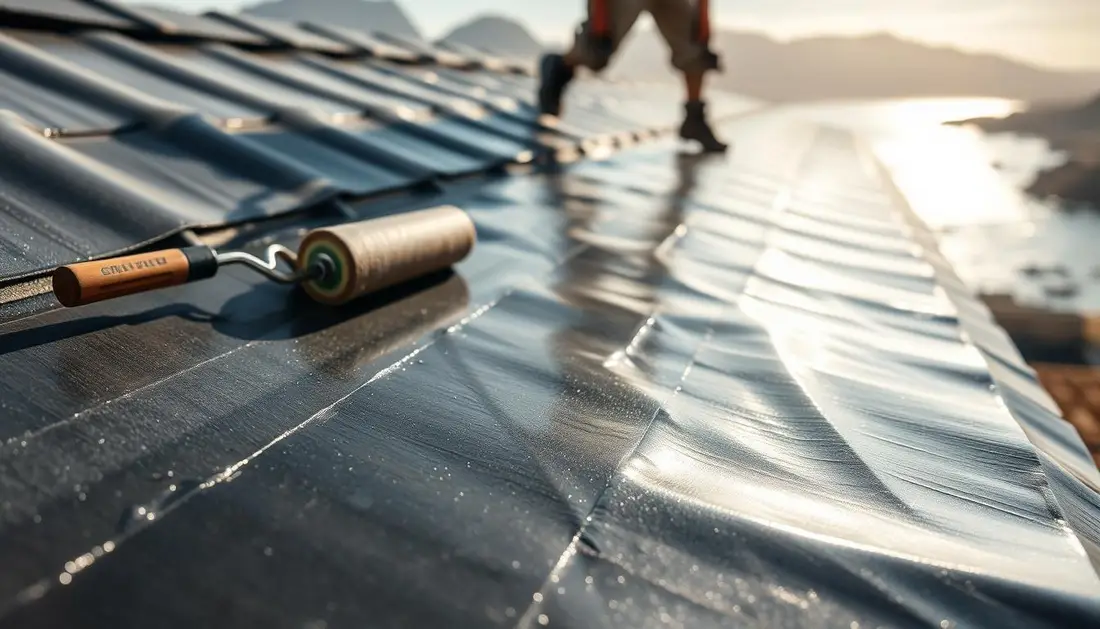
Parapet and Box Gutter Detailing
The Roofco box gutter is a roll‑formed component that serves as both fascia and gutter, ideal for small structure drainage. Correct detailing and material selection reduce ponding and overflow.
Common interventions include replacing flashings, ensuring correct lengths of sheeting for proper cover, and using marine‑grade sealants at junctions.
Structural Integrity
Structural work often requires strengthening supports and confirming the cover of joints to protect ceilings and internal finishes.
- Waterproofing at parapets and box gutters is the top failure point—address it early.
- Our guidance shows that projects usually need new flashings and correct sheeting lengths for reliable drainage.
- High‑quality products and a clear contractor plan prevent repeat repairs and save cost over years.
| Item | Why it matters | Action |
|---|---|---|
| Parapet detailing | Stops wall and ceiling ingress | Replace flashings; seal laps |
| Box gutter (Roofco) | Integral fascia and drainage | Check fall and outlet size |
| Structural support | Prevents sag and joint failure | Reinforce purlins and covers |
When you request a service, ensure the contractor supplies a written waterproofing plan for your roof design. This protects your investment and reduces the risk of costly water damage later.
Navigating Our Platform for Accurate Pricing Guidance
Our platform connects homeowners with independent contractors so you receive clear, comparable cost guidance quickly.
Our pricing guidance breaks down scope, materials and labour so you can read each quote with confidence.
Use our quote request process to ask for multiple options. You can request up to three quotes, or up to five where available. This speeds planning and improves decision-making.
- We link you to local contractors who match your specific roofing needs and supply expectations.
- Compare services and products across quotes to check quality and scope before you commit.
- Faster turnaround helps you lock timelines and budget for your project.
- Review contractor profiles to confirm experience and past work relevant to your needs.
Tip: Ask each bidder to list materials, labour hours and any exclusions in writing. That simple step reduces surprises and keeps quality on track.
Essential Documentation for Contractor Agreements
A clear, signed contract keeps your project on track and reduces costly misunderstandings.
Before work starts, insist that contractors provide a written agreement that lists inclusions, exclusions and the full scope of the building project.
Ask for a service agreement that states timelines, payment milestones and the warranties for materials and labour. This makes it easy to check progress and hold the team to the schedule.
Within the construction industry, a signed contract protects you and clarifies responsibilities. It also sets the process for variations and dispute resolution.
Request a detailed breakdown of expected deliverables and any potential variations. That ensures each phase of the projects is priced and timed clearly.
“Confirm inclusions, exclusions, timelines, payments and warranties in writing to avoid surprises.”
- Get scope and costs in writing before any deposit is paid.
- Include payment schedule linked to milestones, not dates alone.
- Require material and labour warranties with clear validity periods.
- Specify who approves variations and how they are costed.
| Document | What to check | Why it matters |
|---|---|---|
| Scope of work | Detailed tasks, materials, exclusions | Prevents scope creep and hidden costs |
| Payment schedule | Milestones, amounts, retentions | Protects cash flow and performance |
| Warranties | Material and workmanship periods | Ensures remedy for defects |
Our platform helps you request up to three quotes, or up to five where available, from independent contractors. Use those quotes to compare documented scope and contract terms before you appoint anyone.
Seasonal Considerations for Roofing Installations
Plan installations around seasonal windows to protect sealants, flashings and insulation from damp during critical weeks.
Timing matters. In the Western Cape, follow the winter‑rain programme so waterproofing is applied in dry windows. This step preserves the system and improves long‑term performance. It reads well alongside western cape building cost per square metre.
Roofco offers a broad range of profiles — Corrugated, IBR and Surelock — with thicknesses from 0.19mm to 0.80mm. Choose products and lengths that suit your project and keep sections dry before fixing.
Over the years contractors have found that installing roof sheeting in dry spells prevents leaks and helps flashings and insulation sit correctly. Using the right cover and fixings for IBR or corrugated systems reduces wind uplift and corrosion risks.
- Discuss the seasonal schedule with your contractor so all items arrive before a dry window.
- Protect materials and lengths on site to avoid rust and damage.
- Apply approved waterproofing solutions during dry days to extend the roof’s life by years.
Secure Your Professional Roofing Quote Today
Request a professional quote now to compare scope, materials and contractor experience. Visit buildingpricessouthafrica.co.za and use our simple quote request process for your project.
We connect you with independent contractors who can assess your roof needs and provide a competitive service quote. Each bidder lists materials, labour and exclusions so you can read offers with confidence.
Compare multiple services to ensure a faster turnaround while keeping quality and warranty details clear. We help you find contractors who match your expectations for workmanship and timing.
Do not delay maintenance or installation. Take the first step and request your quote now — secure a WC roofing quote today.
FAQ
What does “Western Cape Roofing Prices – Wind & Salt Air Scope” cover?
This scope explains typical costs for roof sheeting, flashings, insulation and waterproofing in coastal areas, and how wind and salt air affect material choice and expected lifespan. It focuses on common systems such as IBR and long-run sheeting, details like parapet and box gutter work, and the extra corrosion protection needed near the coast.
How do market dynamics in the Western Cape influence my roofing quote?
Local market factors include material availability, contractor workload, transport distances, and regional demand for corrosion-resistant products. Labour rates vary by town and access; busy seasons push lead times and can increase cost. We show typical ranges so you can compare realistic contractor quotes.
Which materials should I consider for a coastal project?
Choose corrosion-resistant sheeting and flashings: zincalume, coated steel with marine-grade paint, or aluminium in specific cases. Also confirm fasteners, sealants and insulation are specified for salt-air conditions. The right system reduces maintenance and protects flashings, gutters and roof sheeting over time.
How does material selection affect the overall project cost?
Higher-grade sheeting and enhanced coatings raise material cost but lower long‑term maintenance and replacement expense. Insulation, vapour barriers and specialised flashings add immediate cost but improve waterproofing and energy performance, affecting total installed system pricing.
What role does labour and site access play in the quote?
Labour is a large portion of the quote. Difficult access, steep pitches, limited parking or scaffolding requirements increase time and crew size, which pushes up cost. Safe access and good site logistics reduce turnaround time and labour charges.
How should parapet and box gutter detailing be priced?
Parapet cappings, internal box gutter linings and outlet detailing require careful workmanship and appropriate materials to ensure waterproofing. Quotes should itemise flashing lengths, gutter lining material, outlet fabrications and labour for sealing and testing.
What inspections or structural work might affect the cost?
If rafters, battens or the substrate have rot, rust or structural defects, contractors will quote for repairs or reinforcement. Structural integrity checks, remedial carpentry or replacement of corroded members add to scope and should be listed separately in the quote.
Which coatings and flashings resist wind and salt air best?
Marine-grade powder coats, high-build primers and stainless-steel or aluminium flashings perform best in saline environments. Specify compatible fasteners and sealants to avoid galvanic corrosion and premature failure of flashings and fixings.
What paperwork should I request before work starts?
Ask for a detailed written quote with itemised materials, labour, lead times and warranty terms, plus proof of contractor registration, public liability cover and references for similar coastal projects. Confirm who handles council approvals and what guarantees apply to flashings, sheeting and workmanship.
Are there seasonal factors that change cost or timing?
Wet and windy months cause delays and may require temporary weather protection, increasing labour and materials. Contractors often have longer lead times during busy seasons, so pricing can rise; schedule installations in drier months where possible to reduce risk and cost.
How do I use the platform to get accurate quotes?
Provide clear project details: roof area, existing sheeting type (IBR or long-run), desired materials, access constraints, and any structural concerns. You may request up to three quotes, or up to five where available, from independent contractors who will confirm final pricing after site visits.
What should I confirm in writing after receiving a quote?
Confirm scope of work, itemised materials and lengths, warranty periods for materials and workmanship, turnaround time, payment schedule and any exclusions. Ensure responsibilities for waterproofing, insulation and final clean-up are explicit before work begins. More on how we compile this is in why location changes the price.
Can insulation and waterproofing be added later, and how does that affect cost?
Retrofitting insulation or upgrading waterproofing later often costs more than including them in the initial install because of extra labour and possible rework of flashings and sheeting. Including these systems in the original quote is usually more cost‑effective.
What warranty and maintenance should I expect for coastal roofs?
Expect manufacturer warranties on sheeting and coatings and a separate workmanship warranty from the contractor. Coastal conditions require regular inspections and maintenance of flashings, gutters and fixings; clarify maintenance frequency and who provides service after installation.
How can I compare quote accuracy between contractors?
Compare itemised costs for materials, labour hours, access allowances, and specific items like flashings, flashings lengths and gutter linings. Check if insulation, waterproofing details and structural repairs are included. Ask for references and examples of similar projects in coastal areas. This pairs naturally with western cape house extension cost guide.
Related building cost guides
Ready to compare?