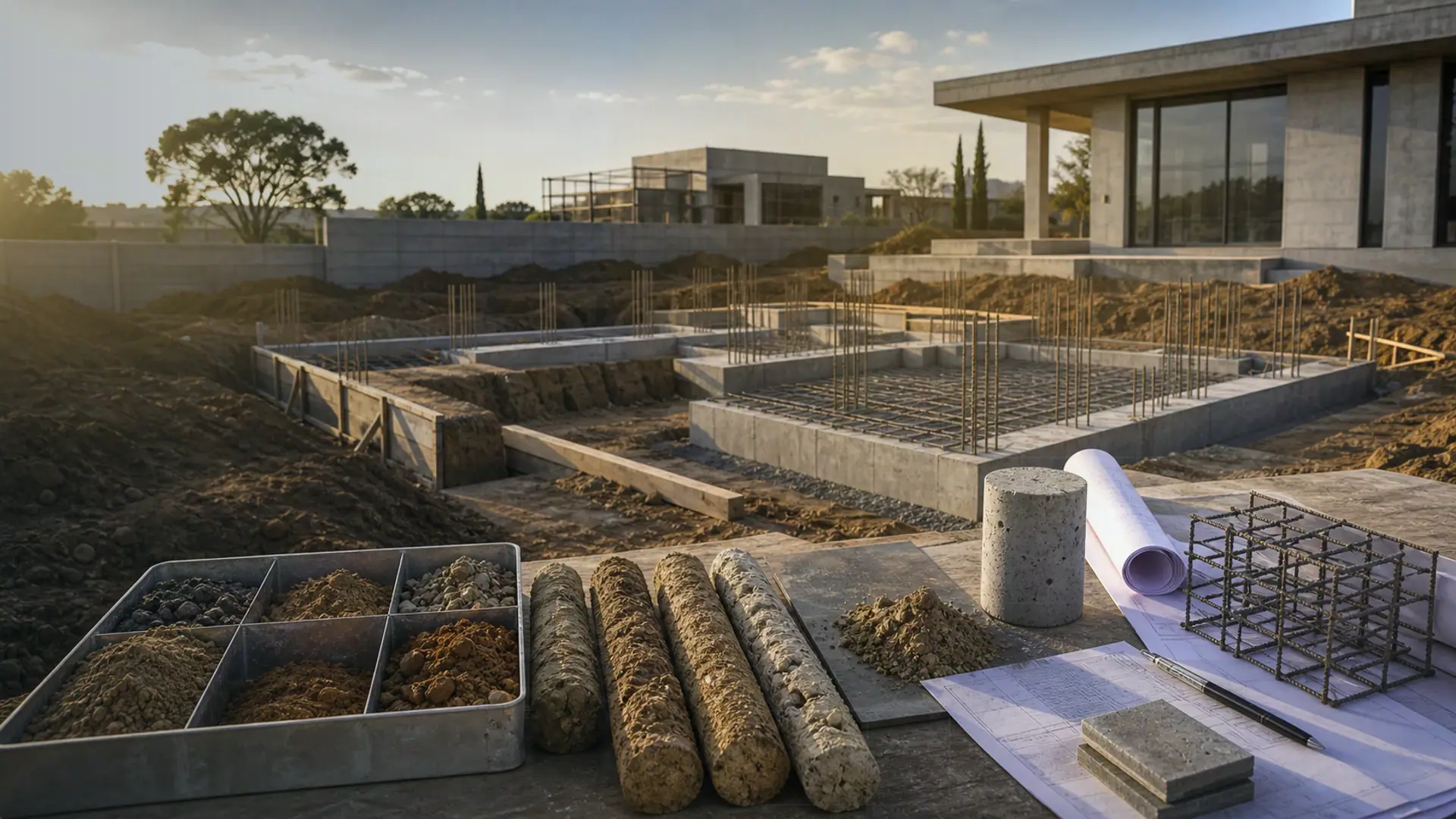
Paving Cost Per Square Metre
Base preparation, drainage, edging, load, paver choice, and access behind the rate
Quick answer
Paving cost per square metre by paver class – plus the base preparation, falls and edging that decide whether your paving lasts.
Indicative ranges for planning — not a quotation. Final cost depends on scope, finish level, site access and area, and may exclude VAT and professional fees; confirm pricing in writing with your chosen builder.
Cost at a glance
| Finish / spec level | Indicative rate | Typical total |
|---|---|---|
| Cement (bevel) | R500/m² | R26 400–R33 600 |
| Clay | R660/m² | R34 848–R44 352 |
| Flagstone / cobble | R800/m² | R42 240–R53 760 |
Indicative totals for a 60 m² project · indicative 2026 guidance, not a quotation. Use the calculator below for your exact size, or request tailored cost guidance.
Instant estimate
Paving cost calculator
Driveway / patio paving by area, paver and base prep.
10 min read
On this page
How much should you trust a headline price when the ground beneath your project changes everything? That question matters if you are planning a driveway or patio and want realistic guidance from day one.
At buildingpricessouthafrica.co.za we give independent pricing help so you can compare installation costs, materials and labour without the confusion. Our platform explains the common factors that drive final prices and helps you spot low quotes that ignore long‑term value.

Every project depends on size, surface finish, access and material choice. We show you how to check inclusions, warranties and realistic pricing so your budget matches the work required.
Use our pricing guidance to weigh options, from bricks to concrete pavers, and to ask contractors the right questions before you sign a quote.
Understanding the Paving Cost Per Square Metre South Africa Landscape
Local labour, ground conditions and material choice shape realistic pricing. Our guidance flags which variables matter — and base preparation is the biggest of them, since skimping is why paving sinks and shifts within a season or two.

Residential and commercial jobs follow different rules, with commercial work often needing engineered sub-bases that raise both price and timeline. Getting the driveway falls and drainage basics right matters on any project, or water pools and undermines the surface.
Always check a quote for a clear split between materials and labour, confirm the per-square-metre rate for supply and installation, and ask for SABS-compliant specs in writing. If you are still deciding the surface, the concrete vs paving for driveways comparison frames the cost trade-off.
| Factor | Why it matters | What to request |
|---|---|---|
| Materials (concrete, bricks, stone) | Different durability and finishes affect pricing | Unit price and warranty |
| Labour & region | Regional rates and skill level change installation costs | Hourly rate or fixed installation fee |
| Site conditions | Access, ground work and drainage alter the scope | Site-prep line items and contingencies |
Obtain multiple quotes — at least three where available — so you can compare real prices and pick the best value, and set the figure against the wider building price guides and the building rates per square metre for the rest of your project.
The Invisible Forty Percent of Your Paving Budget
Nearly half of what you pay goes into the ground work that never shows on the finished surface.
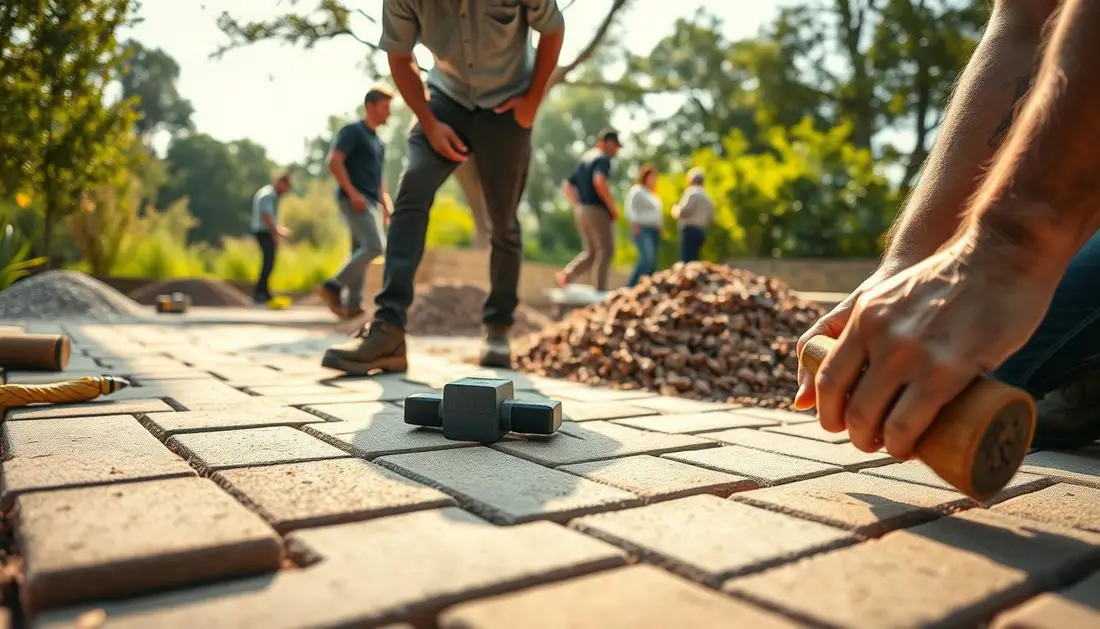
Good sub‑base compaction and a correct sand bedding layer stop movement and settling. If these steps are skipped, even premium materials like concrete, bricks or stone will fail sooner.
Edge haunching and falls to drainage
Edge haunching keeps pavers from shifting sideways. Proper falls ensure water runs away from buildings and neighbours.
- Always check that quotes include these items in the total price per square metre.
- High‑quality sub‑base material and bedding sand matter as much as surface pavers.
- Expect this earthwork to make up about 40% of final installation costs.
| Preparation item | Why it matters | What to confirm in the quote |
|---|---|---|
| Sub‑base compaction | Prevents sinking and long‑term repairs | Material type, compaction method, depth |
| Sand bedding | Allows even bedding and locking of pavers | Sand grade and thickness |
| Edge haunching | Stops lateral movement and edge failure | Haunch material and installation detail |
| Falls & drainage | Protects against pooling and structural damage | Gradient, outlets and drainage route |
Comparing Material Classes and Labour Rates
Materials and labour choices change your final bill more than the surface look does — the cement, clay & flagstone pavers compared guide shows how much the paver itself drives the rate.

Concrete bevels or interlockers usually fall between R250 and R350 for supply and installation. Clay bricks commonly sit at R300–R350 supplied and laid.
Flagstone and decorative finishes
Flagstone gives a premium finish. Expect R400–R550 supplied and installed. Decorative colours or specialised cuts raise the materials and labour demands.
Labour versus supply costs
Installation rates typically range R150–R250 depending on pattern complexity and access. Delivery within a 125km radius can add R1,200–R5,700 to your total.
Always ask for a split between supply and labour on any quote.
| Material | Supply & install (R/m²) | Install only (R/m²) | Notes |
|---|---|---|---|
| Concrete bevels / interlockers | 250–350 | 150–200 | Good value, wide colour/finish options |
| Clay bricks | 300–350 | 150–200 | Traditional look, strong durability |
| Flagstone / natural stone | 400–550 | 150–250 | Premium finish, specialist labour needed |
- Tip: Larger projects often reduce the price per unit due to economies of scale.
- Confirm colours, finish and transport charges before signing.
Driveway Versus Patio Specifications
Not all outdoor areas are built the same: a driveway has very different structural needs to a patio.
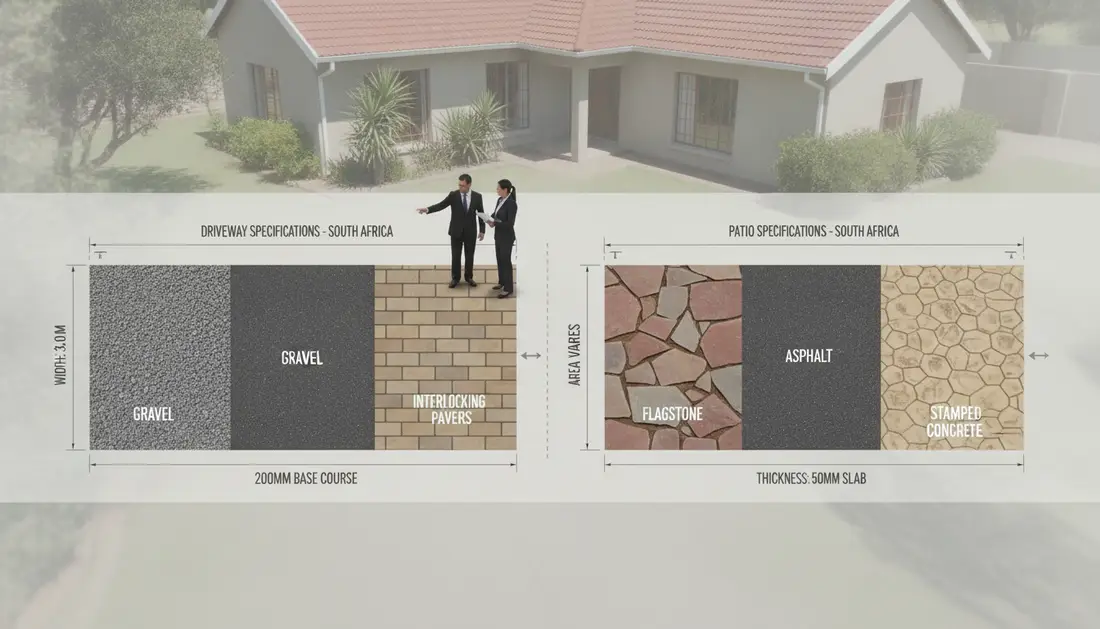
For low-traffic patios, standard 50mm bricks are usually adequate and more economical. For driveways that carry vehicles we recommend 80mm bricks for durability.
Every 10mm increase in brick thickness typically adds around R20 per square metre to the material cost. That increase matters on larger areas and when choosing between brick, concrete or stone.
- Driveway work needs a stronger sub-base and heavier compaction, which raises installation costs and may require specialised equipment.
- Patio areas allow decorative options such as flagstone or specialised slabs that suit foot traffic rather than vehicles.
- Match material thickness to the intended use to avoid premature failure.
“Always check load‑bearing requirements with your contractor before you select materials.”
We suggest you request clear splits for materials and labour when you ask for quotes. That ensures the right specification for your project and protects long‑term performance.
Managing Site Conditions and Drainage Requirements
How water moves across your plot decides whether your new surface will be durable or a maintenance burden.
Stormwater routing rules mean you must not direct runoff toward your house or your neighbour’s land. Follow local regulations and plan falls so water leaves the area safely.
Proper grading and site preparation protect your investment. Good drainage reduces movement, staining and frost damage to pavers, concrete or brick surfaces.
Practical steps installers will take
- Assess slopes, existing structures and landscaping that change flow paths.
- Specify channels, drains or soakaways where needed and show these in the quote.
- Factor specialist materials and extra earthworks into your installation costs if the site is complex.
Discuss drainage plans with your contractor before signing. Ask for written details of falls, outlets and any additional work so the final price reflects the true scope.
| Measure | Why it matters | What to confirm |
|---|---|---|
| Grading & falls | Directs water away from buildings | Gradient and direction of runoff |
| Channels/linear drains | Collects surface water along driveways and areas | Type, capacity and outlet point |
| Soakaways & subsoil drains | Manages excess water below surface | Location, size and maintenance needs |
Navigating Our Quote Request Process
Start by asking for multiple detailed quotes so you can judge value, not just price. Our quote request process is built to connect you with independent contractors across South Africa.
Use buildingpricessouthafrica.co.za to request up to three quotes, or up to five options where available, and to compare paving prices and installation details side by side.
- Provide clear project details: area size, preferred materials, access and any drainage needs.
- Ask contractors to itemise supply, labour and site preparation so you can compare real costs.
- Request timelines, warranties and written terms before you decide.
Our pricing guidance helps you spot quotes that exclude essential preparation or use lower‑grade materials. Remember, the cheapest offer may not protect your budget long term. It reads well alongside swimming pool price guide.
“Our platform gives you the tools to find reliable professionals and compare genuine options.”
Final step: Review each quote, ask clarifying questions, and confirm the chosen contractor will provide a written agreement that outlines scope, payment and schedules.
Securing Long Term Value for Your Outdoor Surfaces
A well‑specified job today avoids repairs and added expense down the line. Choose the right paving materials and insist on professional installation to protect your investment.
Regular maintenance — sweeping, joint care and periodic sealing — keeps pavers, concrete and stone looking good and working well for years. This small effort reduces future repair needs and preserves value.
Our pricing guidance stresses that quality materials and correct site preparation are the best defence against hidden costs. Use our platform to request quotes and find contractors who understand structural integrity and drainage. This pairs naturally with what garage building costs.
Remember: the total cost of ownership includes initial installation and ongoing care. Plan for both, and your outdoor surfaces will reward you with durability and stronger resale appeal across South Africa.
FAQ
What determines the base work that changes everything for a paving project?
The base work includes excavation, sub-base compaction, sand bedding and edge haunching. These elements set levels, falls to drainage and long-term performance. Poor base work causes movement and ponding, so confirm compaction depth, material type (crushed stone or G5), and that falls are specified before any surface units are laid.
How do regional labour and material rates affect pricing across the country?
Labour rates, transport and material availability vary by region and urban versus rural location. Inner-city areas often show higher hourly rates and delivery charges. Ask contractors for a breakdown showing labour, supply, delivery and any waste removal so you can compare like-for-like quotes.
What makes up the “invisible” 40% of the project budget?
About 40% typically covers sub-base work, drainage preparation, edge restraints and site clearance. These items aren’t flashy but are essential for durability. Make sure the quote details strip-out, excavation depth, compaction specs, edge haunching and fall to stormwater or soakaway.
Which material classes give the best value for driveways versus patios?
Cement and clay bricks are cost-effective and durable for driveways. Flagstone, natural stone and decorative finishes suit patios and feature areas but carry higher supply and installation premiums. Choose based on traffic load, appearance goals and maintenance expectations.
How should I read a quote that separates labour and supply costs?
A clear quote lists unit prices for supply and install, plus quantities. Labour should show hours, rate and scope (levelling, laying, jointing). Supplies should note material type, colour, finish and transport. Compare total installed prices, not just unit supply figures.
What site conditions add extra work and charges?
Restricted access, steep gradients, unstable soil, buried services and the need for retaining walls all add preparation time and materials. Drainage upgrades and stormwater routing rules can also increase scope. Ask contractors to inspect the site and itemise any additional works.
How do stormwater routing rules affect specification and pricing?
Local bylaws often require controlled discharge, soakaways or connections to municipal systems. That can mean additional excavation, piping, catchpits or permeable surfacing. Confirm requirements with your municipality and ensure the quote includes compliance items.
What should I check in writing before accepting a quote?
Confirm scope, materials (type, colour, finish), base and bedding specifications, drainage works, access arrangements, start and completion dates, payment terms and any warranty or maintenance advice. Ensure contingency items and variations are clearly priced.
How does the quote request process work on your platform?
You request up to three independent contractor quotes, where available. Contractors handle site visits, final pricing and schedules. We pass your request to independent installers so you receive competitive offers to compare. Final contractor selection, site inspections and guarantees are managed between you and the installer. It reads well alongside what carport costs.
What adds long-term value to outdoor surfaces beyond initial price?
Durable base preparation, correct drainage, quality materials and professional installation reduce repair needs and preserve appearance. Choose reputable materials such as concrete units, clay bricks or natural stone, and get maintenance guidance in writing to protect your investment.
Related building cost guides
Read & compare builder quotes with confidence
Before you weigh up prices, get fluent in what a building quote actually contains — inclusions, exclusions, provisional sums and the red flags that change the real cost.
- How to Read a Builder Quote
- Provisional Sums in Building Quotes
- Prime Cost Items in Building Quotes
- Building Quote Red Flags
- How to Avoid an Underquoted Building Project
- Questions to Ask Before Hiring a Builder
- Building Snag List Before Final Payment
- How to Compare Building Quotes Properly
- South African Building Terms Glossary
- Building Cost Inflation in South Africa
- Builder's Guarantees in South Africa
- Builder Payment Schedules and Deposits
- Building Contract Essentials
- When a Building Project Goes Wrong
Ready to compare?