
Building Cost Resources
Budgeting guides, quote-comparison help, approval planning, and practical cost education before you build
Quick answer
Building cost guides for planning, quotes and budget control – from reading a builder quote to snag lists and approval costs.
Planning, costs & quotes
The 10 Steps to Building a House in South Africa
A stage-by-stage roadmap from planning and approvals to handover and final snagging

What Causes Building Cost Overruns?
Scope creep, delays, design changes, rework, and supplier shifts that derail the budget
How Much Do Building Plans Cost in South Africa?
Drawings, submissions, engineering input, and compliance costs that shape the early budget

Building Snag List Before Final Payment
A practical workmanship checklist for defects, incomplete items, and handover control
The Cheapest Way to Build a House in South Africa
Simpler shapes, efficient layouts, and material choices that reduce cost without wrecking quality

Architect vs Draughtsperson in South Africa
Design depth, approval needs, complexity, and where professional fees make the most sense
Owner-Builder vs Turnkey Contractor
Managing trades yourself versus using one coordinated route from planning to handover
How to Budget for a Home Extension
Structure, roofing tie-ins, finishes, and hidden scope items that often get missed

Renovation vs New Build Cost Comparison
When improving an existing house makes sense and when starting fresh may be cleaner

How to Read a Builder Quote
Scope wording, exclusions, provisional sums, and allowances that change the real price

Provisional Sums in Building Quotes
Why flexible allowances can make a quote look cheaper than the final project cost
Prime Cost Items in Building Quotes
Fixtures, fittings, finishes, and allowances that can move the real budget after approval

Building Quote Red Flags
Vague scope, missing exclusions, low allowances, and payment terms that deserve a closer look

How to Avoid an Underquoted Building Project
Spot low allowances, missing scope, unclear specifications, and quote gaps before work starts

How NHBRC Registration Can Affect Building Costs
Builder compliance, enrolment expectations, risk cover, and why cheaper quotes need closer checking

Council Approval Costs and Delays
Submission fees, revisions, documentation gaps, and timing risks that affect project budgets

Building in the Rain in South Africa
Slab timing, drainage, roofing exposure, and weather-related delays that affect progress and cost
How Long It Takes to Build a House in South Africa
Planning, approvals, weather, contractor speed, and sequencing all affect the timeline

Questions to Ask Before Hiring a Builder
Vetting, quote quality, workmanship risk, and practical checks before signing anything

Estimate vs Quote: What's the Difference?
One is a planning number, the other is a commitment – know which you're holding before you decide

What Builders Need Before They Can Quote You
Plans, photos, measurements and decisions – the pack that gets you an accurate price first time

Why Calculator Numbers Differ From Real Quotes
Calculators price typical projects; quotes price your site, your access and your choices

How Builders Measure Square Metres
Construction area vs floor area – the measuring difference that breaks most rate comparisons
Entry, Standard & Premium Finishes Explained
What entry, standard and premium actually buy you – room by room, spec by spec

Why Square-Metre Rates Can Mislead
The rate is a starting point – size efficiency, scope gaps and finish creep do the misleading

South African Building Terms Glossary
Prelims to PC items – every quote and site term decoded in plain English, A to Z

Building Cost Inflation in South Africa
What's actually pushing building prices – materials, labour, logistics and the rand
Builder's Guarantees in South Africa
Workmanship, roof leaks and the 5-year structural net – what guarantees really cover

Builder Payment Schedules and Deposits
Never pay ahead of the work – deposits, milestones and retention that protect you
Building Contract Essentials
If it isn't written, it doesn't exist – the clauses every building contract needs

Buying Land to Build: The Checklist
Soil, zoning, servitudes and services – the checks that decide what your stand really costs

When a Building Project Goes Wrong
Abandonment, defects and disputes – the recovery playbook when prevention wasn't enough
New builds, extensions & outbuildings

Single vs Double Storey: Which Costs More?
Same floor area, different structure – where each option wins on cost, stand size and lifestyle

How Roof Design Affects Build Cost
Pitch, spans, hips and valleys – design choices that quietly add or save tens of thousands
What a Suspended Concrete Slab Involves
Propping, steel, engineering and pour day – why first-floor slabs are a different job entirely

When an Extension Needs Approved Plans
Size, position and structure triggers – when council must sign off before you build
Roof Tie-Ins: Joining New Roofs to Old
Joining new roof to old – flashings, levels and leak points that decide extension quality

Extending Up vs Building Out
Second storey or bigger footprint – structure, garden and budget decide it

Granny Flat Rules & Approvals in South Africa
Second-dwelling rights, size caps and entrances – the rules before the build

Planning a Granny Flat for Rental Income
Designing the flat tenants want – metering, privacy and the yield maths
Prefab vs Brick Granny Flats
Speed against permanence – what each method really delivers for the money

Standard Garage Sizes in South Africa
Single, double and the sizes that actually fit modern cars and storage

Garage Door Types Compared
Tip-up, sectional or roll-up – security, space and automation trade-offs

Converting a Carport Into a Garage
Infill walls, the slab question and the approval most people skip

Carport vs Garage: Which Should You Build?
Security, weather, resale and rands – the honest comparison before you pour anything

Extension vs Granny Flat: Which Adds More?
More house or a second dwelling – space, income and approvals decide it
Renovations

How to Renovate in Phases
The sequence that stops phase two ripping out phase one

Hidden Problems Renovations Uncover
Damp, dodgy wiring, asbestos and rot – what opens up when the walls do
Living at Home During a Renovation
Dust zones, dead kitchens and timelines – a survival plan that keeps the project moving

What Moving Kitchen Services Involves
Why moving the sink costs more than the sink – chasing, falls and certificates
Kitchen Cupboard Materials Compared
Melamine to solid wood – durability, moisture and the look per rand

Countertop Materials Compared
Granite, engineered stone, wood and laminate – living with each, not just buying it

Kitchen Renovation Order of Work
Strip to fit-off in the right order – so nothing gets installed twice

Why Showers Leak: Waterproofing Explained
It's almost never the tiles – membranes, falls and the corners that fail

Bathroom Renovation Order of Work
Demolition to fit-off – the wet-room sequence that protects the waterproofing

What Moving Bathroom Plumbing Involves
Drainage falls rule everything – what shifting the toilet really takes

Planning a Small Bathroom Renovation
Big function in 3–4 m² – layouts, storage and the finishes that stretch space

Renovations That Add Value in South Africa
Where renovation rands come back at resale – and where they quietly don't
Roofing & ceilings

Repair or Replace Your Roof: How to Decide
Patch again or start over – the age, spread and cost signals that decide
Roof Tiles vs Sheeting Compared
Weight, noise, lifespan and look – choosing the covering before the colour
Signs Your Roof Needs Replacing
Sagging lines, repeat leaks and tired coverings – read the roof before it forces you

How Roofers Trace a Leak
Water travels – how pros trace a leak back to its real entry point

Storm Damage & Roof Insurance Claims
Assessor, scope, contractor – the claim sequence and where homeowners lose out

Asbestos Roof Removal: Rules & Process
Licensed removal only – the law, the process and the disposal paper trail

Ceiling Board Types Compared
Gypsum, PVC and fibre-cement – matching boards to rooms and budgets
Bulkheads and Cornices Explained
The details that finish a ceiling – and carry the lighting plan

Ceiling Insulation Options and Rules
Thickness, types and the energy rules – comfort you install once
Walls, paving & outdoor
Brick vs Precast Boundary Walls
Security, lifespan and looks per metre – the honest comparison

Boundary Wall Rules: Heights & Neighbours
Height limits, consent and who pays – the wall rules before the first brick

Why Boundary Walls Crack and Lean
Footings, joints and tree roots – the usual suspects behind leaning walls

Why Retaining Walls Fail
Water pressure wins – drainage failures behind almost every collapsed wall

When a Retaining Wall Needs an Engineer
Height, surcharge and consequence – the thresholds that demand a professional
Retaining Wall Types Compared
CRB blocks, reinforced concrete and gabions – matching wall type to slope and budget

Why Paving Sinks and Shifts
It's the base, not the bricks – compaction failures behind every dip

Cement, Clay & Flagstone Pavers Compared
Cement, clay and flagstone – wear, colour-fastness and the right fit per area
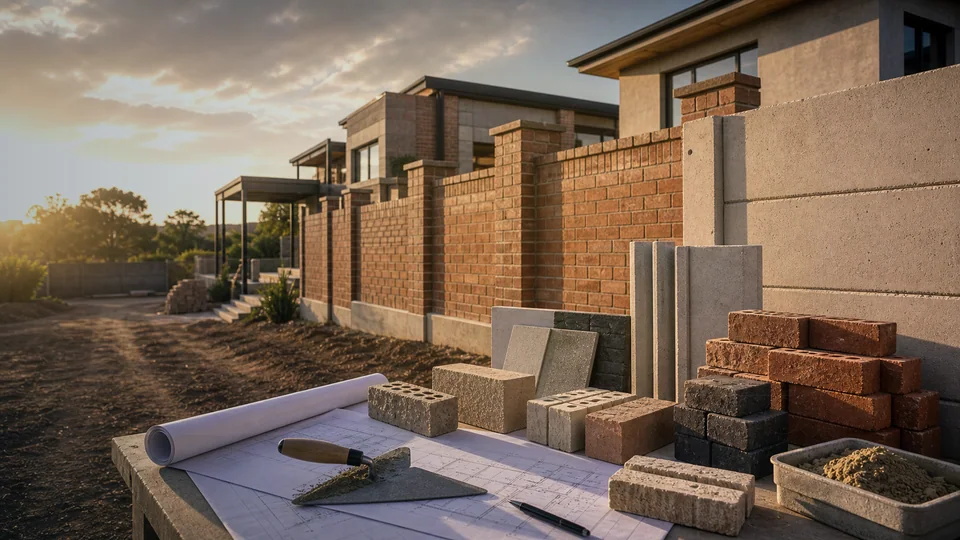
Driveway Falls and Drainage Basics
Falls, channels and the neighbour rule – moving water off legally and for good
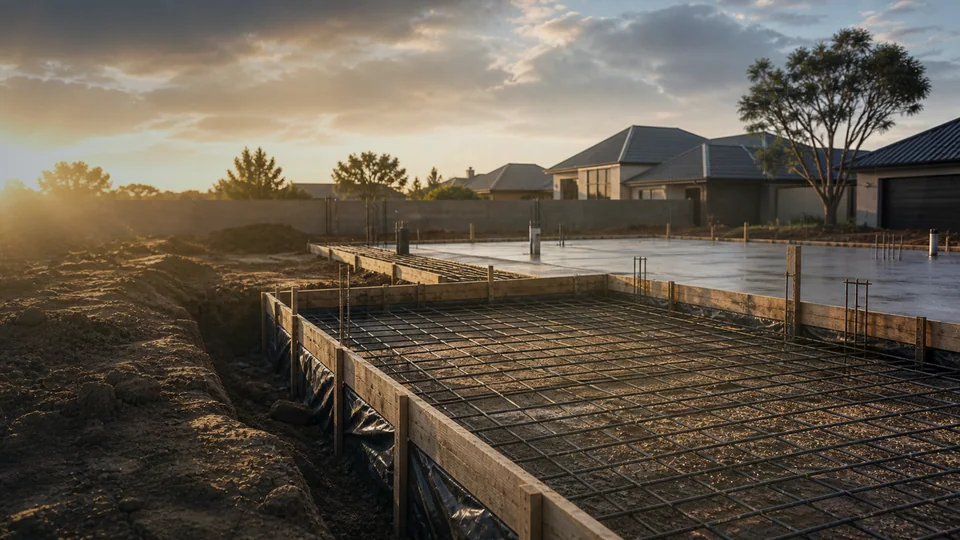
Fibreglass vs Concrete Pools in South Africa
Speed and price against shape freedom and lifespan – the pool decision that sets the budget
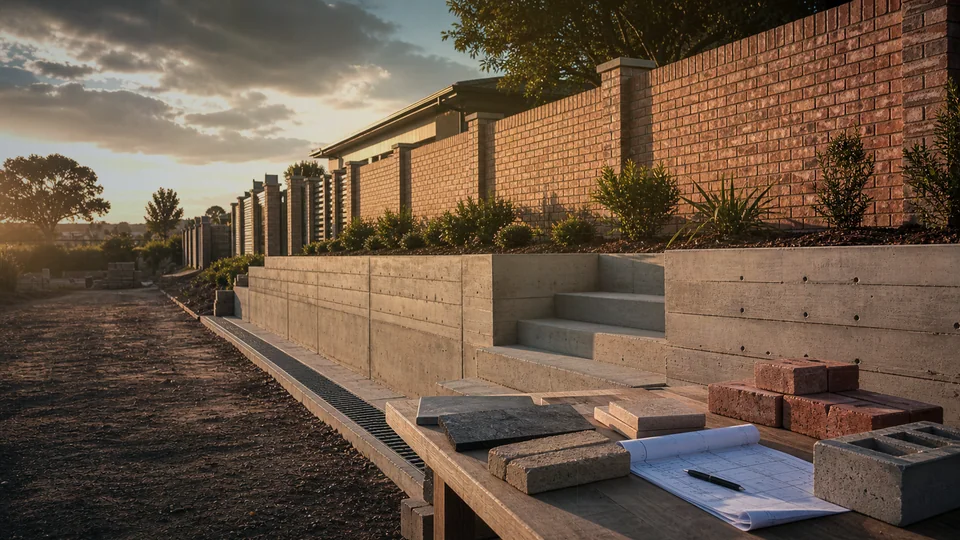
Electric Fence Rules and the COC Explained
Certificates, heights and liability – the legal side of electrified boundaries

Concrete vs Paving for Driveways
One surface poured, one surface laid – cracking, repairs and looks compared
Foundations, structure & demolition

Surface Bed vs Suspended Slab
On the ground or in the air – two slabs, two jobs, two prices

Concrete Strength Grades Explained
15, 25, 30 MPa – what the numbers mean and where each belongs

How Soil Conditions Affect Foundations
Clay heaves, sand shifts, rock resists – the ground writes the foundation spec

Building on Dolomite: What It Means
Sinkhole country rules – geotech, rafts and why Centurion quotes differ

What a Geotechnical Report Tells You
Reading the geotech – site class, founding depth and the lines that cost money

Stock, Face and Maxi Bricks Explained
Stock, face and maxi – what each brick is for and how it lays

How Many Bricks Per Square Metre?
Counts, coverage and waste – the quick maths behind ordering right

What Good Brickwork Looks Like
Plumb, level, clean joints – the visual checks anyone can run

Demolition Permits and Neighbour Rules
Permits, notices and disconnections – the paperwork before the breaker
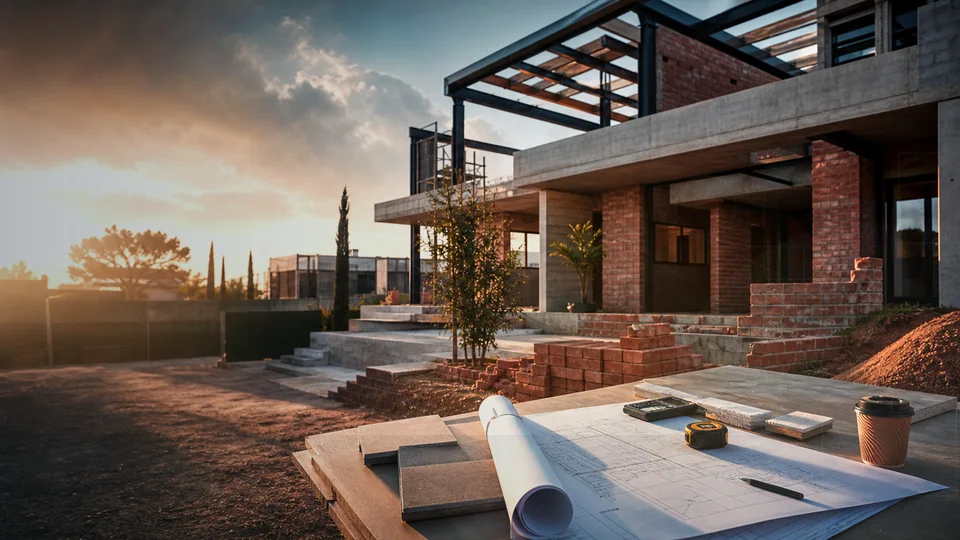
Asbestos in Older Homes: Where It Hides
Ceilings, eaves and roofs – where pre-1990 homes hide it and what to do

Rubble Removal, Skips and Salvage
Skips, loads and salvage credits – clearing the site without burning the budget
Finishes & surfaces
Plaster Cracks: When to Worry
Hairline or structural – reading crack patterns before panic or paint

Skimming vs Plastering
A 3 mm refresh or a 12 mm rebuild – matching the fix to the wall

How Much Paint Do I Need?
Litres, coats and coverage maths – buy right the first time

Why Paint Peels and Flakes
Skipped primer, green plaster and damp – the three killers of paint jobs

Choosing Exterior Paint for SA Conditions
Coastal salt, Highveld UV and damp walls each demand a different system
Porcelain vs Ceramic Tiles
Density decides – wear, water and why porcelain costs more to lay

What Large-Format Tiles Demand
Flat floors, levelling systems and two-man handling – the premium explained

Screeds and Surface Prep Before Tiling
The floor under the floor – screed quality decides the tiling outcome

Drywall vs Brick for Internal Walls
Speed and lightness against mass and permanence – choosing the right internal wall
Services & moisture
The Plumbing Rough-In Stage Explained
Before walls close – what gets installed, tested and signed off

Geyser Installation Rules and Compliance
PRVs, drip trays and vacuum breakers – the compliance behind every legal geyser

Copper vs PEX Piping
Old faithful vs the flexible newcomer – lifespan, theft and labour speed

The Electrical COC Explained
When you need one, what it covers and how long it stays valid

When a DB Board Needs Upgrading
Old boards, missing earth leakage and inverter loads – the upgrade triggers

Planning Plug Points Per Room
Plan plugs for the life you actually live – room-by-room counts that age well

Wiring for Inverters and Solar
Dedicated circuits, changeovers and COCs – wiring the backup properly

Rising Damp: Signs, Causes and Fixes
Tide marks, bubbling paint and salty walls – confirming rising damp before paying to treat it

Torch-On vs Liquid Waterproofing
Heat-welded sheets or brushed-on membranes – matching the system to the surface and the budget
17 min read
On this page
Can you plan a dream new home without unpleasant surprises in the bill? That question shapes every early decision when you plan a new home in south africa. We know how daunting the numbers can feel.
Our platform at buildingpricessouthafrica.co.za gives straightforward pricing guidance and practical tools to help you request up to three quotes, or up to five where available, from independent contractors. We focus on realistic construction cost estimates so you can act with confidence.

Use our pricing guidance to compare labour, materials and finishes. We explain the main cost drivers and what to confirm in writing. Whether you are starting your first project or managing a house renovation, our goal is to help you control the budget and achieve a safe, high-quality result.
Navigating Building Cost Resources South Africa
A clear view of market shifts helps you plan a reliable budget for your new home. The construction industry is expected to rebound in 2026 with an average annual growth rate of 3.5% through 2028. That outlook affects bids, timelines and material availability.
We help you interpret regional trends so you can match your brief to current prices. Use our data to spot likely changes in labour, material and approvals fees. This reduces the chance of surprise variations during construction.

Key actions you can take now:
- Compare recent tender figures for your region.
- Ask contractors to itemise allowances for finishes and access.
- Plan contingency funds for schedule shifts and price moves.
| Driver | Typical impact | Practical action |
|---|---|---|
| Labour availability | Higher hourly rates, longer programmes | Request phased quotes and fixed-time bids |
| Material supply | Price volatility on key items | Lock prices or source alternatives early |
| Approvals & access | Delays and added site costs | Confirm approvals in writing before start |
Understanding the Square Metre Pricing Model
Using a per-square-metre rate helps you compare quotes and set a realistic budget. The square metre pricing model is the standard method to estimate a new home in south africa. Contractors often bundle labour and materials into a single per square figure for early quotes.
Calculating the Floor Area
Measure internal floor area accurately. Include garages and covered verandas only if the contractor includes them in the per square metre rate.
Economic versus Luxury Finishes
Economic finishes start around R9,500 per square metre for a small home. High-end projects can exceed R30,000 per square metre. Your choice of materials and design complexity drives the final price.

| Finish level | Typical R/m2 | Key inclusions |
|---|---|---|
| Economic | R9,500–R14,000 | Basic finishes, bundled labour, standard layouts |
| Mid-range | R14,000–R20,000 | Upgraded materials, some custom elements |
| Luxury | R20,000–R30,000+ | High-quality fittings, complex design, bespoke work |
Remember to factor in location, land size, tax and approvals. We recommend you confirm what the per square metre rate covers in writing before you accept a quote.
Regional Variations in Construction Expenses
Where you choose to site your house affects labour, transport and permit charges more than most people expect.
KwaZulu‑Natal is the most expensive province for a standard home, with an estimated figure around R2,505,000. By contrast, North West and Limpopo are among the most affordable areas.
Regional differences arise from local labour availability, material transport fees and broader economic conditions. Urban centres such as Gauteng typically show higher per square metre rates than remote rural areas.

Understanding the local variation helps you set realistic allowances. Consider travel charges for deliveries, the ease of hiring skilled teams and any premium for fast approvals in busy provinces.
- Site location is a primary factor — remote sites often raise expenses through logistics.
- Material and labour supply in each province directly change your total outlay.
- We provide average per square figures so you can compare provinces and plan contingency.
| Region | Example total (standard home) | Primary drivers |
|---|---|---|
| KwaZulu‑Natal | R2,505,000 | Higher labour rates, access premiums |
| Limpopo | Lower average | Affordable labour, lower transport fees |
| North West | Lower average | Competitive local suppliers, fewer premiums |
Key Factors Influencing Your Total Budget
Decisions about access, materials and schedule determine how far your initial estimate will stretch. Keep the focus on items that change the per square metre and the overall budget.

Land Accessibility and Site Conditions
Poor access, steep gradients or weak soil add work and plant hire. These site issues raise expenses through extra foundations, earthworks and longer labour programmes.
Material Quality and Selection
Material quality drives the price per square and the look you get. Higher-spec finishes increase material costs and may extend labour time.
Impact of Construction Delays
Delays increase labour and equipment hire. Plan for a contingency of 10–15% to cover changes and unexpected issues.
- Labour costs typically account for 25–30% of total construction cost in south africa.
- Size and design determine the volume of materials and the final price per square metre.
- Set a clear budget and confirm inclusions in writing to control costs and avoid surprises.
Essential Professional Fees and Regulatory Costs
Professional fees and permit charges form a predictable slice of your overall project budget. Plan for them early so you can avoid surprises as the project progresses.
Architectural and engineering services protect design quality and compliance. These services also make up a clear percentage of the total project sum and should be included in your financial plan.
Architectural and Engineering Fees
Architect fees in south africa commonly reach up to 8% of the total construction cost. Structural engineer fees are typically around 2% of the total cost.
- Professional fees, including architect and quantity surveyor charges, are essential elements of overall costs.
- Regulatory expenses such as permits and inspections ensure your home meets local law and safety standards.
- Specialist labour costs for plumbing and electrical work often sit outside the general contractor’s fee structure.
- Engaging a qualified quantity surveyor helps you control construction costs south africa throughout the build.
| Service | Typical % of total | What it covers |
|---|---|---|
| Architect | Up to 8% | Design, drawings, coordination and site visits |
| Structural engineer | About 2% | Structural calculations, reports and approvals |
| Quantity surveyor & approvals | 1–3% | Cost control, tender documents, permit assistance |
Budget for these fees from the start. Confirm what each professional includes in writing so your expected expenses match reality.
Securing Finance for Your Construction Project
In south africa, lenders usually pay out loans in stages as each phase of work on your house finishes. This staged release keeps contractors paid and helps you match cashflow to the programme.
To qualify you must be at least 18 years old and have a good credit record. Banks will ask for a signed building contract, site plans and proof of NHRBC registration before approving funds.
Fees and other expenses matter. Expect application fees, valuation charges and interim inspection fees during the loan term. Factor these into your construction cost budget so you do not run short.
- Loans are common for funding a home or property project; banks release funds by stage.
- Provide full paperwork: contract, plans and registration documents to speed approval.
- Understand fees and keep contingency for unforeseen expenses during the build.
| Requirement | Why it matters | Action |
|---|---|---|
| Good credit & age | Eligibility for loans | Check your credit and prepare ID |
| Contract & plans | Bank releases staged payments | Have signed documents ready |
| Fees & inspections | Affects total expenses | Include in budget and contingency |
We guide you through lender requirements in south africa and help you manage loans so your project stays on track.
Comparing the Costs of Building Versus Buying
Weighing up buying against creating a new home means balancing immediate spend with lifetime savings.
In south africa a new build is typically 20–30% pricier than an existing property. The higher upfront price buys you full customisation and modern fittings.
Choosing to build your own home can reduce future bills. You avoid transfer duty and costly renovations that older properties often need.
Energy‑efficient design and modern systems also cut utility charges and may lower certain tax liabilities over time.
| Option | Upfront | Long-term |
|---|---|---|
| Buy existing property | Lower initial outlay | Higher renovation & maintenance risk |
| Build house | 20–30% higher initial spend | Lower maintenance, custom energy savings |
| Financial trade-off | Quicker move-in | Potential tax and running-cost benefits |
We provide clear insights so you can weigh the figures and decide which route suits your family and budget. Ask for staged quotes and confirm what is included before you commit.
Ensuring Quality and Safety Through Our Quote Request Process
Open every quote with a checklist: scope, registration, warranties and clear pricing. Use our quote request process to gather up to three (or where available, five) independent quotes so you can compare per square metre figures and scope side by side.
Identifying Red Flags in Quotes
Start here by reading each quote end‑to‑end. Watch for vague descriptions, missing NHRBC registration details, or prices that are unusually low.
- Missing NHRBC number: Contractors must be registered for new dwellings in south africa.
- Unclear inclusions: No breakdown of labour, material costs, or allowances is a red flag.
- Blank timelines or warranties: Ask for firm dates and written guarantees for workmanship.
The Importance of Written Agreements
Always insist on a written agreement that lists the per square price, scope, materials and payment stages.
“A clear, signed contract is the single best defence against later disputes.”
Confirm who handles site visits, final measurements and warranties. If you use a quantity surveyor, include their role and fees in the contract.
| What to check | Why it matters | Action |
|---|---|---|
| Scope & inclusions | Prevents hidden expenses | Require itemised per square and per square metre entries |
| NHRBC registration | Legal compliance for new homes | Verify the registration number |
| Warranties & timelines | Protects quality and schedule | Get signed start/finish dates and warranty terms |
Use our tools to compare quotes, flag issues early and choose contractors who match your quality and safety expectations for a successful construction project and house build in south africa.
Finalising Your Plans for a Successful Build
Final checks before work starts give you the best chance of sticking to your plan and budget. ,
Confirm all inclusions, exclusions, timelines, payment stages and warranties in writing with your contractor. Per square allowances and the agreed price per metre must be explicit.
List professional fees, including your surveyor, so you do not discover hidden fees later. Review the budget for materials, labour and likely expenses one last time.
Clear communication and a detailed contract protect your property and help maintain quality during construction. Keep timelines and payment schedules written and signed to avoid disputes.
Use our platform guidance to finalise scope and confirm the per square scope that matches your budget and expectations for the new house or home.
Explore these guides
Reading & comparing quotes. To get fluent in builder quotes, read builder payment schedules and deposits, builder’s guarantees, building contract essentials, building cost inflation, building quote red flags, south african building terms glossary, estimate vs quote, how to avoid an underquoted building project, how to read a builder quote, owner-builder vs turnkey contractor, prime cost items in building quotes, provisional sums in building quotes, questions to ask before hiring a builder, building snag list before final payment, what builders need before they can quote you, when a building project goes wrong, and why calculator numbers differ from real quotes.
Planning & process. For planning the project end to end, see the 10 steps to building a house, architect vs draughtsperson, buying land to build, carport vs garage, the cheapest way to build a house, converting a carport into a garage, council approval costs and delays, extending up vs building out, extension vs granny flat, planning a granny flat for rental income, hidden problems renovations uncover, how builders measure square metres, how long it takes to build a house, how much do building plans cost in south africa, how roof design affects build cost, how soil conditions affect foundations, how to budget for a home extension, living at home during a renovation, prefab vs brick granny flats, how to renovate in phases, renovation vs new build cost comparison, renovations that add value, single vs double storey, entry, standard & premium finishes explained, what causes building cost overruns, when an extension needs approved plans, and why square-metre rates can mislead.
Renovation know-how. Renovation sequencing and pitfalls are covered in bathroom renovation order of work, kitchen renovation order of work, what moving bathroom plumbing involves, what moving kitchen services involves, planning a small bathroom renovation, and why showers leak.
Walls, roofs & damp. On walls, roofs, paving and damp, see asbestos in older homes, asbestos roof removal, boundary wall rules, brick vs precast boundary walls, driveway falls and drainage basics, how roofers trace a leak, retaining wall types compared, rising damp, repair or replace your roof, roof tie-ins, roof tiles vs sheeting compared, signs your roof needs replacing, storm damage & roof insurance claims, torch-on vs liquid waterproofing, when a retaining wall needs an engineer, why boundary walls crack and lean, why paint peels and flakes, why paving sinks and shifts, and why retaining walls fail.
Materials & finishes. For materials and finish choices, see stock, face and maxi bricks explained, bulkheads and cornices explained, ceiling board types compared, ceiling insulation options and rules, concrete strength grades explained, copper vs pex piping, drywall vs brick for internal walls, choosing exterior paint for sa conditions, fibreglass vs concrete pools, garage door types compared, how many bricks per square metre, planning plug points per room, how much paint do i need, countertop materials compared, kitchen cupboard materials compared, what large-format tiles demand, cement, clay & flagstone pavers compared, plaster cracks, porcelain vs ceramic tiles, screeds and surface prep before tiling, skimming vs plastering, standard garage sizes, surface bed vs suspended slab, what a suspended concrete slab involves, and what good brickwork looks like.
Services & compliance. On services, approvals and compliance, see building in the rain, building on dolomite, demolition permits and neighbour rules, electric fence rules and the coc explained, the electrical coc explained, geyser installation rules and compliance, granny flat rules & approvals, how nhbrc registration can affect building costs, the plumbing rough-in stage explained, rubble removal, skips and salvage, what a geotechnical report tells you, when a db board needs upgrading, and wiring for inverters and solar.
What prices include. For what shapes the numbers, see concrete vs paving for driveways.
FAQ
How do I estimate the price per square metre for a new home?
Start by calculating the finished floor area in square metres. Multiply that area by a realistic price-per-square-metre benchmark for the finish level you want — economy, mid-range or luxury. Add provisional sums for services, professional fees and contingency. Request up to 3 quotes, or up to 5 where available, from independent contractors to validate your budget.
What should I include when asking for a quote?
Provide a measured floor plan, a specification of finishes, site access details and any unusual ground conditions. Confirm whether the quote includes labour, materials, VAT, municipal connections, professional fees and a contingency percentage. Ask contractors to itemise provisional sums so you can compare like-for-like.
How do regional differences affect pricing?
Labour rates, material availability and logistics vary by province and town. Remote sites incur higher delivery and contractor travel charges. Municipal approval fees and local taxes also differ. Always get quotes from contractors who work in your area and check recent local build examples.
What is the role of a quantity surveyor and is one necessary?
A quantity surveyor prepares detailed cost plans, helps control variations and checks contractor valuations. For projects above a simple extension, a quantity surveyor saves money by preventing scope drift and ensuring accurate tender documents. Consider a surveyor for new homes or major renovations.
How much should I allow for professional fees and approvals?
Typical architectural and engineering fees vary with complexity; allow a percentage of the contract sum. Add municipal plan approval and connection fees, and specialist reports like geotechnical and electrical certificates where required. Get written fee estimates from your professionals.
What are common red flags in contractor quotes?
Vague scopes, unusually low prices, omitted warranties, no fixed start or completion dates and lack of itemised labour and material costs are red flags. Reputable contractors provide clear, written scope, payment milestones and references from recent jobs.
How do materials and finishes change the overall price?
Upgrading finishes raises the per-square-metre figure more than slight plan changes. Structural materials, windows, roofing and kitchen and bathroom fittings drive price differences. Specify exact brands or equivalent standards to avoid surprises when comparing quotes.
How can I reduce risk of cost overruns during construction?
Fix the design and specification before tendering, include a contingency (usually 5–10%), and use a written contract that covers scope changes. Schedule regular site inspections and keep communication with the contractor documented to control variations.
Should I build or buy an existing property?
Compare total project cost (land, build, fees) with market prices for comparable homes in your area. Building gives design control and often better long-term value, while buying can be quicker and sometimes cheaper when land or construction premiums are high. Factor in time, financing and personal priorities.
What financing options are available for new construction?
Options include home construction loans from major banks, bridging finance, builder finance and personal loan top-ups. Lenders require detailed plans, a cost estimate from a registered contractor and progress certificates. Confirm disbursement schedules and fees with your bank early.
How important is site accessibility and ground condition to the budget?
Very important. Restricted access, steep slopes or poor soil increase labour, plant and foundation costs. A geotechnical report flags special foundation work. Include access improvements and temporary works in your budget and quotes.
What should a written agreement with a contractor include?
The agreement should state the full scope, fixed price or measured rates, start and completion dates, payment terms, retention, warranties, variation process and dispute resolution. Insist on a clear defects liability period and proof of contractor registration or insurance.
How do construction delays impact the final price?
Delays increase labour overheads, may lead to material price inflation and can trigger penalty clauses or claims for time-related costs. Build realistic programme buffers and include liquidated damages and extension-of-time clauses in the contract to manage risk.
Can you explain square metre pricing versus elemental estimating?
Square metre pricing gives a quick budget using an average rate per finished area. Elemental estimating breaks the job into walls, roofs, finishes, services and external works for more accuracy. Use square metre rates for early budgeting and elemental estimates for tender and contract stage. For the full set of cost guides, see building price guides.
How do I verify a contractor’s previous work and reputation?
Ask for recent project addresses, contactable client references and photographs. Visit sites if possible. Check membership of industry bodies, public reviews and whether the contractor holds relevant insurances and tax clearance. A reliable contractor should welcome scrutiny.
What contingencies should I budget for unexpected issues?
Allow 5–10% contingency for small projects and 10–15% for larger or complex builds. Budget separately for unforeseeable items found during excavation or renovation, and for scope changes that reflect new decisions during construction.
How do taxes and duties affect project pricing?
VAT at the prevailing rate applies to most contractor invoices and materials unless specific exemptions apply. Import duties on specialised items can increase material prices. Confirm VAT treatment and include it in your comparisons when you request written quotes.
What practical steps should I take before finalising plans?
Finalise the floor area and specification, obtain a geotechnical report, get preliminary quotations, secure finance approval in principle and instruct an architect or draughtsman to prepare tender-ready drawings. Then invite written quotes and compare them against a detailed specification.
Start with certainty