
Western Cape Building Price Guide
Coastal exposure, Cape Town demand, slope conditions, premium finishes, and logistics pressure
Quick answer
Western Cape building prices – winter rain programmes, wind specs, slopes and heritage triggers behind coastal and premium quotes.
Cities & areas

Cape Town Building Cost Guide
Heritage-sensitive renovations, coastal conditions, premium finishes, and strong contractor demand

Southern Suburbs Building Cost Guide
Older homes, careful alterations, structural upgrades, and finish-sensitive renovation budgets

Northern Suburbs Building Cost Guide
Family homes, additions, practical new-build demand, and varied suburb pricing

Cape Winelands Building Cost Guide
Estate rules, travel distance, lifestyle-home finishes, and site-sensitive construction costs

Building Costs on the Garden Route
George, Mossel Bay, Knysna and Plett – semigration demand, coastal specs and contractor availability
Cost topics

Western Cape Building Cost Per Square Metre
Rate tables for Cape Town, the suburbs, and the Winelands, with slope and coastal premiums
Western Cape Renovation Cost Guide
Older homes, coastal materials, and heritage-sensitive work can make renovation quotes more layered

Western Cape House Extension Cost Guide
Established suburbs, coastal exposure, slopes, and roof tie-ins make additions more site-sensitive

Western Cape Roofing Price Guide
Roofing quotes need closer checks where wind, salt air, waterproofing, and roof design meet
9 min read
On this page
How much will it really cost to build your dream home in the Western Cape? That question matters if you plan to design a house from scratch or compare costs to buying an existing property.
At present the region averages about R14,800 per square metre for new construction. Our platform, buildingpricessouthafrica.co.za, gives clear figures so you can see the per square meter rate and estimate total cost build.

Building a house usually costs 20–30% more than buying, yet it can save you on maintenance and transfer duties long term. Our pricing guidance helps you weigh those trade-offs and plan a realistic budget.
You will find step-by-step cost factors, from labour and materials to approvals and access. Use the tools on our site to request quotes and confirm what to get in writing before work starts.
Understanding Building Prices Western Cape and Market Trends
Cost per square metre varies widely across provinces, so your budget will change with location and scope — compare regional building costs before you commit. Costs also vary by province — see province-by-province building costs.
Current data shows KwaZulu‑Natal leading at R14,860 per square metre, Gauteng at R13,330 and Western Cape at R13,150. The North West remains most affordable at R7,980 per square metre. This pairs naturally with building costs in on the Garden Route.

These differences reflect demand for upper‑class residential work and the quality of finishes you choose. Site access, design complexity and materials all push the final costs higher.
- Scale and type: a larger house reduces some per‑square meter overhead but raises total expense.
- Professional fees: expect 25–30% of the project budget for consultants and approvals.
- Location premium: coastal and premium areas command higher rates than inland regions such as North West.
Use these regional averages as starting estimates when you plan a project. Request detailed quotes to convert averages into a realistic cost build for your site and design.
Core Factors Influencing Your Construction Budget
Decisions about quality, size and specialist input directly shape the cost per square metre you should expect. We focus on the items that move totals most quickly so you can plan a realistic budget.
Material Quality and Design Complexity
Materials set the baseline. Higher-grade finishes and specialist cladding can push the per square metre rate well above R20,000.
Design complexity adds labour hours and specialist trades. Multi-storey plans or intricate façades raise both the time and the costs of a project.

Professional Fees and Labour
Labour typically accounts for 25–30% of total costs on a residential project. That share changes with site access, skill requirements and region.
Professional fees are another visible line. Architects can reach up to 8% of construction cost and structural engineers around 2%. Include quantity surveyor or consultant fees when you set the budget.
- Example: a 150 m 3‑bed house needs careful specification to control the cost per metre.
- Set aside 10–15% contingency for unexpected expenses.
- Confirm material quality and scope in your contract to avoid later disputes.
Technical Considerations for Coastal and Heritage Sites
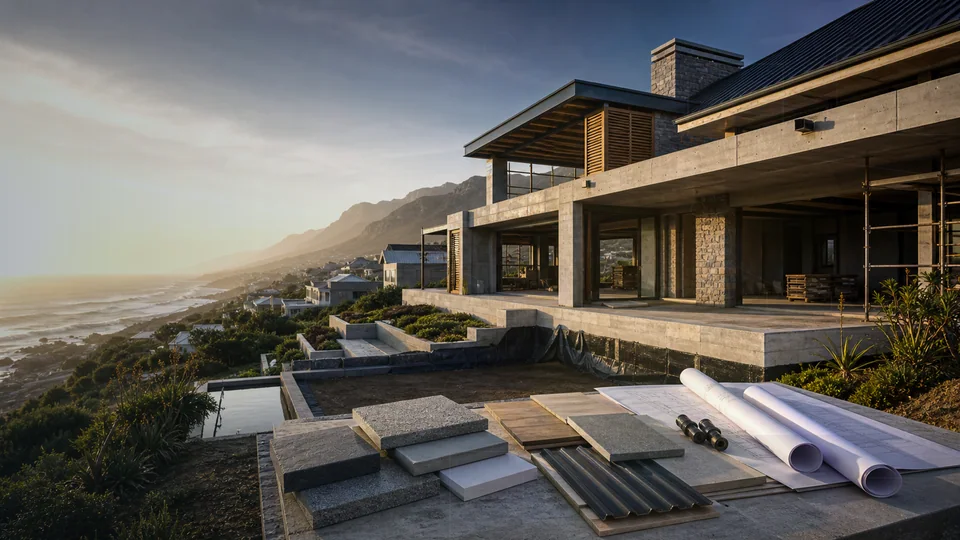
Sites with sea spray, steep slopes or heritage listings need extra technical input and cost allowances. Start by planning for location-specific risks so your budget reflects real construction needs.

Winter rainfall and moisture protection
Winter rain in this region demands robust moisture control. Use thicker roof membranes, sealed slab edges and protected roof lights to reduce long‑term damage.
Tip: choose salt‑resistant materials in exposed areas to avoid premature corrosion and rising maintenance costs.
Heritage regulations
If the property is older than 60 years, you must apply for permits and follow conservation rules. These legal steps can add time and additional fees to your renovation or new works.
Consult a local heritage specialist early to avoid delays and unexpected expense during approvals.
Slope sites and engineered platforms
Sloping plots often need retaining walls, engineered platforms and specialist foundations. These items are major cost factors and change the cost per square metre for the whole project.
- Retaining walls and earthworks increase materials and labour rates.
- Complex designs usually push professional fees higher.
- Factor these elements into your budget and request detailed quotes for site-specific work.
Navigating Labour Premiums and Seasonal Scarcity
When contractors are scarce, your labour line can jump and the project timetable often stretches.
Labour usually makes up about 25–30% of the total cost on a house project. In Cape Town this share can rise during peak months because demand for skilled trades exceeds supply.
Plan for seasonal fluctuation. Schedule site work in off‑peak months to reduce the risk of higher rates and delays. Confirm contractor availability and agree start dates in writing.

Our platform helps you compare rates and find contractors who match your quality expectations. Paying a premium for reliable, skilled labour often saves money long term by avoiding rework.
- Costs vary with timing — aim to contract outside the busiest seasons.
- Ask for phased timelines and fixed labour rates where possible.
- Factor labour volatility into your contingency so the overall cost build remains realistic.
Understanding local market differences helps you manage expectations and control your project budget.
Essential Steps for Securing Accurate Quotes
Getting clear, comparable quotes is the single most important step when you plan a home project. Use a structured process so you can compare scope, rates and warranties without guessing.
Our quote request process connects you with independent contractors who can supply site-specific estimates. You may request up to three quotes, or up to five options where available, to see a realistic spread of cost and quality.
Always confirm in writing the inclusions, exclusions, project timelines, payment schedules and warranties before work starts on your site. A written brief reduces disputes and keeps the budget honest.
Check each submission for detailed material and labour breakdowns, the per square metre rate, and any professional fees. Verify that the contractor is registered with the National Home Builders Registration Council (NHBRC) — registration is mandatory for all new homes in South Africa.
- Ask for itemised estimates that show cost per item and total cost build.
- Request references and recent work examples to judge quality over the cheapest price.
- Keep at least a 10–15% contingency in your budget for unforeseen expenses.
“A detailed contract saves time and money — confirm scope, timelines and warranties in writing.”
Finalising Your Construction Strategy for Success
Successful projects marry design intent with tight cost management from day one. Plan decisions that link your design and materials to the expected cost per square metre so your budget stays realistic.
Ensure your professional team — architects, engineers and quantity surveyors — share the project brief and fee limits. Regularly compare actual costs against initial estimates to spot overruns early.
Use our pricing guidance and the quote request process to gather clear, comparable proposals. Clear communication with independent contractors reduces delays and avoids unexpected expenses.
We provide tools and data to help you manage building costs in South Africa and reach your desired quality without surprise bills. Confirm scope, timelines and warranties in writing before work begins.
Explore these guides
Where we cover. Local cost guidance is available for building costs in Cape Town, building costs in on the Garden Route, building costs in Northern Suburbs, building costs in Southern Suburbs, and building costs in Winelands.
Rate & topic guides. For the numbers behind a project here, see building cost per square metre western cape, house extension costs western cape, renovation costs western cape, and roofing prices western cape.
FAQ
What is the current cost per square metre to build a home in the Western Cape coastal and premium areas?
Costs vary by location and specification. As a guide, expect a higher rate for coastal and premium suburbs due to corrosion protection, superior finishes and site access. Always ask contractors for a detailed cost per square metre that separates structure, finishes and external works.
Which core factors most affect my total construction budget?
Key cost drivers are material quality, design complexity, professional fees, labour rates and site conditions. Confirm scope items such as foundations, retaining walls, drainage, access improvements and finishes in writing to avoid scope creep.
How do material quality and design complexity influence costs?
Higher-spec materials and bespoke designs raise both material and labour costs. Complexity increases the hours required from trades and engineers and can need specialised suppliers. Specify finishes clearly to get comparable quotes from contractors.
What professional fees should I budget for?
Budget for architects, structural engineers, electrical and mechanical consultants, and principal-agent fees where applicable. Local municipal plan fees and NHBRC or SABS-related inspections may add additional charges. Request fee schedules early.
How does coastal exposure change technical requirements?
Salt air accelerates corrosion, so you need corrosion-resistant fixings, stainless steel or galvanised elements, specialised coatings and robust waterproofing. These measures add upfront cost but reduce long‑term maintenance.
Are there extra costs for winter rainfall and moisture protection?
Yes. Sites with high winter rainfall need improved drainage, damp-proof membranes, specific cavity details and carefully sequenced works to prevent moisture ingress. These details increase both materials and labour time.
Do heritage or conservation areas increase expenses?
Heritage regulations often require specialist approvals, conservation architects and specific materials or methods. Plan for longer lead times and higher fees for consultants and contractors experienced with heritage work.
How much extra does building on a sloping site cost?
Slopes typically require engineered platforms, retaining walls, more complex foundations and additional earthworks. These are significant cost items and should be priced by an engineer and included in the contractor quotes.
Why do labour premiums and seasonal scarcity affect my quote?
Skilled trades can be scarce during peak seasons, pushing labour rates up. Plan projects outside peak demand where possible and ask contractors about lead times and seasonal surcharges before committing.
What documents and information should I provide to get accurate quotes?
Provide a measured plan, clear specification of finishes, site photos, levels, geotechnical report if available, and any municipal constraints. The clearer the brief, the more comparable and reliable the quotes will be.
How does your quote request process work and how many options can I get?
You may request up to three independent contractor quotes, or up to five options where available. Contractors conduct site visits and issue finalised written quotes; we do not guarantee prices, timelines or the maximum number of quotes.
What should I confirm in writing before appointing a contractor?
Confirm scope, fixed price or provisional sums, payment schedule, programme, warranties, who sources materials, and responsibility for municipal approvals. Get the contract and variations clause in writing.
How can I reduce costs without sacrificing quality?
Opt for simpler rooflines and standard sizes, choose durable mid-range finishes, bundle work packages to reduce subcontractor mobilisation, and clarify allowances versus included items in the quote.
Do building permits and municipal rates affect the overall cost?
Yes. Municipal plan and approval fees, services connection costs and compliance certificates add to the budget. Factor these statutory charges into your total project cost before signing a contract.
How do I compare quotes effectively?
Compare line-by-line: scope, exclusions, provisional sums, material brands, lead times and warranties. Ask for clarifications on any differing items and request an itemised breakdown for major cost components.
Start with certainty