
Roof Replacement Cost Guide
Rebuild budgets across roof covering, timber, waterproofing, access, and storm-damage scope
Quick answer
Roof replacement costs by covering, including strip-out, timber repairs and waterproofing – plus the scope checks before you compare.
Indicative ranges for planning — not a quotation. Final cost depends on scope, finish level, site access and area, and may exclude VAT and professional fees; confirm pricing in writing with your chosen builder.
Cost at a glance
| Finish / spec level | Indicative rate | Typical total |
|---|---|---|
| IBR / corrugated sheeting | R550/m² | R77 440–R98 560 |
| Concrete tile | R750/m² | R106k–R134k |
| Clay tile | R1 050/m² | R148k–R188k |
| Slate / premium | R1 600/m² | R225k–R287k |
Indicative totals for a 160 m² project · indicative 2026 guidance, not a quotation. Use the calculator below for your exact size, or request tailored cost guidance.
Instant estimate
Roof replacement calculator
Re-roof budget by roof area and covering type.
11 min read
On this page
Curious how much a new roof really sets you back in your area? Many homeowners expect a single figure, but the true price varies by material, area size and access for installation.
Our platform delivers clear pricing signals and practical guidance. Visit buildingpricessouthafrica.co.za to see typical ranges: new roof installation often sits between R450/m² and R1000/m², while removal generally ranges R50–R100/m².
Understanding your specific property needs makes budgeting easier. Factors such as material choice — metal, slate or concrete — labour, repairs after inspection and the size of the area drive the final price.
Our pricing guidance helps you compare options and plan a realistic budget. Request a quote, confirm the scope in writing and check whether contractors include warranties and access planning before the work starts.
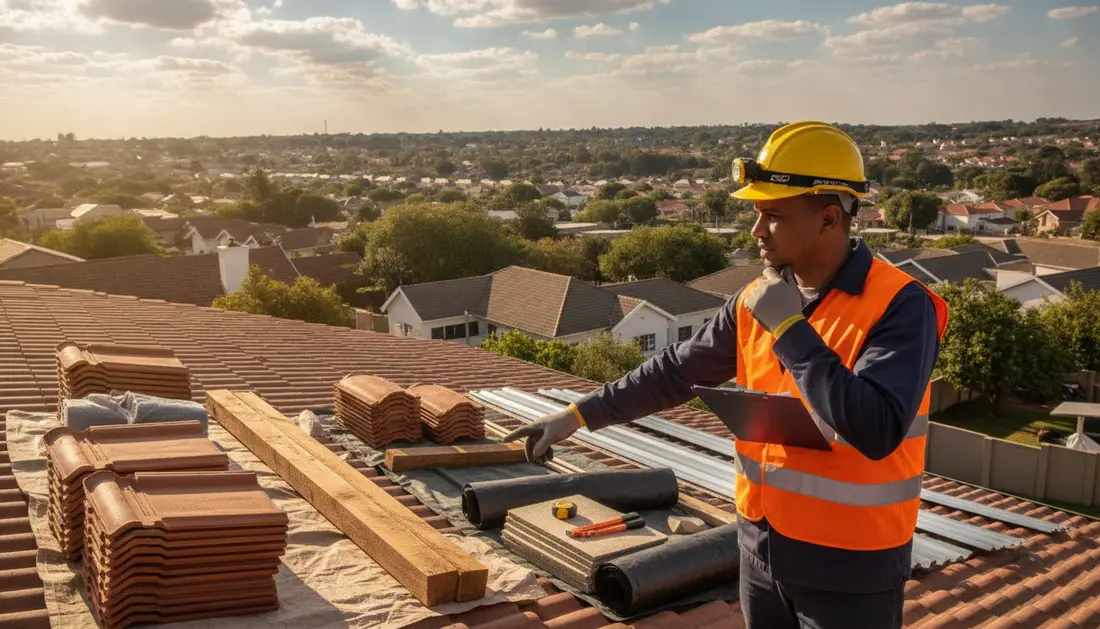
Understanding the Roof Replacement Cost South Africa Landscape
From severe hail in Gauteng to metal corrosion along the coast, regional weather is the first driver of pricing. Our pricing guidance shows how that shifts the likely price — and whether you actually need a full replacement or the cheaper roof repair guide route.
Property complexity also matters: a simple single-span house needs less labour and material than a multi-level or heritage building. Where the damage is borderline, repair or replace your roof walks through how to make the call.

When you use our quote request process you connect with an expert who knows local building behaviour and assesses the roof type, visible damage and hidden structural issues. Material choice frames the budget — the roof tiles vs sheeting compared guide weighs cost against lifespan.
- Compare quotes to check scope, warranties and lead times.
- Understand why certain roofs fail to prevent repeat work.
- Anticipate labour and material needs by evaluating complexity early.
Every house is different, so use local insight to get a tailored quote for your installation or repairs. Before you spend, check your roof against the signs your roof needs replacing — patching a roof that is past saving wastes money.
If your home dates from before the 1990s, factor in asbestos roof removal, which carries strict handling rules and added cost. A re-roof is also the moment to add ceiling insulation options and rules while the structure is open, and to budget the related trades from our price guides.
Price Guidance by Roofing Material
C. Different materials suit different homes; each has distinct pricing, labour needs and lifespan expectations.
We list typical installation ranges per square metre so you can compare options quickly.

Concrete and Clay Tiles
Concrete tiles typically install from R500/m² to R800/m². They are durable and offer good insulation, making them a value-led option for many homes.
Metal Sheeting
Corrugated iron and other metal sheeting are affordable and fast to fit. Expect pricing roughly R450/m² to R800/m². Metal is light, covers large areas quickly and often lowers labour time.
Slate and Thatch
Slate is a premium material, usually R700/m² to R1,000/m² per square metre. It adds value but needs specialist labour for correct installation.
Thatched options give excellent natural insulation and cost about R500/m² to R700/m². They require regular maintenance to stay effective.
Planning tip: When you request quotes, check the breakdown for materials, labour, removal and maintenance so you compare like-for-like pricing.
Key Factors Influencing Your Total Budget
Your total spend depends on a mix of material selection, labour skill and how accessible the building is for installation.
Access and complexity affect labour time. Multi-storey properties or steep pitches need safety gear and extra hours. That raises the price for roofing service.
Preparation and removal matter. Clearing old materials and making good the structure adds to the final figure. Allow for removal and latent repairs in your estimate.
| Factor | What it affects | Typical impact | Tip |
|---|---|---|---|
| Access & Complexity | Labour & time | Low to high | Get a site visit quote |
| Material type | Materials & installation | Medium to high | Compare per square prices |
| Removal & repairs | Removal, structural work | Medium | Confirm inclusions in the quote |
| Region & labour | Labour rates & lead time | Varies by area | Check local pricing |
Confirm in writing what your quote includes. That way you avoid surprises and can compare prices for tile, metal or other materials fairly.
Essential Operational Considerations for Your Project
Before any demolition begins, ensure the structure can carry the new load and the scope is clear in writing. A truss inspection avoids surprises and shows whether timber repairs or batten replacement are needed.

Removal and Structural Integrity
Removing the old covering is complex and must be handled by professionals. Proper removal protects the building and people on site.
Asbestos and hazardous materials demand licensed removal to meet regulations. Ask for a written inspection clause in your quote.
Insulation and Underlay
Top-up insulation while the area is open is cost-effective and improves energy performance. The underlay and batten system are critical for long-term performance, whether you use metal or tile materials.
| Operational item | What it affects | Who performs it | Key note |
|---|---|---|---|
| Truss inspection | Structural capacity | Qualified inspector | Report and repair list before installation |
| Removal of old material | Site safety & access | Licensed contractor | Includes hazardous removal where needed |
| Underlay & batten | Weatherproofing & ventilation | Roofing installer | Choose correct type for material and size |
| Insulation top-up | Energy use & maintenance | Insulation specialist | Do it while installation is open |
“Ensure a full structural inspection is written into your agreement.”
We recommend you request clear pricing for these steps so the final price reflects all necessary work and avoids later repairs. It reads well alongside what damp proofing costs.
Selecting a Qualified Professional
Choosing the right professional is the difference between a smooth installation and endless follow-up work; a poor hire means extra repairs, delays and a higher final price. Read the fine print too, since common quote exclusions like scaffolding or gutter work can land back on you.
Use our platform to find independent contractors who can handle different roofing material types — from slate and tile to metal and concrete. These contractors supply a full inspection and explain any necessary repairs before work begins.
The Importance of Written Agreements
Always insist on a written agreement that confirms inclusions, exclusions, timelines, payments and warranties. A clear contract protects you and sets expectations for materials, labour and maintenance.
- Compare quotes using our quote request process to assess price, scope and lead times.
- Check warranty terms for both materials and labour before signing.
- Request references and past-project photos to verify the expert’s work on homes like yours.
| What to confirm | Why it matters | Red flag |
|---|---|---|
| Scope of work | Prevents scope creep and hidden work | Vague descriptions |
| Timelines & payments | Controls schedule and cashflow | Large upfront deposits |
| Warranties | Protects against defects and repairs | No written warranty |
“A detailed inspection and written quote save time and money.”
Taking the Next Steps for Your Property
Prioritise safety, access and scope so quotes match what you need.
Start planning with a short inspection and a clear brief. Use our platform to compare pricing, labour and materials for a new roof or a roof installation. There’s more detail in how roof design affects build cost.
Use our quote request process to get up to three or five quotes where available. Compare per square pricing, timelines and warranties before you decide. For the full set of cost guides, see browse all our cost guides.
Consult an expert to confirm repairs and to ensure the final price reflects the true scope. Secure a written quote and agreement.
Visit buildingpricessouthafrica.co.za to begin your search and request competitive quotes for your property today.
FAQ
How much should I budget per square metre for a new roof covering and basic labour?
Budgets vary by material and complexity. As a rough guide, expect lower prices for rolled or corrugated metal sheeting, mid-range for concrete or clay tiles, and higher rates for slate or specialised finishes. Labour, removal of existing covering and basic timber repairs are charged separately. Ask contractors for a per-square-metre price that includes materials, fixing, and waste removal, and get at least three written quotes to compare.
Which materials give the best long-term value for South African homes?
Durable options include concrete tiles, quality metal sheeting (galvanised or Zincalume), and natural slate where appropriate. Concrete tiles balance price and lifespan well. Metal is cost-effective, lightweight and quick to install. Slate lasts longest but has higher upfront material and structural strengthening costs. Consider maintenance, local climate, and resale value when choosing.
Will timber repairs or replacing the roof structure significantly change my budget?
Yes. Structural work such as replacing trusses, purlins or sarking can add substantially to the overall sum. Simple re-tiling with sound timber costs much less than a rebuild. Insist on an inspection report that lists required timber repairs and any bracing or tie-downs needed. This lets you compare quotes on an equal scope.
Do I need building approvals and how do they affect pricing?
Many municipalities require plans or notification for significant alterations, especially if you change rooflines, add skylights or alter structural members. Fees and plan-drawing costs add to the budget. Confirm with your local municipality and include approval fees and any engineer or architect costs in your quotes.
How should I compare multiple quotes to avoid hidden extras?
Compare like-for-like: material brand and profile, whether sarking/underlay and insulation are included, extent of timber repairs, removal and disposal of old materials, scaffolding or edge protection, and warranty terms. Check for VAT, provisional sums and exclusions. Prefer fixed-price written quotes that list payment milestones.
What warranties and guarantees should I ask for?
Request manufacturer warranties on materials (tiles, sheeting, fasteners) and a workmanship guarantee from the installer. Typical workmanship guarantees range from 1–5 years. Clarify who handles follow-up service and whether warranties require regular maintenance. Get warranty terms in writing.
Is insulation and an underlay necessary when installing a new covering?
Yes. A suitable underlay improves waterproofing and ventilation; insulation reduces heat gain and improves energy efficiency. Upgrading insulation during a re-cover is cost-effective as access is already open. Ask contractors to itemise insulation type, R-value and placement in the quote.
How much does removal and disposal of the existing covering add to the project?
Removal and disposal costs depend on material weight and local skip or landfill fees. Removing heavy tiles and repairing the deck costs more than pulling off metal sheets. Quotes should show removal, disposal, labour and any hazardous-material handling if present.
Can I replace only part of a covering to save money?
Partial replacement can work if damage is localised and the remaining covering matches in material and condition. Mixed coverings can reduce curb appeal and affect waterproofing at joins. For best long-term value, weigh short-term savings against potential patching and future rework. This pairs naturally with what waterproofing costs.
How do site access and roof complexity affect pricing?
Limited access, steep pitches, multiple hips, valleys, dormers or complex details increase labour time, require more safety equipment and can need specialised installers. Expect higher per-metre charges for complex roofs. Ensure quotes reflect access, scaffolding and fall-protection costs.
Should I choose metal sheeting or concrete tiles for an investment property?
For investment properties, consider lifecycle cost, speed of installation and tenant expectations. Metal sheeting installs quickly, is lightweight and low-maintenance. Concrete tiles offer better thermal mass and a traditional look but cost more to install and may need stronger structure. Match choice to target rental market and budget.
What routine maintenance keeps a new covering performing well?
Annual inspections, clearing gutters and checking flashings, replacing cracked or slipped tiles, and checking fasteners on metal sheets will extend service life. Keep documentation of inspections and repairs for warranty claims and future buyers.
How soon should I schedule a full inspection and quote after noticing leaks or damage?
Arrange an inspection as soon as possible. Small leaks can conceal timber rot and structural issues. Early assessment limits secondary damage and gives you time to obtain multiple quotes and plan approvals before costs escalate.
Can I get financial assistance or payment plans for major re-cover works?
Some installers or local banks offer staged payment plans or home improvement loans. Compare interest rates and confirm payment milestones in the written agreement. Avoid large upfront deposits; industry practice often splits payments between deposit, progress stage and completion. For the how-to, see building in the rain south africa.
How many contractor quotes should I request and what should I expect at a site visit?
Request up to three written quotes where available. During a site visit expect measurement, timber inspection, discussion about material options, ventilation and insulation, and a clear scope of work. Ask installers for lead times, start dates and warranty terms in the written quote. Our guide to ceiling insulation options and rules covers what’s involved.
Related building cost guides
Read & compare builder quotes with confidence
Before you weigh up prices, get fluent in what a building quote actually contains — inclusions, exclusions, provisional sums and the red flags that change the real cost.
- How to Read a Builder Quote
- Provisional Sums in Building Quotes
- Prime Cost Items in Building Quotes
- Building Quote Red Flags
- How to Avoid an Underquoted Building Project
- Questions to Ask Before Hiring a Builder
- Building Snag List Before Final Payment
- How to Compare Building Quotes Properly
- South African Building Terms Glossary
- Building Cost Inflation in South Africa
- Builder's Guarantees in South Africa
- Builder Payment Schedules and Deposits
- Building Contract Essentials
- When a Building Project Goes Wrong
Ready to compare?