
Durban Building Cost Guide
Coastal wear, humidity, renovation demand, waterproofing, and metro contractor access
Quick answer
Durban building prices – waterproofing, salt-air specs and flood-aware drainage, with renovation guidance for older Berea-style blocks.
20 min read
On this page
Curious how much it really costs to start a seaside project? If you’ve ever wondered whether your budget will stretch to a new extension or a full house remodel, you are in the right place.
At buildingpricessouthafrica.co.za we make cost comparisons easier. Our platform gives clear, practical figures so you can compare costs across coastal locations, from Cape Town to other parts of South Africa.
Our pricing guidance helps you check the true cost of a renovation or when planning to build new home. You can request up to 3 quotes, connect with independent contractors, and see how labour, materials and access affect overall costs.
Use this guide to understand what to confirm in writing, how location shifts budgets, and which factors change your property spend. We aim to empower you with realistic figures so your house project starts with reliable information.

Understanding Building Prices Durban
Before you commit to plans, check the local cost drivers so your budget matches reality; our market snapshot and average per‑square figures help you set a sensible target, in line with broader building costs in KZN. It reads well alongside building costs in North Coast.
Current Market Overview
2026 south africa trends show a wide range of outcomes. A small economic home starts at R9,500 per square, while higher‑end homes commonly cost upwards R30,000 build per square metre.

Average Cost Per Square Metre
KwaZulu‑Natal’s estimated 2026 cost sits around R16,700 per square metre. Use this figure as a mid‑point when you gather quotes. For what this typically costs, see KwaZulu-Natal building prices.
- Quality of materials and labour shifts the final price most.
- Location — whether near the coast or inland — affects access, approvals and transport costs.
- Plan with a clear estimate per sqm to avoid surprises.
| Tier | Typical R/m² | Notes |
|---|---|---|
| Economic | R9,500 | Small economic home starts |
| Regional average | R16,700 | KwaZulu‑Natal 2026 estimate |
| High end | R20,000+ | Luxury finishes and higher quality |
The Reality of Coastal Construction Costs
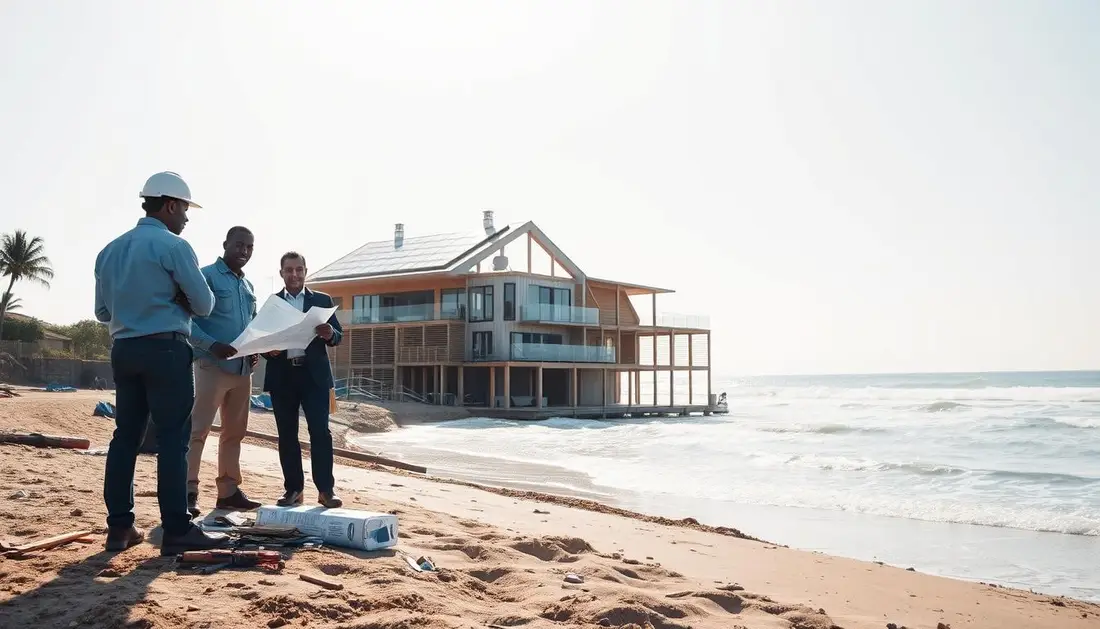
A seaside site quickly moves a project from standard scope to specialist work and higher expense. Coastal projects push up building costs because materials must resist salt corrosion and stronger winds.
2026 south africa figures start at r9,500 per square for a simple home, but coastal work rarely stays at that baseline. Reinforced foundations, thicker roofs and salt‑resistant roofing increase the per square metre total.
Industry cost surveys point to elevated construction inflation, so expect upwards of R20,000 per square metre for luxury finishes. Higher-end homes cost upwards r20,000 when you choose premium cladding, stainless fixings and specialist glazing.
- Durable materials raise costs but extend service life.
- Site access and extra engineering add per sqm expense.
- Use our platform to factor in these extras before you request quotes.
“Coastal projects often exceed the small economic home rates and require a realistic contingency.”
Comparing Building Versus Buying Property
Deciding whether to build a new home or buy an existing property depends on how you weigh short-term cost against long-term value.
On average, building a house typically costs 20–30% more than buying an established one. Yet many of the long-term benefits make the extra outlay sensible for owners who plan to stay.
Long-Term Financial Benefits
You save money by avoiding transfer duty and some administrative fees that apply when you buy in South Africa. That lowers upfront friction and reduces hidden legal costs.
- Building avoids costly renovations and recurring maintenance on older homes.
- Energy-efficient design can cut running costs and provide tax advantages.
- Our platform helps you compare building costs against market prices by location.
By choosing to build, you control material quality and future maintenance. That control often saves you money over a decade and makes your investment more secure.
“Customising a home today can prevent expensive upgrades tomorrow.”

Essential Budgeting for Professional Fees
Allocating fees for consultants early makes the financial plan far more reliable. Professional charges are a small share of the total but they shape outcomes and reduce risk.
Budgeting for professional fees is critical for any building project in South Africa. Architects can charge up to 8% of the construction cost. A structural engineer typically bills about 2%.
A quantity surveyor helps control spend and may charge up to 4%. Together these advisers keep your cost forecasts honest and your plan achievable.
We recommend a contingency of 10–15% of the total to cover unexpected changes. Early allocation stops cash-flow shortfalls and reduces delays.

| Professional | Typical Fee (% of construction cost) | Why it matters |
|---|---|---|
| Architect | Up to 8% | Design quality, approvals and coordination |
| Structural engineer | ~2% | Safety and structural compliance |
| Quantity surveyor | Up to 4% | Accurate budgeting and cost control |
“Plan for professional fees from day one to protect your home budget.”
Navigating Durban Environmental Challenges
Salt-laden air and heavy rain demand specific specs to keep a home performing well. Coastal exposure accelerates corrosion and mould, so factor these items into your cost plan early.
Salt-Air Aluminium and Fixings
Use salt-air aluminium sections and marine-grade stainless fixings to resist rapid corrosion. Specify anodised or powder-coated aluminium and A4 (316) stainless steel bolts and fasteners.
These materials raise the initial cost but reduce maintenance and extend life. Check that roof tiles and flashings are rated for salt-spray and high winds.
Storm and Flood Drainage Retrofits
Older houses often need storm and flood drainage retrofits to prevent water damage. Robust gutters, larger downpipes and site drainage work are common upgrades.
We recommend mould-resistant paint in damp rooms and sealed junctions around openings to address humid-place issues. Our platform lists contractors in south africa and cape town who specialise in these retrofits.
- Key note: factor specialist materials into your building costs estimate.
- Tip: confirm material specs and warranties in writing before you sign.
“Addressing coastal issues at the design stage saves cost and preserves value.”
Managing Older Property Renovations in Berea and Glenwood
Renovating a unit in Berea or Glenwood usually begins with tracing the history of flat‑roof leaks and past repairs. These older blocks commonly present recurring waterproofing issues that affect scope and timing.
Body‑corporate approvals are often required for external works. Expect formal meetings, repair votes and minutes that can delay start dates and add to the overall cost.
Before you sign any contract, arrange a structural assessment. Older frames and communal roofs can hide defects that change the house scope and specialist labour required.
Our platform provides pricing guidance to help you budget for that specialised labour. We also connect you with contractors who have track records in this area and understand local processes.
Plan for contingency and allow extra time for approvals. Knowing the specific challenges of this place keeps your project on track and within your expected budget.
- Confirm waterproofing history and warranty status.
- Factor body‑corporate timelines into your schedule.
- Obtain a structural report before detailed costing.
“Tackle communal roof issues early to avoid costly delays.”
The Impact of Site Access and Logistics
Access and logistics determine how smoothly your project runs and how much it will ultimately cost. Plan for access early so you avoid delays and extra charges.
Metro Contractor Access and Seasonal Availability
Metro contractor access in most urban areas is generally good, which helps keep labour and delivery time reasonable. However, specialist waterproofing trades fill up fast during the storm season.
If you schedule work in the rainy months you may wait for a specialist, and that delay will increase construction cost and overall costs for the house.
- Plan your timeline to avoid the busy storm season and locked schedules for waterproofing specialists.
- Narrow roads or steep terrain can need specialist equipment and raise building costs in South Africa.
- Location and area access influence the availability of labour and material delivery, whether in Cape Town or elsewhere.
- Our platform provides realistic pricing guidance so you can factor logistics into your estimate and keep your home project on schedule.
“Good logistics planning saves time and prevents unexpected site charges.”
Material Selection and Quality Considerations
Material choices set the tone for durability, maintenance and eventual resale value.
Selecting the right materials—from bricks to roof tiles—affects both immediate cost and long-term performance. High-quality choices reduce repairs and keep running costs lower.
Bricks typically range from R1,600 to R6,000 per 1,000 units. Roof tiles sit between R1,300 and R4,000 per 1,000 units.
Compare options on both cost and quality before you decide. A cheaper material can lead to higher repair bills later.
- Choose durable bricks and corrosion-resistant roof tiles for coastal exposure.
- Assess the whole material lifecycle, not just the initial purchase cost.
- Use our platform to compare material grades and supplier quotes.
“Picking quality material now protects your home and lowers future maintenance.”
We connect you with suppliers and contractors who advise on suitable materials for your site and budget. Make decisions with clarity so your project delivers long-term value.
Labour Dynamics in the Local Market
How craftsmen are priced locally will shape the final cost of your home. Labour typically accounts for 25–30% of total building costs in south africa, so trades fees are a major budget item.
Skilled tasks, especially bathrooms, attract higher labour fees. In 2026 south africa, expect labour for a bathroom to range from R9,000 to R25,000 depending on finish level.
The quality of labour you hire determines the final finish and long‑term maintenance of your house.
- Labour is typically 25–30% of construction cost and affects per square metre estimates.
- Location and site complexity—whether in cape town or another place—change quoted labour rates.
- Choose experienced trades to protect quality and reduce rework.
- Our platform helps you compare labour costs and request fair quotes from independent contractors.
“Plan labour early: it controls finish quality and keeps overall costs honest.”
Waterproofng and Structural Integrity
A robust waterproofing strategy saves you major repair costs and preserves material performance. Waterproofing is essential for the structural integrity of any coastal property and must be part of renovation framing from day one.
Poor moisture control damages bricks and roof tiles over time. Specify sealants, membrane systems and flashings suited to the material and local exposure. This reduces ongoing maintenance and future repair cost.
We provide pricing guidance so you can budget waterproofing into your overall building costs. Expect quoted figures shown per square metre so you can compare cost and scope clearly. Costs for this are set out in what building costs per square metre.
- Ensure your contractor lists waterproofing specifications in writing.
- Confirm which material and labour are included in each quote.
- Factor the per square cost of high‑quality membranes into your estimate.
“Prioritise waterproofing-inclusive framing to protect your property and avoid repeated repairs.”
Financing Your Construction Project
A staged loan release is the standard way most lenders support house construction in South Africa.
Lenders pay out funds in phases as each construction milestone is completed. This means you must match your contractor’s schedule to the bank’s drawdown stages.
To qualify for a building loan you must be at least 18 and have a good credit record. Banks check your score, income and the projected cost plan before approval.
- Financing a project in South Africa requires a building loan paid in stages tied to site milestones.
- We provide pricing guidance so you know how much money to borrow for your home or property.
- Whether you are building in Cape Town or elsewhere, understanding the payout process keeps your project on track.
- Prepare a clear budget for the bank that shows scope, labour and material costs to speed approval.
“Plan your cashflow to match lender drawdowns and avoid work stoppages.”
We help you estimate likely costs and the money you will need so you can present a confident loan application and keep construction moving without unnecessary delays.
Understanding the Role of the NHBRC
Ensure your builder is NHBRC-registered before you finalise any plan for a new home.
The NHBRC (National Home Builders Registration Council) regulates standards and protects homeowners across South Africa.
All builders must register with the NHBRC for new dwellings. You should verify registration to make sure your property gets the statutory warranties and protections it needs.
- The NHBRC enforces technical standards and handles complaints about workmanship.
- Registration gives homeowners access to mandatory enrolment and warranty schemes.
- Our platform provides pricing guidance and lists registered contractors to help you choose with confidence in South Africa.
“Confirm registration and ask for the NHBRC enrolment number before you sign.”
| Action | Why it matters | Result |
|---|---|---|
| Verify NHBRC registration | Ensures compliance with safety and workmanship rules | Warranty cover for your home |
| Ask for enrolment proof | Confirms the builder is authorised for new dwellings | Lower risk for your property |
| Use registered professionals | Access to NHBRC dispute resolution | Greater peace of mind during the building process |
Planning for Unexpected Contingencies
Unexpected ground conditions can turn a straightforward plan into a complex, costly task.
Set aside a contingency of 10–15% of your total construction cost. This buffer covers unforeseen repairs, site work and short-term delays so you can keep the project moving.
Poor soil, hidden services or unmarked utilities often add extra work and increase your costs per square metre. Even minor discoveries can raise the per square estimate and extend time on site.
We provide realistic guidance so you can include these risks in your budget. Accurate allowance reduces stress and helps contractors price with confidence.
- Plan a 10–15% contingency on the likely construction cost.
- Expect unexpected site conditions to affect timeline and costs.
- Use our pricing tools to factor contingencies into the overall project budget.
Tip: a sensible contingency saves you time and protects your investment when surprises appear.
Leveraging Our Platform for Accurate Quotes
A clear brief helps contractors give a realistic estimate and avoids time‑consuming back‑and‑forth.
Use our platform to request up to three quotes from independent contractors. Our quote request process is simple and efficient. It collects the scope, access notes and preferred finishes so quotes are comparable.
- We do not perform construction work; we connect you with independent professionals who handle site visits and final offers.
- Compare multiple submissions to check scope, timelines and the final price per item.
- Our pricing guidance helps you evaluate quotes and spot missing items or optimistic assumptions.
- We aim to keep the process transparent and stress‑free for South African homeowners.
| Feature | How it helps you | What to confirm |
|---|---|---|
| Up to 3 quotes | Enables side‑by‑side comparison | Scope, exclusions, payment milestones |
| Standardised brief | Makes estimates directly comparable | Access, finishes, warranty terms |
| Pricing guidance | Explains common cost drivers | Labour, materials, specialist items |
“Use a clear brief and multiple quotes to secure a fair, transparent outcome.”
Start now: visit buildingpricessouthafrica.co.za and use our quote request process to get a reliable set of offers for your renovation.
Sustainable Building Practices for Long-Term Value
Sustainable homes often cost around 5% more to construct, but that extra sum can pay back through lower energy bills and stronger resale appeal.
Investing in passive design, solar systems and higher-grade insulation cuts ongoing running costs. Over a decade, you save real money and reduce vulnerability to rising energy tariffs.
Material choice matters. Bamboo, reclaimed timber and local stone are cost-effective alternatives that age well in coastal climates.
There are also fiscal incentives. Some green instalments qualify for reduced levies or tax allowances that improve the headline benefits of sustainable upgrades.
- Green homes: ~5% higher upfront cost; lower lifetime operating costs.
- Materials: bamboo and stone provide durable, cost‑effective options.
- Regional note: whether you are in cape town or elsewhere in south africa, consider local supply and warranties.
| Feature | Typical extra cost | Long-term outcome |
|---|---|---|
| Solar PV + battery | 3–6% of build cost | Lower bills; faster payback in sunny areas |
| High-performance insulation | 1–3% of build cost | Reduced heating/cooling demand; comfort gains |
| Sustainable materials (bamboo/stone) | 0–4% depending on source | Durability and lower maintenance |
| Rainwater harvesting | 1–2% of build cost | Lower municipal water use and bills |
“A small upgrade today can protect value and cut running costs for years.”
We provide pricing guidance and connect you with contractors who specialise in eco-friendly work. Use the platform to compare costs and confirm which sustainable features deliver the best return for your site and budget.
Finalising Your Coastal Renovation Journey
Wrapping up a coastal renovation needs careful timing and a firm estimate to avoid delays.
Take the time to review your plan and confirm every scope item in writing. This reduces disputes and keeps the schedule predictable.
Use our platform to secure a reliable price estimate and compare up to three independent quotes. The main benefits are clearer budgets and fewer surprises.
Before any work starts, sign a detailed contract with milestones and payment stages. Prepare a small contingency and check warranties so you finish on time and to standard.
We are here to support you through the final steps and to help you move forward with confidence.
FAQ
What are typical Durban building costs for a coastal renovation?
Typical coastal renovation costs vary with scope and finishes. Small economic jobs can start from about R6,500 per square metre for basic floor‑plan work and finishes. Mid‑range upgrades commonly sit between R9,000 and R14,000 per square metre. Higher‑end renovations, or full house replacements with premium materials and coastal corrosion protection, often exceed R20,000 per square metre. Always confirm inclusions — foundations, waterproofing, structural repairs, and municipal approvals can change the estimate. Costs for this are set out in building cost per square metre kwazulu natal.
How does location around the coast affect project cost?
Location drives cost through access, logistics and environmental exposure. Properties closer to the shoreline need salt‑air corrosion protection, aluminium and stainless fixings, and robust waterproofing, which add to material and labour expense. Inner suburbs with limited site access or steep stands incur higher crane, transport and labour time charges. Seasonal demand in holiday areas can increase contractor rates.
What should I budget for professional fees and approvals?
Factor in architects, structural engineers, land surveyors and local authority plan fees. Professional fees typically range from 6% to 12% of contract value depending on service level. Municipal plan approvals, NHBRC enrolment for new work, and specialised reports (geotech, structural) are additional costs. Get a written fee schedule before commissioning design work.
How do materials influence the overall cost per square metre?
Material choice affects price directly. Standard face bricks, vitrified tiles and ceramic sanitary ware are cost‑effective. Upgrading to porcelain tiles, imported fittings, engineered timber, or full aluminium curtain walls will push costs toward the higher bands. Coastal‑grade materials — stainless steel, marine coatings and specialised membranes — increase durability but add to upfront spend.
What are common coastal damage issues to budget for?
Expect salt‑induced corrosion on metalwork, spalling concrete, oxidised fixings, and accelerated timber decay in damp areas. Balconies, balustrades and exposed concrete beams can need repairs or replacement. Budget for thorough inspection, remedial structural work and protective coatings to avoid repeated maintenance costs.
How much contingency should I include for unexpected work?
We advise a contingency of 10% to 20% of the construction budget. Renovations of older homes, especially in Berea and Glenwood, frequently reveal concealed defects — termite damage, rotten timbers, non‑compliant wiring, or hidden leaks. Contingency covers remedial structural work, re‑routing services and any delays that affect labour costs.
Does site access affect labour and time estimates?
Yes. Restricted metro contractor access, narrow streets, gate hours and lack of on‑site parking increase labour time and logistics costs. Where crane access is required or materials must be brought in from a distance, expect higher rates and longer programmes. Seasonal labour availability near holidays can also affect pricing and timelines.
What role does the NHBRC play and does enrolment add cost?
The NHBRC protects new home owners and sets construction standards. New house builds and prescribed renovations should be enrolled; enrolment adds a fee but provides inspection and warranty benefits. Non‑enrolment risks future compliance issues and may affect resale value. Confirm NHBRC requirements with your contractor and include the fees in your budget.
How do labour rates in Durban compare to Cape Town or Gauteng?
Labour rates vary regionally. Durban metro trades can be slightly lower than Cape Town’s premium coastal rates but may be higher than some Gauteng areas for specialist coastal remedial work. Contractor overheads, transport and seasonal demand influence local rates. Always compare like‑for‑like quotes for scope and finish level.
Should I consider sustainable options to reduce long‑term costs?
Yes. Investment in durable, low‑maintenance materials, good insulation, energy‑efficient glazing and rainwater systems increases capital cost but reduces running and maintenance expense. Coastal homes benefit from corrosion‑resistant materials and passive ventilation design to cut future remedial costs. Include lifecycle benefits in your cost comparison.
How do I get reliable quotes through your platform?
Use our request form to submit your brief and photos. We send your project to independent contractors who provide up to three quotes, or up to five options where available. Contractors handle site visits, final measurements and written quotations. Review scope, exclusions, timeframes and warranty terms in writing before appointing.
What items must be confirmed in writing before work starts?
Confirm the full scope of work, material specifications, finishes, lead times, start and completion dates, payment terms, warranty details and who is responsible for municipal approvals. Also confirm contingency use, how variations will be priced, and site access rules. A clear written contract prevents disputes. More on how we compile this is in why building costs differ by province.
How long will a typical coastal renovation take?
Timelines depend on scope. Minor refurbishments can take 4–8 weeks. Medium renovations often run 3–6 months. Full‑house rebuilds or major structural remedials can take 6–12 months. Allow extra time for approvals, specialised coatings curing, and seasonal weather delays. For indicative ranges, see cost to build a house.
Are waterproofing and structural integrity expensive to fix?
Effective waterproofing and structural repairs are essential and can be costly, but cutting corners causes higher lifetime costs. Budget sufficiently for quality membranes, professional installation and structural strengthening where needed. Insist on warranties and proven products for marine‑exposed areas.
Can financing be arranged for renovation projects?
Yes. Major banks and specialist lenders offer home improvement or bridging loans. Speak to your bank or a mortgage broker early to confirm available amounts and repayment terms. Some homeowners refinance or use staged drawdowns linked to project milestones. Factor financing costs into your total project budget.
What benefits come from using higher‑quality finishes in the coastal context?
Higher‑quality, coastal‑rated finishes increase longevity and reduce ongoing maintenance. Benefits include better resale value, fewer annual repairs and improved occupant comfort. Decide which areas require premium protection (balconies, external metalwork, bathrooms) and where standard finishes are acceptable.
How should I approach renovating an older property in Berea or Glenwood?
Start with a detailed condition survey to identify structural, damp and services issues. Prioritise structural repairs and waterproofing before cosmetic upgrades. Factor in heritage restrictions, municipal regulations and possible need for specialised trades. Use contingencies and staged works to manage cashflow and reduce risk.
What are common exclusions in contractor quotes that I should watch for?
Watch for exclusions like demolition of unknown obstructions, latent defects, asbestos removal, specialised inspections, site security, landscaping, and municipal connection charges. Also check if provisional sums are included for unforeseen repairs. Ask for a priced‑list of provisos and allowances.
How do I judge quality when comparing quotes?
Compare specifications, not just the bottom line. Look for material brands, product warranties, detailed trade schedules, and programme milestones. Check contractor references, past coastal projects and NHBRC enrolment. A cheaper quote with vague specs usually costs more later. This pairs naturally with building costs in Pietermaritzburg.
Ready to compare?