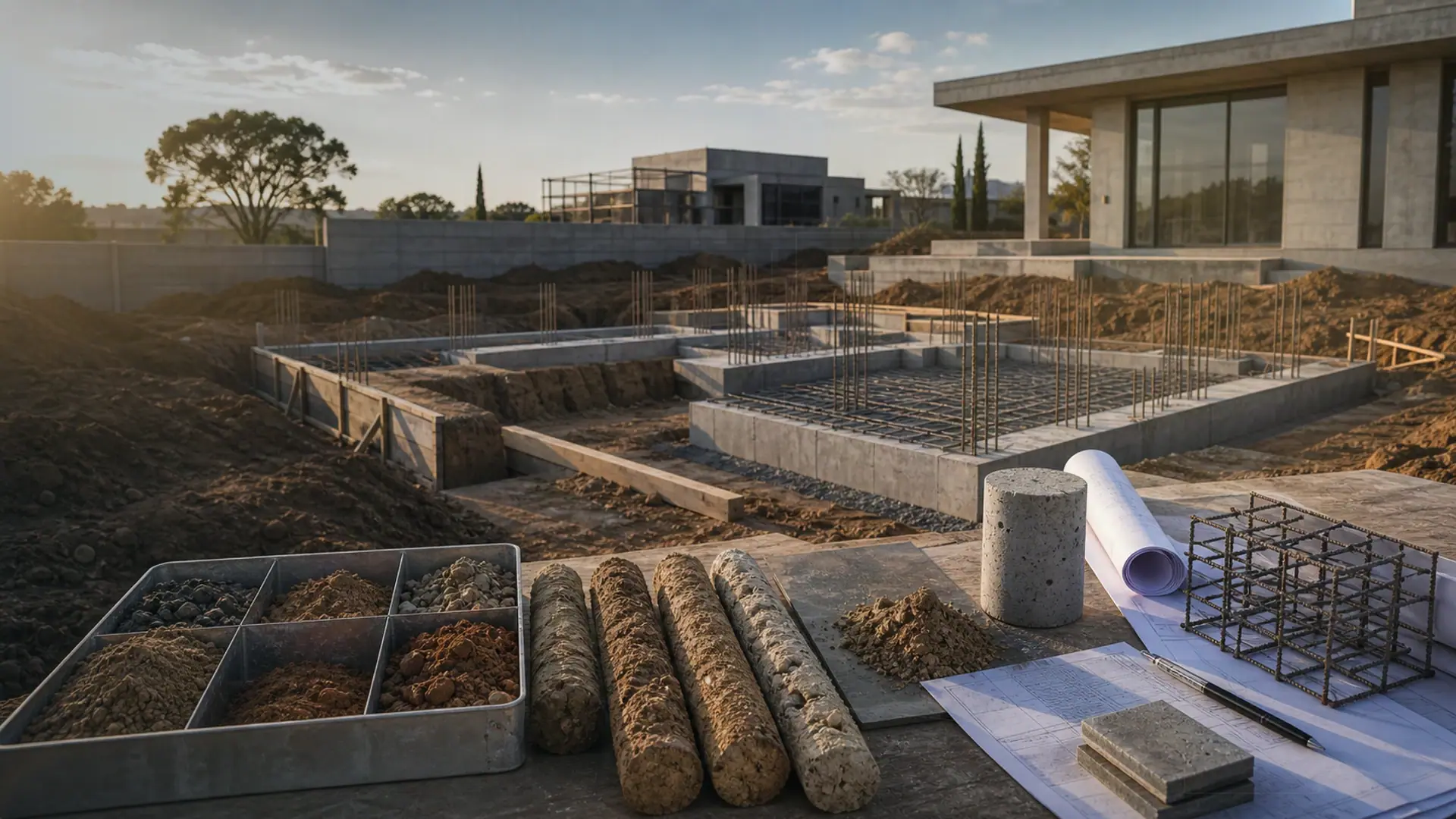
Plumbing Rough-In Cost Guide
Pipe routes, room count, drainage, slab-stage access, and service changes before finishes
Quick answer
Plumbing rough-in costs per point – water, drainage and geyser points – with compliance items and the room counts that multiply quotes.
Indicative ranges for planning — not a quotation. Final cost depends on scope, finish level, site access and area, and may exclude VAT and professional fees; confirm pricing in writing with your chosen builder.
Cost at a glance
| Finish / spec level | Indicative rate | Typical total |
|---|---|---|
| PEX (standard) | R1 800/points | R15 300–R20 700 |
| Copper | R2 600/points | R22 100–R29 900 |
Indicative totals for a 10 points project · indicative 2026 guidance, not a quotation. Use the calculator below for your exact size, or request tailored cost guidance.
Instant estimate
Plumbing rough-in calculator
Pipe routes and drainage by number of wet points.
12 min read
On this page
Have you ever wondered how pipe routes and site access can reshape the final price of a new build? That one question often decides whether a project stays on budget or blows past the quote. We open with the full phrase plumbing rough in costs South Africa to set the scene clearly for your planning.
Our platform, buildingpricessouthafrica.co.za, gives straightforward pricing guidance so you can compare quotes and plan your installation with confidence. You will see how pricing, materials and job complexity affect the total figure.
We connect you with independent contractors who handle site visits, final quotes and the actual work. Use our tool to request up to three quote options, or up to five where available.
Expect clear guidance on drain layouts, slab-stage access and service changes. Learn typical plumber south africa rates, cost per hour, and what to confirm in writing before work starts.

Ready to compare estimates and save money on your project? Start with accurate quotes and realistic pricing to avoid surprises.
Understanding Plumbing Rough In Costs South Africa
Knowing typical hourly and call‑out fees removes guesswork from your quote process, and our pricing guidance lets you compare offers and plan a realistic budget — alongside the rest of all price guides for the wider job.
Key pricing markers:
- Standard hourly rates typically range from R300 to R750 per hour.
- Call‑out fees generally fall between R450 and R650.
- Emergency work usually attracts higher per hour charges than routine maintenance.
We help you factor in job complexity, location and required services. Many plumbers set prices by task difficulty, so the final price shifts with site access and installation scope.
Use our platform to request quotes and compare local plumbers across south africa. You will see how leak detection, drain cleaning and repairs affect the total price. This lets you budget for labour, call‑outs and any specialist work without surprises.
Tip: Always confirm the cost per hour and what the call‑out covers before you agree to a job.

The Fundamentals of the Rough-In Phase
Before concrete goes down, all supply and waste lines must be placed, secured and pressure‑tested — a stage that determines long‑term performance and future maintenance, which is exactly what the plumbing rough-in stage explained covers.
Defining the Scope
The pre‑slab phase is where every pipe route is set for the whole home.
Our platform explains the scope of work so you know what to expect for materials and labour. Proper installation reduces the chance of a future leak and protects the entire water system.
The Importance of Slab‑Stage Access
Slab‑stage access is non‑negotiable. Under‑slab drainage must be completed before the pour. Missing this step creates major delays and higher cost for repairs.
- The plumber must secure and pressure‑test all lines prior to inspection.
- Complex layouts raise the price of materials and installation time.
- Coordinate with your contractor to meet local standards across south africa.
- Our pricing guidance highlights how labour per hour and material choice affect final figures.

Tip: Choose a plumber experienced with slab‑stage work to avoid costly rework later.
Key Factors Influencing Your Total Investment
Total project pricing depends on more than hourly rates — location, materials and access matter too, and so does what a quote leaves out, since exclusions are where budgets quietly blow.
Our pricing guidance shows three core drivers: job complexity, material quality and plumber experience.
Location matters. Different areas across south africa attract different per hour figures and travel fees. This shifts the final price quickly.
Emergency work and after‑hours service often add a premium. Specialised tasks such as leak detection or repairs also raise the amount you pay.
- Job complexity and installation scope increase labour time and overall pricing.
- Higher‑grade materials reduce long‑term maintenance but raise upfront price.
- Experienced plumbers tend to charge more, yet offer fewer callbacks and better quality.
We connect you with contractors who provide detailed breakdowns — labour, materials, travel and any emergency surcharges.
“Ask about plumber experience and written inclusions before you accept a quote.”
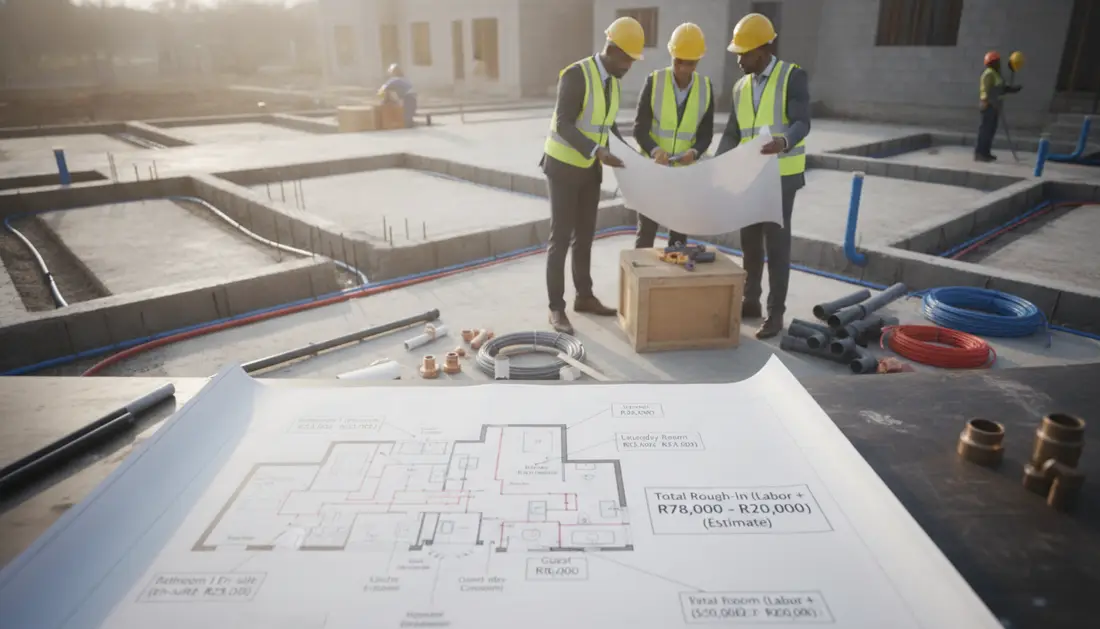
Navigating Per-Point Pricing Norms
Counting sink, shower and toilet points reveals the real drivers of a job price. Per-point pricing is a common method that breaks an installation into clear, comparable units.
Our pricing guidance explains how bathroom and kitchen multipliers increase the overall quote. Each additional fixture raises labour time and materials, and the total reflects those added points.
Calculating the Bathroom and Kitchen Multiplier
Key points to watch:
- Per-point pricing is widely used by plumbers across south africa to estimate installation and service fees.
- Each sink, toilet or shower point acts as a multiplier for the total price because it adds complexity to the work.
- Cost per point varies by location, required materials and any access or pipe‑rerouting challenges.
Emergency work or specialised drain cleaning may carry different rates than standard installation points. We connect you with independent contractors who price transparently so you can compare and budget with confidence.

Technical Specifications and Material Choices
Small specification shifts can change your final quote significantly: copper versus PEX alters material cost and labour time, while geyser placement and PRV compliance add technical requirements. Get the geyser installation rules and compliance right, or a failed inspection costs you twice.
Comparing pipe material deltas
Our pricing guidance shows copper costs more upfront but suits high‑temperature runs and long‑term durability, while PEX is cheaper and faster to install, lowering labour time. The full copper vs pex piping comparison weighs both for your home.
- Higher‑grade materials reduce future leak repairs and maintenance.
- Material choice influences plumber experience required and final price.
Geyser placement and PRV compliance
Geyser installation ranges from R6,500 to R19,500 depending on access, roof or plantroom siting, and additional safety fittings. PRV compliance is mandatory for all water‑heating systems and affects both the permit process and the final quotation.
“Confirm PRV installation and any additional compliance costs before you accept a quote.”
| Specification | Copper | PEX |
|---|---|---|
| Material price | Higher | Lower |
| Installation speed | Slower | Faster |
| Best use | High temp runs, longevity | Flexible routing, cost‑sensitive jobs |
| Effect on quote | Raises material and labour figures | Reduces material and labour figures |
Our platform connects you with qualified plumbers who explain the material delta, cost per hour, and compliance items so you can decide with confidence.
Operational Standards and Compliance
Strict testing and local approvals protect your investment and reduce future repair bills.
All lines must be pressure‑tested and documented before handover. This is a mandatory requirement for any plumbing work on a south african property and it affects the final price and timeline.
Our pricing guidance stresses that municipal connection fees are usually excluded from standard quotes. Budget these fees separately when you review a price.
We connect you with qualified plumbers who ensure toilet connections, drain systems and water installations meet local compliance.
- Mandatory pressure testing of all lines.
- Municipal connection fees excluded from most quotes.
- Compliance raises per hour pricing where complexity or certifications are required.
Whether you need emergency repairs or routine maintenance, choose contractors who prioritise operational excellence. Confirm qualifications and written assurances before work begins to avoid costly future leaks and system failures.
Managing Quotes and Contractor Connections
Requesting multiple estimates is the surest way to spot outlier prices and hidden exclusions.
Use our platform to request up to three quotes from independent contractors. We supply clear pricing guidance so you can compare itemised estimates for labour, materials and installation time.
Utilising Our Platform for Accurate Estimates
buildingpricessouthafrica.co.za connects you with local professionals who provide detailed quotes, including per hour rates and any emergency premiums.
Compare plumbers by their breakdowns, not just the final price. That helps you spot missing items or lowball offers.
Confirming Inclusions and Exclusions
Always ask for written inclusions and exclusions. That protects you from surprise charges for fittings, travel or municipal fees.
Tip: Check who supplies materials and whether approvals are covered in the quote.
Establishing Written Warranties
Insist on written warranties for workmanship and parts. A clear warranty reduces dispute risk and helps you save money over time.
- Request up to 3 quotes to compare pricing and scope.
- Confirm per hour rates and material responsibilities.
- Obtain a written warranty and completion timeline.
| Item | What to check | Why it matters |
|---|---|---|
| Scope | Itemised tasks and exclusions | Prevents surprise charges |
| Pricing | Per hour, materials, call‑outs | Allows true comparison |
| Warranty | Duration and coverage | Protects your investment |
“Get detailed, written estimates and a warranty before work starts.”
Securing Value for Your Plumbing Installation
Compare up to three detailed quotes to protect your budget and the finished quality of the work.
, Use buildingpricessouthafrica.co.za to request independent quotes and view our pricing guidance. This helps you judge true cost, not just the headline price per hour.
Request clear itemised quotes that list labour, materials and maintenance obligations. Remember: the lowest per hour rate can lead to higher long‑term costs if work or quality suffers.
Our platform connects you with pros who offer transparent pricing for plumbing services and emergency calls. Review each quote and choose the option that helps you save money while securing quality installation in south africa. It reads well alongside electrical installation price guide.
FAQ
What does a plumbing rough-in include for new builds or renovations?
The rough-in covers pipe routes for water supply and drainage, position of soil and waste stacks, hot-water runs to geysers and kitchens, sanitary fixture stub-outs, and any service changes below slab or in stud walls. It does not include fixture installation, finishes, or tiling. Confirm whether excavation, slab cutting or reinstatement is included in the written quote.
How do room count and fixture points affect the total price?
More rooms and more sanitary points increase labour and material needs. Electric geysers, additional bathrooms, kitchens and external taps each add a per-point charge. Contractors usually apply a bathroom/kitchen multiplier where complex rooms cost more than a single point. Ask for a detailed per-point breakdown so you can compare quotes fairly.
Why is slab-stage access important and how does it influence pricing?
Working at slab stage is faster and cheaper because pipes are installed before concrete finishes. Retrofitting under a finished slab requires cutting, reinstatement and extra labour, which raises the price. If slab access is limited or requires specialist excavation, expect higher rates and longer timelines.
What are common regional price variations across South Africa?
Labour and material prices differ by city and area. Major metros often have higher hourly rates and tighter availability, while outlying towns may charge travel or call-out fees. Also check for differences in municipal approval costs and water meter or reticulation requirements in your area. This pairs naturally with budgeting for plastering per square metre.
How do material choices affect the overall investment?
Pipe material (PVC, uPVC, copper, PEX) and fittings drive material cost differences. Copper or specialised corrosion-resistant pipework costs more but may suit certain installations. Fixtures, valves, PRVs and geyser specifications also shift the price. Always request material brand and grade on the quote.
What compliance checks and certifications should I expect?
Trades must follow SANS, local bylaws and water-safety rules including PRV placement for geysers and correct backflow prevention. Your contractor should supply compliance documentation, installation certificates and, where needed, municipal sign-off. Confirm who arranges inspections and pays associated fees.
How do plumbers usually price a rough-in job — per hour or per point?
Contractors commonly use a hybrid: a per-point rate for standard taps, wastes and WC connections plus hourly or daily rates for non-standard work, excavations or site supervision. Per-point pricing helps estimate base cost; expect additional charges for complexity, access or emergency work. This pairs naturally with budgeting for bricklaying per thousand.
What should I check in written quotes to avoid surprises?
Ensure the quote lists scope, per-point counts, labour hours, materials with brands, exclusions (fixture supply, tiling, painting), slab reinstatement, permit fees, and a clear warranty period. Check payment milestones and whether trenching, pump hire or traffic management are included.
Do I need a written warranty and what is reasonable?
Yes. A written warranty covering workmanship for at least 12 months is standard; materials may carry manufacturer warranties. The contractor should state response times for defects, exclusion clauses (e.g. third-party damage), and whether corrective works are free within the warranty period.
How can I save money without compromising quality?
Plan early so work occurs at slab stage, consolidate fixtures into fewer stacks to reduce pipe runs, choose cost-effective but proven materials, and get up to three competitive quotes. Avoid mid-project scope changes and ensure good site access to reduce labour time.
What additional services should I consider when budgeting (e.g. leak detection or emergency call-outs)?
Factor in leak detection, pressure testing, thermal insulation for hot-water runs, PRV installation, and a contingency for emergency repairs. If you want emergency response, confirm call-out fees and hourly emergency rates in writing.
How does contractor experience influence pricing and quality?
Experienced contractors may charge higher rates but often deliver more accurate scope, faster installation and fewer defects. Check references, previous project photos and whether they work with certified plumbers. Balancing cost with proven expertise usually gives better long-term value.
Can you explain the bathroom and kitchen multiplier mentioned on quotes?
The multiplier accounts for added complexity in rooms with multiple fixtures, hot-water runs and drainage traps. A kitchen or ensuite will attract a higher per-point rate than a simple basin point. Request the multiplier formula and a line-item calculation so you can compare quotes.
What should I know about geyser placement and PRV compliance?
Geyser location affects pipe lengths, insulation needs and pressure-relief valve (PRV) routing. PRVs must meet local standards and be vented safely. Incorrect placement or non-compliant PRVs can lead to fines and unsafe installations — ensure the quote specifies PRV type and discharge routing.
How do I use the platform to get accurate estimates and contractor matches?
Provide clear scope, floor plans, fixture schedules and access details when requesting quotes. We match your brief to independent contractors who issue up to three quotes, or up to five where available. Independent contractors perform site visits for final pricing and handle timelines, warranties and approvals. For the full set of cost guides, see our building price guides.
What common exclusions should I watch for on quotes?
Typical exclusions include fixture supply, tiling and painting, slab cutting and reinstatement, municipal fees, traffic management, and landscaping repairs. Also check whether the quote excludes asbestos removal or dealing with unforeseen structural issues.
Read & compare builder quotes with confidence
Before you weigh up prices, get fluent in what a building quote actually contains — inclusions, exclusions, provisional sums and the red flags that change the real cost.
- How to Read a Builder Quote
- Provisional Sums in Building Quotes
- Prime Cost Items in Building Quotes
- Building Quote Red Flags
- How to Avoid an Underquoted Building Project
- Questions to Ask Before Hiring a Builder
- Building Snag List Before Final Payment
- How to Compare Building Quotes Properly
- South African Building Terms Glossary
- Building Cost Inflation in South Africa
- Builder's Guarantees in South Africa
- Builder Payment Schedules and Deposits
- Building Contract Essentials
- When a Building Project Goes Wrong
Ready to compare?