
Gqeberha Building Cost Guide
Metro access, coastal exposure, supplier chains, walling, slabs, and family-home construction
Quick answer
Gqeberha (Port Elizabeth) building prices – wind-proof roofing specs, salt air and stable local supply for walls, slabs and family homes.
17 min read
On this page
Curious how much it really costs to build a house on the coast in 2026? If you are planning a new home in Gqeberha, this short guide answers the key cost questions so you can plan with confidence.
Our platform at buildingpricessouthafrica.co.za offers clear pricing guidance and a simple model to help you compare options.

We show typical figures: small economic homes start at about R9,500 per square metre, while higher-end houses can exceed R30,000 per square metre.
Use our service to request up to three quotes from independent contractors. Our role is to help you compare offers and make an informed choice, not to manage or carry out the work.
This guide explains cost drivers, how quotes are formed, and what to confirm in writing so your budget matches reality.
Understanding Building Prices Gqeberha and Coastal Market Dynamics
Our pricing guidance uses local data to show how coastal demand, materials and labour affect cost; the Eastern Cape estimate for 2026 sits at R12,300 per square metre, in line with broader building costs in the Eastern Cape.
Note the name: Port Elizabeth is still a common search term, but the city is now known as Gqeberha. We include both names to make sure your search finds relevant construction information.
The market here often makes it cheaper to buy an existing home than to build one. Expect a 20–30% premium when you decide to build rather than purchase.

- Regional supply and coastal exposure drive material and labour costs.
- Our service connects you with independent contractors who understand local conditions.
- Compare quotes to control overall costs and avoid common pitfalls.
| Factor | Impact on Cost | What to check |
|---|---|---|
| Materials (coastal grade) | Moderate to high | Confirm corrosion protection and warranties |
| Labour & demand | High in peak seasons | Ask contractors for lead times and rates |
| Site access & plans | Variable | Check site fees and foundation needs in quotes |
| Professional fees | Low to moderate | Confirm scope with architects and engineers |
The Reality of Building in the Windy City
Strong winds and salt air force material choices that affect your total project cost and long-term quality.
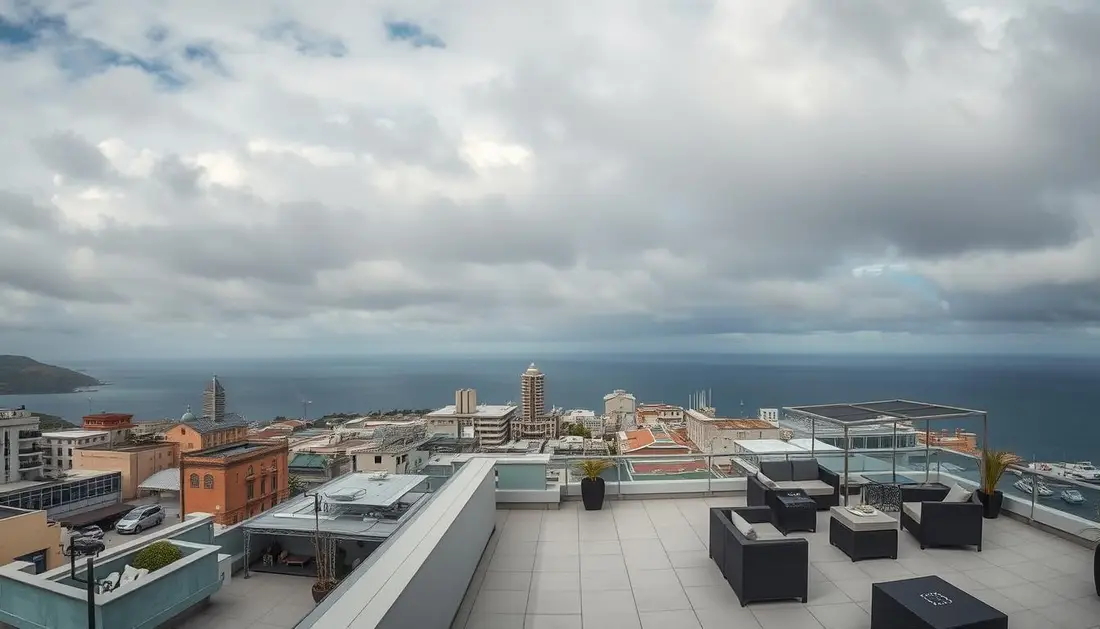
Roofs near the sea need thicker roof sheeting and robust fixings to resist uplift and wind-driven water. Thicker roof sheets add to initial costs but cut maintenance years later.
Roof sheeting and fixings
Use corrosion-resistant screws, sealed flashings and higher-gauge sheeting. Confirm these specs in writing with your contractor or service.
Salt air and corrosion protection
Salt speeds metal failure; protective coatings and stainless fixings extend life. A concrete foundation for a 100m (16m3) plot starts from R23,000, so factor this into early estimates.
- Wind-driven rain seals are essential to protect water-sensitive finishes.
- Prepare your site to reduce uplift and water ingress risks.
- Work with contractors who specify materials for coastal South Africa and can justify quality choices.
| Item | Typical Requirement | Why it matters |
|---|---|---|
| Roof sheeting | Higher gauge, sealed overlaps | Resists uplift and reduces leaks |
| Fixings | Stainless or coated screws | Prevents corrosion and failure |
| Foundation | Concrete from R23,000 (100m, 16m3) | Stable base against erosion and water |
Analysing Construction Costs per Square Metre
A clear cost-per-metre figure helps you translate a floor plan into expected total spend.
Analysing construction costs per square metre is the most effective way to estimate your budget for a new home in South Africa. For 2026, small economic houses start from about R9,500 per square metre, while higher-end homes can exceed R30,000 per square metre.
Size and finish quality drive the final figure. A compact layout with basic finishes reduces the cost per sqm. Larger or custom designs increase material, labour and specialist work.

- Our platform gives guidance so you can see how total cost changes with sqm and spec.
- We connect you with independent contractors who provide detailed estimates for your specific build.
- Discuss inclusions and exclusions in writing to avoid surprises during the project.
| Example | Typical cost per sqm | When to expect |
|---|---|---|
| Small economic house | R9,500 | Basic finishes, compact size |
| Average family home | R12,300 | Mid-range finishes and site work |
| High-end property | R20,000+ | Custom finishes and specialist systems |
Use cost per square metre as your planning tool. It links size, spec and price so you can compare quotes and choose the right service for your property and budget.
Comparing New Builds Against Established Property Renovations
Deciding whether to build a new home or renovate an older house is a financial and practical choice. A new home often adds 20–30% to the total cost compared with buying and upgrading an existing property.
Renovating Walmer and Summerstrand stock can save on transfer duties and reduce upfront fees. It also lets you keep the character of the area while upgrading to modern standards.

Renovating Walmer and Summerstrand stock
Renovation costs depend on structural repairs, updated finishes and how much modernisation you need. In some cases renovating per square can be far cheaper than a full new build.
- Compare the expected costs and the lifespan improvements you will get from quality materials.
- Our service connects you with contractors who have years of experience working on older property in the area.
- Get written scopes and multiple quotes so you can compare construction quality and total project costs.
Bottom line: If you want charm and lower immediate outlay, renovating in Walmer or Summerstrand can be the smarter choice. If you want a bespoke layout and new systems, expect to pay the premium for a new home.
Essential Factors Influencing Your Total Project Budget
How you reach and prepare the site shapes the early budget for any new home. Site access, terrain and soil type drive foundation design, transport needs and temporary works that add to your cost per square metre. For indicative ranges, see eastern cape building cost per square metre.
Site access and terrain
Restricted or steep sites need more plant and labour. That raises labour costs and extends the schedule.
Good access reduces crane and haulage time and keeps the price and timeline predictable.
Soil conditions and foundations
Soil tests tell you if standard footings will do or if piled foundations are required.
Poor subsoil often doubles foundation scope and adds to total building costs. Factor foundation work into your early estimate and discuss options with an architect or engineer.
Labour and regional demand
Labour typically accounts for 25–30% of total construction costs in south africa. Seasonal demand in a local market can push that share higher.
Plan a contingency of 10–15% of your budget to cover delays, scope changes or market shifts.
- Professional fees (architect, engineer) are essential and should be in your brief.
- Material quality, roof and water systems affect long‑term costs and quality.
- Request multiple quotes through our service so you can compare estimates and confirm inclusions.
| Factor | Typical impact | What to check |
|---|---|---|
| Site access & terrain | Low to high | Plant needs, haulage and temporary works |
| Soil & foundation | Moderate to high | Soil report, footing type, pile requirement |
| Labour & demand | High (25–30%) | Lead times, labour costs and regional rates |
| Contingency | 10–15% | Allow for scope changes and unforeseen work |
Navigating Local Material Supply and Merchant Stability
Local merchant stock levels and material price lists are practical tools when you plan material costs. Building-material suppliers can give early estimates that help you draft a budget.
A solid local merchant base in Port Elizabeth provides a stable supply of essential materials. That stability keeps your construction schedule on track and reduces unexpected increases in the final price of your home.
Our service connects you with independent contractors who work with these merchants. Over the years reliable supply chains have proved key to completing residential property projects on time.
- Verify material availability early to avoid delays and extra costs.
- Ask contractors to show quotes that reference merchant calculators or current stock.
- Prefer suppliers with proven delivery records rather than one‑off discounts.
- Plan for small lead‑time buffers to manage seasonal demand, especially outside cape town.
| Supplier | Tool / Feature | Why it helps |
|---|---|---|
| Building-material retailers | Material price lists | Quick budget checks for common items |
| Brick suppliers | Stock look‑up | Confirms immediate availability |
| Trade merchants | Trade pricing | Better bulk cost visibility |
| Cement suppliers | Cement and aggregate pricing | Stabilises concrete cost forecasts |
Professional Fees and Specialist Consultations
Specialist consultations can save money later by preventing costly rework. In south africa, professional fees are a required part of any formal construction project and must be included in your early estimate.
Typical fee guide: architect fees are commonly up to 8% of the construction cost, while a structural engineer often charges about 2%.
Engaging a qualified architect ensures your home design meets local regulations and structural standards for your property. Good plans reduce change orders and help control overall costs.
Who you will need
- Architect — design, plans and council submissions.
- Structural engineer — calculations and site-specific details.
- Specialist consultants — services such as geotech, electrical or services design where needed.
Our service connects you with independent professionals who prepare the necessary plans and consultations to move your project forward. Confirm all fees and service inclusions in writing before work starts.
“Confirming scopes early protects your budget and your timeline.”
Managing Hidden Costs and Contingency Planning
A clear contingency plan keeps your project on track when surprises occur. In south africa, allow a 10–15% contingency of total construction cost. That buffer covers unexpected site work, scope changes and delay-related expenses.
Hidden costs often stem from poor soil, extra foundation work or complex roof and water drainage details. Labour for bathrooms typically runs between R9,000 and R13,000, so itemise these trades in your plans.
Our platform helps you get accurate estimates for materials, labour and professional fees. Ask contractors for written scopes and confirm allowances for finishes and design changes.
- Set contingency at 10–15% and track spend against it.
- Clarify who pays for scope changes before work starts.
- Use detailed plans to reduce surprises linked to land or site access.
| Risk | Typical extra cost | What to confirm in writing |
|---|---|---|
| Poor soil / foundation | Moderate to high | Soil report and foundation allowance |
| Roof & water drainage | Low to moderate | Material specs and detail drawings |
| Trades (bathrooms) | R9,000–R13,000 (labour) | Labour rates and inclusions |
“Review all project documentation carefully to keep your budget realistic.”
Securing Finance for Your Construction Project
Lenders manage risk by paying out in phases as your project reaches defined milestones. Knowing the loan process helps you plan cashflow, control costs and keep work moving.
Loan stages
Banks typically release funds in staged draws linked to construction phases: foundations, walls, roof and practical completion. Each draw requires an inspection or progress claim from your contractor.
Prepare plans and detailed quotes so your lender can confirm scope, size and cost before approval. Our service helps you gather NHBRC‑registered contractor quotes for this purpose.
Credit score requirements
Most lenders expect a good credit score to approve a loan. Aim for a score above 670 to improve your chances and secure better fees and terms.
We recommend consulting a financial adviser to match loan options to your budget, project timeline and long‑term costs.
| Requirement | What lender checks | Why it matters |
|---|---|---|
| Plans & quotes | Scope, sqm, fees | Confirms project cost and draw schedule |
| Contractor status | NHBRC registration, references | Protects quality and lender risk |
| Credit score | Score >670 preferred | Improves approval odds and rates |
“Get written quotes and approved plans ready before you apply to avoid delays.”
The Importance of Written Agreements and Warranties
Clear, signed agreements give both you and your contractor a straightforward road‑map for the work ahead. A good contract lists the contractor and homeowner by name, the full description of the work, the agreed cost and a firm completion date. This reduces confusion and helps manage expectations for your house project.
In South Africa, warranties matter. The NHBRC provides cover for major structural defects on new homes, so always confirm your contractor’s registration. Check that plans and warranty documents are part of the contract before any payments are made.
What to confirm in writing:
- The full scope of works and any exclusions.
- Total cost, payment schedule and contingency allowances.
- Completion date and remedies for delays.
- Warranty terms and proof of NHBRC registration.
Our service helps you find independent professionals who supply clear contracts and protect your property interests. By documenting every term you lower the risk of disputes and make sure the final result meets your expectations.
“Always confirm the contract includes names, scope, cost and a completion date.”
Connecting with Reliable Local Contractors
A clear shortlist of independent professionals helps you compare quotes and confirm scope quickly.
Our platform connects you with verified pros in Port Elizabeth for plumbing, waterproofing and general construction. Many listed contractors have over 20 years of local experience and a proven track record on house and home projects.
Use our service to request up to three independent quotes. By comparing offers you can match expertise to your plans, budget and the specific needs of your property.
- Reliable pros for roof work, water leak detection and structural tasks.
- Transparent comparison so you can request quotes and weigh scope side by side.
- Direct contact with contractors who understand coastal area conditions and sqm planning.
| Trade | Feature | Why it helps |
|---|---|---|
| Plumbing | Verified pros | Faster diagnosis of water issues and clear quotes |
| Waterproofing | Specialist skills | Protects long‑term value of your property |
| General construction | 20+ years experience | Reliable delivery and practical advice on plans |
“Comparing written quotes from local pros keeps your project on schedule and within budget.”
Sustainable Building Practices for Coastal Homes
Prioritising energy efficiency on a coastal property secures savings for many years. In south africa, green homes typically add about 5% to upfront cost but cut ongoing costs through lower energy use.
Energy efficiency and long-term savings
Choose quality insulation, energy‑efficient windows and passive orientation in your plans. These factors reduce running costs and improve comfort in a seaside house.
- Materials: Bamboo and stone are sustainable alternatives that also save on maintenance and extend product life.
- Roof insulation and sealed penetrations cut heat gain and lower electricity use for years.
- Service — our platform connects you with contractors experienced in eco designs and coastal construction.
- Design for passive cooling and consider solar-ready roofs sized by sqm to match your energy goals.
Over time, a modest premium at the build stage becomes a net saving. Discuss sustainable choices with your contractor and record them in the contract so the quality and savings are clear.
“Sensible sustainable design protects value, comfort and the environment.”
Taking the First Steps Toward Your Custom Build
Begin by checking your budget against a realistic cost per square and confirm the likely cost per square metre for your desired size and finishes. For indicative ranges, see per-square-metre build rates.
Visit buildingpricessouthafrica.co.za to use our platform and access our pricing guidance. You can get an early estimate that covers land, materials, labour costs and professional fees.
Get pre‑approved with a bond originator so you know what you can afford. Request quotes through our service to connect with independent pros who refine your plans and estimate final building costs.
Talk to an architect to lock in a plan and finishes. Start now and use our guide to keep your budget realistic as your project takes shape.
FAQ
What is the typical cost per square metre to construct a house in Gqeberha (PE)?
Costs in the coastal metro vary by scope and quality. Expect a basic new home from around R9,500–R14,000 per sqm, a mid-range finish R14,000–R20,000 per sqm, and higher-end homes R20,000+ per sqm. These ranges reflect labour, materials, finishes and local demand; get site-specific quotes for an accurate estimate.
How does coastal exposure affect long-term material and maintenance costs?
Salt-laden air causes faster corrosion to metal sheeting, fixings and external fittings. Use stainless steel fasteners, galvanised or coated roofing, and corrosion-resistant paint systems. Initial costs rise, but lifecycle maintenance drops; factor 10–20% higher on external specialist materials and warranties.
Which site factors in Gqeberha most influence the total project budget?
Site access, slope and soil type have big effects. Poor access increases labour time and plant hire. Sandy or rocky soils change foundation designs and costs. Also consider municipal service connections, site clearance and retaining structures when budgeting.
How do labour rates and regional demand impact quotes locally?
Labour shortages or busy seasons push rates up and extend timelines. Trades such as plumbers, electricians and roofers may add premium charges. Confirm lead times and include labour escalation in your contingency to avoid surprise cost increases.
What should I check in written quotes and contracts before committing?
Confirm scope, deliverables, materials and brand names, fixed versus provisional sums, payment schedule, defects liability period and any exclusions. Ask for a clear start and completion date, dispute resolution method and proof of contractor insurance and registration.
Are professional fees for architects and engineers included in standard estimates?
Not always. Architects, structural engineers, and specialised consultants usually charge separately—either a percentage of contract value or fixed fees. Clarify fee structure early and budget typically 6–12% for design and approvals on a custom project.
How should I allow for contingency and hidden costs?
Set aside 8–15% contingency for unforeseen site issues, price escalation and minor design changes. Include costs for municipal plan approvals, connection fees for water and electricity, temporary services and waste removal when calculating total budget.
What financing options exist for owners starting a new house or renovation in PE?
Banks offer building loans that release funds in stages tied to construction milestones. Make sure you understand drawdown conditions, inspection requirements and interest capitalisation. Check your credit score and secure pre-approval before tendering to contractors.
How does renovating older suburbs like Walmer or Summerstrand compare to new builds on vacant land?
Renovations often reveal hidden defects—old wiring, damp, or substandard foundations—that increase cost per sqm. However, you save on new services and siteworks. New builds give control over layout and efficiency but add earthworks, service connections and longer lead times.
What local supply chain issues should I watch when sourcing materials in the coastal metro?
Merchant stock shortages and lead times affect pricing and schedule. Confirm delivery windows for key items (roof sheeting, timber, windows) and consider alternative suppliers. Locked-in material allowances in quotes reduce risk of sudden price hikes.
Which finishes or specifications most affect the final cost per square metre?
Kitchens, bathrooms, floor finishes, and joinery drive cost variation. Premium tiles, stone countertops, custom cabinetry and high-spec fittings can double finishing costs compared with standard options. Decide early on finish level to keep the budget aligned.
How do approvals and municipal fees factor into the project timeline and budget?
Plan for municipal plan checks, building plan approvals and compliance certificates. Fees vary by municipality and by value of work. Allow extra weeks for approval and include application and inspection fees in your budget. More on how we compile this is in why location changes the price.
What warranty and post-handover protections should I request from a contractor?
Request a written workmanship warranty, details of any manufacturer warranties for materials, and a defects liability period. Make sure retention terms and final payment conditions are clear so you retain leverage to fix outstanding issues after completion.
Can sustainable choices reduce running costs for coastal homes?
Yes. Energy-efficient glazing, insulation, LED lighting, solar PV and water-saving fittings reduce long-term utility costs. Upfront costs rise, but owners often recoup investments through lower bills and improved resale value. Factor lifecycle savings into your decision. This pairs naturally with building costs in East London.
How do I get reliable local contractors and multiple quotes in Gqeberha?
Seek recommendations, check professional registrations and past project references. Use a quote platform or ask for up to 3 independent quotes, or up to 5 where available, to compare scope and pricing. Always arrange site visits so quotes reflect actual conditions. Costs for this are set out in what it costs to build a house.
Ready to compare?