
Waterproofing Costs in South Africa
Flat roofs, balconies and parapets priced per m² – torch-on, liquid and the prep that decides lifespan
Quick answer
Waterproofing prices in South Africa per m² – torch-on and liquid systems for flat roofs and balconies, with honest lifespan guidance.
Indicative ranges for planning — not a quotation. Final cost depends on scope, finish level, site access and area, and may exclude VAT and professional fees; confirm pricing in writing with your chosen builder.
Cost at a glance
| Finish / spec level | Indicative rate | Typical total |
|---|---|---|
| Liquid membrane | R280/m² | R9 856–R12 544 |
| Torch-on | R360/m² | R12 672–R16 128 |
| Fibreglass / premium | R520/m² | R18 304–R23 296 |
Indicative totals for a 40 m² project · indicative 2026 guidance, not a quotation. Use the calculator below for your exact size, or request tailored cost guidance.
Instant estimate
Waterproofing cost calculator
Flat roofs, balconies and parapets by area and system.
14 min read
On this page
Curious how much it will cost to protect every square metre of your roof? At buildingpricessouthafrica.co.za we track local market rates so you can plan with confidence.
Thousands of homeowners use our platform to compare service options and request quotes. The average labour cost commonly sits between R88 and R300 per square metre.
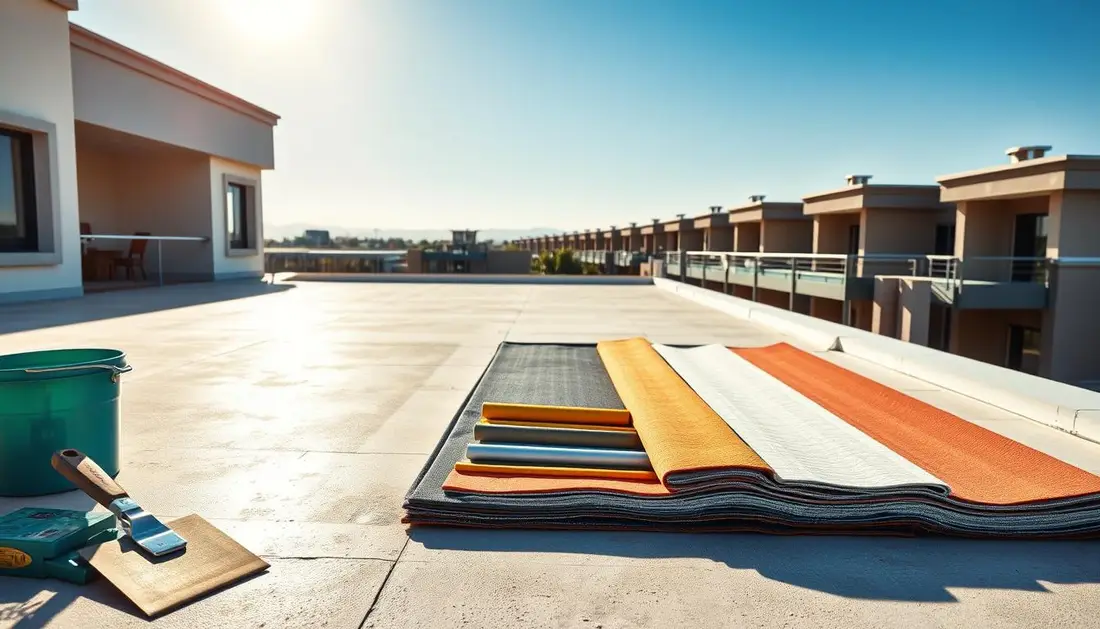
Understanding the final price per square needs a clear look at site access, surface preparation, materials and sealant choice. Our pricing guidance explains how damp proofing or a full installation will affect your estimate.
Use our platform to connect with independent contractors and get an accurate metre-by-metre breakdown. This helps you avoid underestimating labour, materials or unexpected extras when your home requires waterproofing.
Start with a realistic cost estimate and then request tailored quotes for your property. That way you protect every square metre with trustworthy local expertise.
Understanding Waterproofing Prices South Africa
A clear cost breakdown is the first step to protecting your roof correctly, and our pricing guidance sets out typical market figures so you know what to expect — figures you can line up against the rest of our price guides. It reads well alongside what roof repair costs.
Bitumen spray-on systems typically cost between R400 and R600 per square metre. Labour usually averages about R200 per square metre.

When your home requires waterproofing, consider the specific type of system, surface access and the choice of sealant. These items make the biggest difference to the final cost.
- Analyse whether minor repairs or a full replacement are needed to find the average cost waterproofing for your roof.
- A professional damp proofing service should give a clear breakdown per square so you see labour, materials and sealant costs.
- Compare options and metre rates to choose the best long-term solution for your property.
“We help you understand why some systems cost more and how to request a fair quote.”
Common Waterproofing Systems and Their Applications
Choose the right system for your roof and you cut long-term risk and maintenance — the options vary by durability, flexibility and where they perform best, which is exactly what the torch-on vs liquid waterproofing comparison sets out.
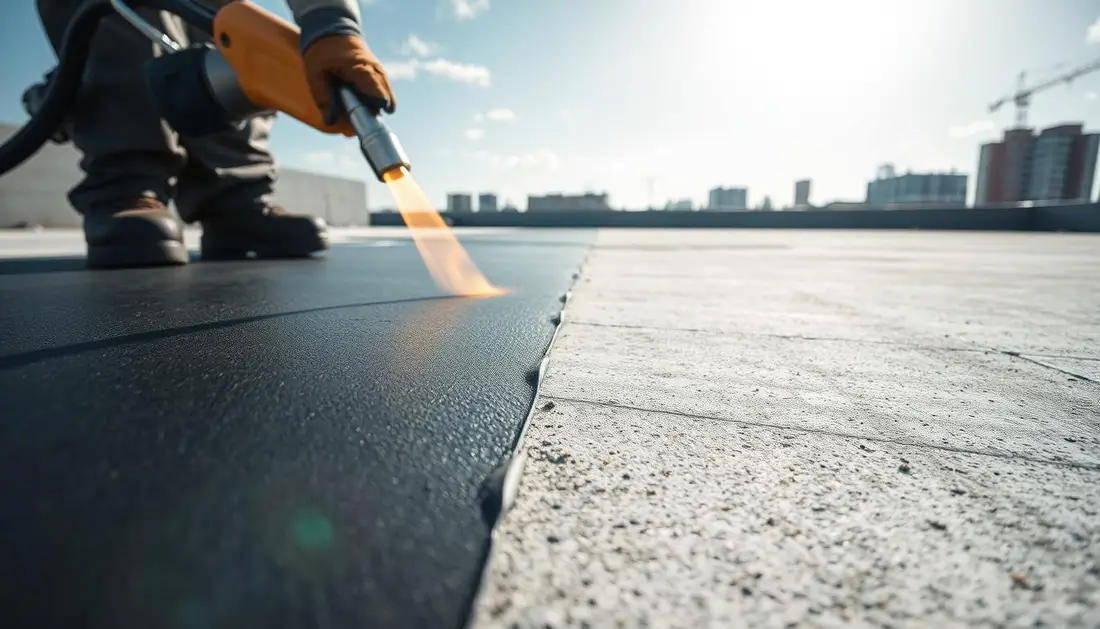
Torch-on bitumen membranes
Torch-on bitumen layers are heavy-duty. They typically cost between R300 and R500 per square metre and suit flat roofs well.
Advantages: proven lifespan, strong tear resistance and good UV tolerance.
Liquid and acrylic coatings
Liquid rubber and acrylic coatings create a seamless surface. They work well where the roof has many penetrations or complex details.
Use case: complex roof forms that traditional membranes struggle to follow.
Cementitious systems
Cementitious mixes are rigid and often chosen for damp proofing basements or retaining walls. They give a hard, water-resistant layer for your home.
- Installation of a quality membrane is a professional service that protects every metre of your roof.
- Correct surface preparation and the right sealant or specialised roof paint extend lifespan.
- When your roof requires waterproofing, our platform helps you match system type to design and climate.
“Understanding application and cost per square metre helps you evaluate contractor quotes with confidence.”
Analysing Cost Variations by Scope and Substrate
Costs shift markedly depending on whether you strip back old layers or apply an overlay to the existing surface.
Labour typically ranges from R88 to R300 per square metre and is the single biggest variable in any estimate. Surface preparation, such as removing old bitumen, adds time and labour.
Our pricing guidance shows that the condition of your roof dictates how much work is needed. Complex substrates need extra preparation to ensure the sealant performs long term. This pairs naturally with what bathroom renovation costs.
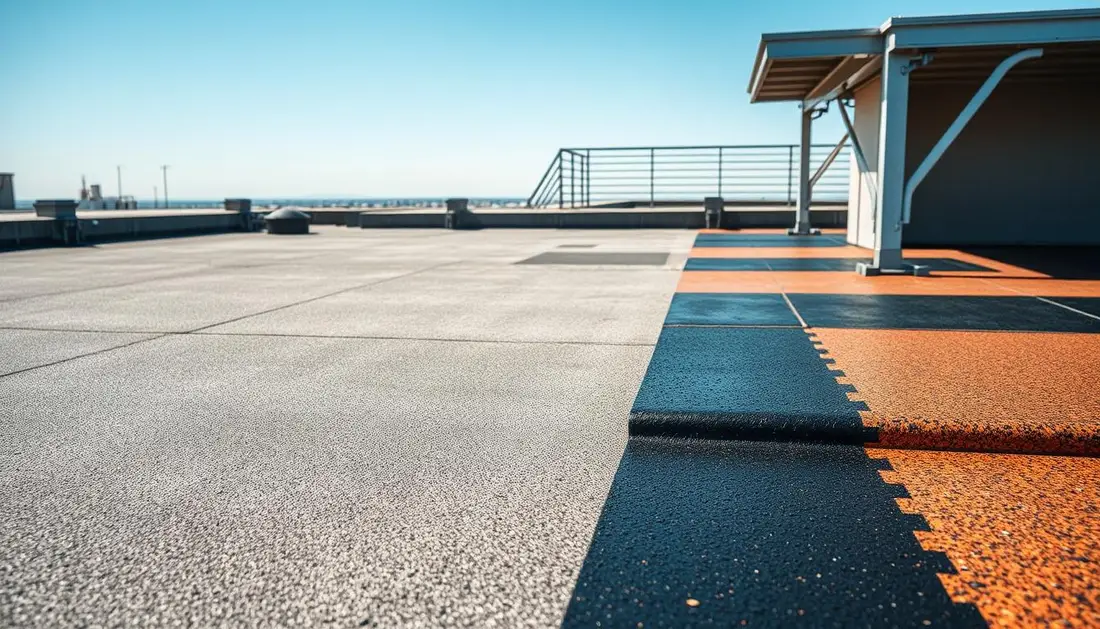
- The total area affects cost: larger projects may reduce labour per metre through economies of scale.
- Stripping old layers versus overlaying changes the scope and the final cost waterproofing for your home.
- Contractors will assess substrate type — concrete, metal or masonry — to choose the correct damp proofing method.
| Scope | Typical Labour Impact | Surface Work | Likely Cost Effect |
|---|---|---|---|
| Overlay | Low–Medium | Minimal cleaning, patch repairs | Lower immediate cost |
| Full strip and replace | High | Bitumen removal, deep cleaning, priming | Higher estimate, longer life |
| Local repairs | Low | Targeted patching and sealant | Cost-effective short-term fix |
“Proper substrate management is the foundation of a successful project.”
Our platform encourages you to confirm the scope in writing so the final estimate matches the true needs of your roof and avoids unexpected costs.
Why Surface Preparation Dictates Longevity
Surface preparation is the unsung factor that often decides whether a roof lasts or fails. Clean, dry and well-prepared substrate gives any membrane the best chance to perform.

The Importance of Detailing and Upstands
Detailing at upstands and parapets matters more than the brand of membrane. These points see the most movement and weather exposure.
If upstands and outlets are not finished correctly, even the best sealant will fail. Our platform flags this as a critical element of any credible service.
Managing Joints and Outlets
Failure to seal joints properly is the leading cause of premature waterproofing failure in residential properties.
- The longevity of your membrane depends on professional surface prep and correct joint treatment.
- Proper cleaning, priming or paint extends life and reduces future repair cost.
- When your home needs damp proofing, insist contractors detail every penetration.
| Issue | Impact on Life | Typical Cost Effect |
|---|---|---|
| Poor surface cleaning | Shorter membrane adhesion | Higher repair cost |
| Undetailed upstands | Early leaks at edges | Increased maintenance |
| Unsealed joints | Main cause of failure | Repeat patching |
“Investing in proper detailing now saves you from recurring costs later.”
Essential Factors Influencing Your Project Estimate
Project scope, from a small balcony to a full slab, drives the bulk of your final estimate. Our pricing guidance breaks down how each element adds to the total so you can compare quotes with confidence. For the full set of cost guides, see browse all our cost guides.
Site access and regional labour rates often change the cost more than the choice of sealant. For example, a 30–100 m² residential roof in Queenswood, Pretoria, had an estimate of R18,000. A 40 m² balcony in Kempton Park was also estimated at R18,000 for a complete job. A 30 m² flat slab in Broadacres, Bryanston, was quoted at R15,000 for re-installation.
The type of materials and the current surface condition determine how much preparation and bitumen work is needed. That, in turn, affects labour and the final estimate.
- Your project estimate is influenced by site access, material type and regional labour rates.
- Our pricing guidance shows how area and scope affect the per square metre figure.
- Finishes and roof complexity raise the total cost and the time required for installation.
| Factor | How it affects cost | Typical outcome |
|---|---|---|
| Scope / Area | Larger areas give economies of scale | Lower cost per square metre |
| Access & Site | Hard access increases labour time | Higher labour component |
| Surface condition | Requires cleaning, repairs or extra bitumen layers | Higher initial estimate |
| Finishes & Details | Complex detailing needs more time | Increased total cost |
Use our platform to request a detailed estimate that lists labour, materials and installation costs for your home. That way you get a realistic cost and can choose the right contractor for proper damp proofing and long-term protection.
Navigating Guarantee Norms and Maintenance Requirements
Guarantees and routine care determine whether an installation delivers long-term protection or short-term headaches.
Standard Warranty Expectations
Standard warranties for torch-on systems typically range from 8 to 10 years, depending on installation quality.
Most professional waterproofing providers tie their warranty to regular maintenance of the roof surface and drainage. That means clearing outlets, checking joints and repairing minor defects on a schedule.
When your home requires waterproofing, always confirm warranty terms in writing. Ask how the type of system affects the length of cover — some advanced membranes offer up to 20 years.
- Understand guarantee norms: our platform helps you compare what is and isn’t covered.
- Maintenance matters: most warranties require regular inspections and outlet clearing to stay valid.
- Confirm in writing: get the expected lifespan of the sealant and any exclusions on paper before work starts.
- Ask about service scope: who does scheduled checks and whether routine maintenance is included in the price.
“Proper maintenance is a small cost compared with the expense of premature failure.”
Our platform connects you with reputable contractors who are transparent about guarantee policies and the care required. By asking the right questions you protect your home and your investment.
How to Secure Reliable Quotes via Our Platform
Use our quote request process to connect with local professionals and get clear, comparative estimates for your project.
buildingpricessouthafrica.co.za lets you request up to three quotes so you can compare cost, scope and the proposed installation timeline.
Thousands of homeowners use our platform to find an independent contractor with the right experience for their roof type.
When your home requires waterproofing, ask each contractor to list materials, labour and any required approvals in writing.
- Our process matches you with independent professionals who provide a detailed estimate.
- Compare the proposed service, clarification of scope and the timeline before you accept a quote.
- Ask questions during site visits so the contractor understands the surface challenges and damp proofing needs.
| Feature | Benefit | Action |
|---|---|---|
| Up to 3 quotes | Compare offers fairly | Submit brief via the platform |
| Independent contractors | Reduce risk of poor work | Review profiles and past work |
| Detailed estimates | Clear scope and timelines | Require written scope and warranties |
“Start your quote request with us to secure a transparent, competitive estimate.”
Evaluating Contractor Credentials and Professionalism
Choosing the right contractor starts with checking their insurance, track record and local references. When your home requires waterproofing, these checks protect you from unexpected delays and added cost.
Ask for evidence of completed installation work in your area and confirm the contractor carries appropriate cover. A professional who documents past jobs shows they understand local conditions and roof detail.
Our platform highlights contractors who are punctual, communicative and clear during the quoting process. Professionalism at the site visit is a strong signal of quality workmanship.
- Verify credentials: insurance, references and trade association membership.
- Check scope: a written quote must list labour, materials, the type of system and expected cost.
- Prioritise experience: skilled labour and proven damp proofing work protect your home long term.
“A fair price for labour and materials suggests the contractor stands behind their work with a warranty.”
Final Steps for Protecting Your Property Investment
Finish your project by signing a clear, written agreement that lists inclusions, exclusions and payment terms. Confirm the warranty, inspection schedule and who is responsible for any follow-up work.
Before work begins, make sure your estimate is complete and that you have compared the available quotes via our platform. This helps you check scope, cost and the exact service on offer.
A quality sealant application is the final layer of your damp proofing and protects the roof and surface long term. Keep all invoices, permits and warranty documents for future maintenance or resale.
Our platform remains available for ongoing support and to help you find the right service if you need further work on your home.
FAQ
What does the headline “Waterproofing Costs in South Africa: Flat roofs, balconies and parapets priced per m²” cover?
This headline indicates we provide typical cost ranges and per square metre rates for common roof and surface types — flat roofs, balconies and parapets — so you can budget before requesting contractor quotes. Costs shown are estimates and depend on materials, labour, access and site-specific repairs. This pairs naturally with what roof replacement costs.
How do I interpret the section “Understanding Waterproofing Prices South Africa”?
That section explains how prices are built up: material cost, labour per m², primer and detail work, any preparatory repairs, and regional labour variations. It also lists typical units used for estimates (per square metre, per metre for upstands, per outlet) so you can compare like-for-like quotes.
What are the main systems in “Common Waterproofing Systems and Their Applications”?
The section covers three widely used options: torch-on bitumen membranes for heavy-duty roofs and decks; liquid and acrylic coatings for irregular surfaces and quick renewals; and cementitious systems for tanks, basements and repairs. Each entry explains typical uses and relative cost drivers.
When would I choose torch-on bitumen membranes?
Choose bitumen membranes for large, trafficked roofs and exposed decks where durability and puncture resistance matter. The system needs trained installers and often higher labour costs, but it gives a long service life when installed correctly with proper detailing.
Are liquid and acrylic coatings suitable for balconies and terraces?
Yes. Liquid and acrylic systems suit balconies, terraces and complex substrates because they form seamless coatings and follow contours. They work well over primed concrete or screed but may require regular maintenance and recoating depending on UV exposure and foot traffic.
What are cementitious systems best used for?
Cementitious systems are ideal for internal and external tanks, wet areas and repairing spalled concrete. They bond well to masonry and concrete substrates and are commonly used where structural compatibility with cement-based substrates is important.
What influences cost variations in “Analysing Cost Variations by Scope and Substrate”?
Major influencers are substrate type (concrete, screed, timber), condition of the surface, required repairs, slope correction, access and fall creation, and whether existing membranes must be removed. These factors change labour intensity and material quantities, affecting the final estimate.
Why does “Surface Preparation” matter so much?
Surface preparation dictates adhesion and longevity. Cleaning, profiling, crack repairs, and ensuring a sound substrate prevent premature failure. Poor preparation often leads to leaks that cost far more to fix than doing the prep correctly in the first place.
What are “detailing and upstands” and why are they important?
Detailing refers to how the membrane or coating is finished around edges, upstands, parapets and penetrations. Proper upstands and sealed junctions prevent water ingress at weak points. Good detailing is critical to system performance and warranty acceptance.
How should joints and outlets be managed?
Joints, expansion gaps and outlets require flexible seals, flashing and reliable mechanical fixings. Outlets must be recessed or fitted with appropriate trays to avoid pooling. Correct joint treatment reduces stress on the membrane and prolongs service life.
What are the “Essential Factors Influencing Your Project Estimate”?
Expect the estimate to reflect scope (area in m²), system type (membrane, liquid, cementitious), labour rates, site access, waste and disposal, scaffolding or edge protection, and any council approvals. Finishes and guarantees also affect price.
How do regional labour and access affect cost?
Labour rates vary by province and city; restricted access or working at height increases labour time and safety costs. If equipment, scaffolding or temporary roofs are needed, the estimate will rise accordingly.
What warranty norms should I expect under “Navigating Guarantee Norms and Maintenance Requirements”?
Standard warranties range from 1 to 10 years depending on system and installer. Manufacturers often back materials while contractors issue workmanship guarantees. Read both carefully — warranties usually require documented maintenance and correct installation to remain valid.
What maintenance is typically required to keep a system valid under warranty?
Routine checks for ponding, debris removal from outlets, resealing movement joints and replacing worn flashings are common requirements. Keep photographic or written records of inspections and any maintenance carried out.
How can I “Secure Reliable Quotes via Our Platform”?
Use our platform to request up to 3 independent quotes (up to 5 where available). Provide accurate area measurements, photos of the site, notes on problems, and specify desired system types to get comparable estimates from qualified contractors.
What should I include when requesting quotes to get accurate estimates?
Include measured area in m², height and access constraints, photos of existing conditions, any known leaks, and whether you want a specific system (bitumen membrane, liquid coating, cementitious). Ask contractors to itemise labour, materials, and any provisional repairs.
How do I evaluate contractor credentials in “Evaluating Contractor Credentials and Professionalism”?
Check supplier references, view prior project photos, confirm trade registration and insurance, ask for manufacturer installation certificates, and compare detailed written scopes. A lower quote may omit essential preparation or detailing.
Which documentation should a reputable contractor provide?
Request a written scope, itemised quote (per m² and for additional works), timeframes, warranty terms, and confirmation of material brands such as Sika, GCP Applied Technologies, or Tremco where relevant. Verify insurance and CIDB grading when applicable.
What are the “Final Steps for Protecting Your Property Investment”?
Before work starts, confirm the detailed written quote, agree on a start date, request proof of insurance and product datasheets, and ensure a maintenance and inspection plan is included. Keep all documentation and photographs for future warranty claims.
Read & compare builder quotes with confidence
Before you weigh up prices, get fluent in what a building quote actually contains — inclusions, exclusions, provisional sums and the red flags that change the real cost.
- How to Read a Builder Quote
- Provisional Sums in Building Quotes
- Prime Cost Items in Building Quotes
- Building Quote Red Flags
- How to Avoid an Underquoted Building Project
- Questions to Ask Before Hiring a Builder
- Building Snag List Before Final Payment
- How to Compare Building Quotes Properly
- South African Building Terms Glossary
- Building Cost Inflation in South Africa
- Builder's Guarantees in South Africa
- Builder Payment Schedules and Deposits
- Building Contract Essentials
- When a Building Project Goes Wrong
Ready to compare?