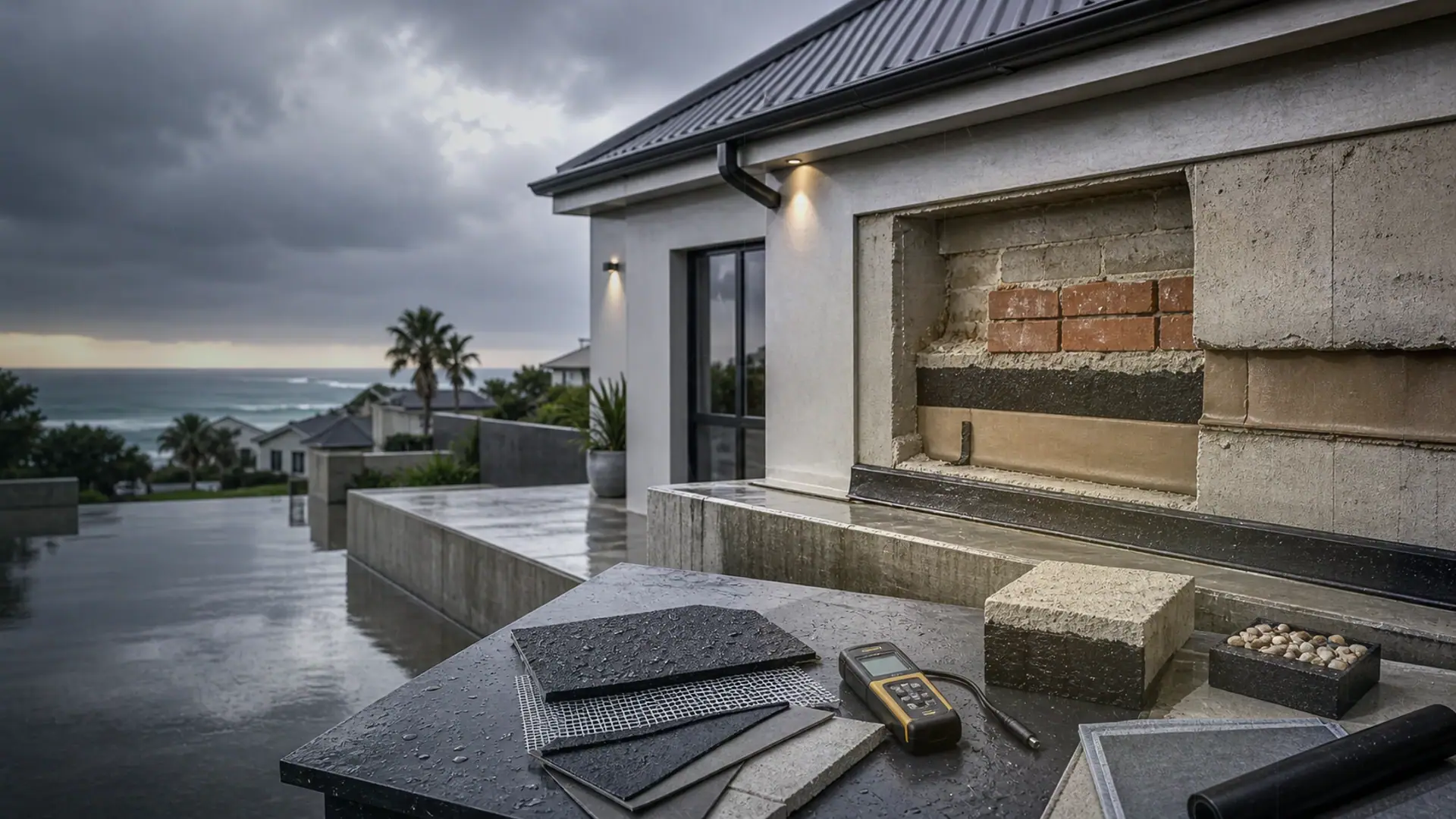
Tiling Cost Per Square Metre
Separate the tile, labour, adhesive, grout, trims, waterproofing, and surface prep
Quick answer
Tiling cost per square metre with labour, adhesive, trims and waterproofing separated – plus large-format and pattern-lay premiums.
Indicative ranges for planning — not a quotation. Final cost depends on scope, finish level, site access and area, and may exclude VAT and professional fees; confirm pricing in writing with your chosen builder.
Cost at a glance
| Finish / spec level | Indicative rate | Typical total |
|---|---|---|
| Budget ceramic | R390/m² | R13 728–R17 472 |
| Mid porcelain | R460/m² | R16 192–R20 608 |
| Premium / large-format | R600/m² | R21 120–R26 880 |
Indicative totals for a 40 m² project · indicative 2026 guidance, not a quotation. Use the calculator below for your exact size, or request tailored cost guidance.
Instant estimate
Tiling cost calculator
Floor/wall tiling by area, tile grade and labour.
16 min read
On this page
Curious how much your next renovation will really set you back? That question is the first step to a fair quote and a better project outcome.

On our platform at buildingpricessouthafrica.co.za we help you separate the price of ceramic tiles and porcelain from professional labour and materials.
Labour often makes up 35% to 60% of a project, and current rates range from R90 to R500 per square metre depending on complexity. Large format tiles and intricate layouts push quotes toward R500 per square.
This guide shows what to confirm in writing: every tile, adhesive, grout, waterproofing and preparation item. Request a detailed quote and compare independent contractors to avoid surprises.
Ready to plan with clarity? Read on to learn how to break down each element and get a fair price for your project.
Understanding the Tiling Cost Per Square Metre South Africa
Most suppliers and contractors quote by the area so you can compare like for like, which keeps estimates straightforward and reduces confusion between bids. For the bigger picture, set the rate against our price guides for the rest of the project.
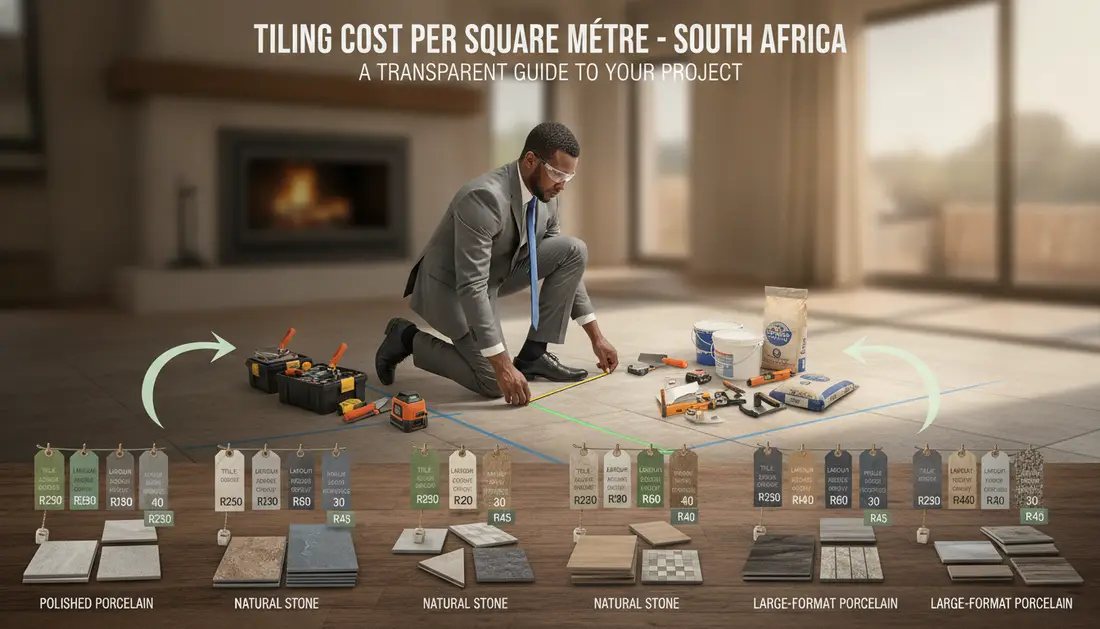
Regional variation matters: coastal zones often need more preparation and damp-proofing, which lifts the price, while inner-city projects may save on prep but pay higher labour in some suburbs — all reflected in the wider per-square-metre rates.
When you review a quote, confirm that the price per square includes adhesive, grout and trims. Verify that each tile and material is itemised so you avoid surprises.
- Tiles and the type chosen influence total price heavily.
- Different areas in your home will vary based on access and complexity.
- Use this guide to compare quotes and check that rates reflect local market conditions.
| Factor | How it affects price | Example regions |
|---|---|---|
| Tile type | Higher grade tiles need special adhesive and handling | Cape Town, Johannesburg |
| Preparation | Levelling and waterproofing increase the final price | Coastal areas, older homes |
| Area complexity | Small wet areas cost more per unit than open living rooms | Bathrooms, kitchens |
Key Factors Influencing Your Total Project Budget
Site access and layout choices directly change how much time and resource a project takes — and tile size is part of that, since what large-format tiles demand in flat substrates and labour can surprise first-timers.

Site access and logistics. Working in tight stairwells, high-rise flats or cluttered rooms adds labour hours. Moving tiles and materials over multiple floors raises labour and handling risks.
Site Access and Logistics
Plan for extra time when access is limited. Ask contractors to confirm how they will move materials and where they will store supplies on site.
Labour Complexity
Complex layouts such as diagonal or herringbone patterns require more cutting and precision. That increases the labour element and affects final price.
“Good planning of access, layout and waterproofing saves time and reduces surprises.”
- Account for waterproofing in wet areas like a bathroom or kitchen.
- Confirm the labour rate covers layout, setting and grout.
- Large format tiles need specialist handling and more time.
| Factor | Impact | Action to take |
|---|---|---|
| Access | More handling time, higher labour | Request site visit and logistics plan |
| Layout complexity | Extra cutting and setting | Allow contingency hours in quote |
| Waterproofing | Mandatory for wet areas; adds materials and work | Include certified waterproofing in scope |
Breaking Down Labour Versus Material Expenses
A clear split between labour and materials helps you spot where the money goes, and the tile itself is a big part of it — the porcelain vs ceramic tiles choice affects both price and durability.
Labour typically makes up 35% to 60% of a project, reflecting complexity, access and skill — much of it in the groundwork, since screeds and surface prep before tiling is what stops tiles lifting later.
Materials cover tiles, adhesives, grout, trims and waterproofing. Porcelain tiles often demand higher-grade adhesives and should be listed as a separate line in your quote.

- Always ask contractors to itemise labour and material lines so you can compare quotes fairly.
- Verify adhesives and grout costs per square metre before work starts; premium products add to material expenses.
- Professional installation of porcelain needs specialised tools and materials compared with basic ceramic tile installation.
- Confirm that the labour price includes substrate preparation and actual hours of work.
“Separate labour and material lines in every quote to keep control of your budget.”
| Item | Typical share | Action |
|---|---|---|
| Labour | 35%–60% | Request hourly or per square breakdown |
| Adhesives & grout | Included in materials | List brand and type separately |
| Tiles (ceramic/porcelain) | Remainder | Specify type and handling needs |
Use our platform to request clear breakdowns and compare quotes. That way you get a fair price and understand what each line on the quote means for your project.
The Importance of Surface Preparation and Substrate Integrity
Tile longevity starts underfoot; preparation and screed condition set the stage.
Proper surface preparation prevents cracks and ensures long-term adhesion. If the screed is uneven or weak, tiles will fail even with the best installation.
Always confirm what the contractor will do to level and prime the base. Uneven substrates often need a self-levelling compound. That adds to the overall cost and must be shown in the quote.

Levelling and Priming Requirements
The quality of the final finish depends on the substrate. Priming seals dust and improves bond strength. Levelling creates a true surface so tiles sit flat and remain secure.
“Never skip levelling and priming; they are the foundation of a durable installation.”
- Substrate integrity: Ask about screed condition before work starts.
- Self-levelling: Required for uneven floors; charged as an extra item in the quote.
- Waterproofing: Mandatory for wet zones to protect the structure beneath.
| Preparation item | Why it matters | What to check in the quote |
|---|---|---|
| Levelling compound | Eliminates dips and high spots | Rate shown as an additional line, area covered |
| Primer | Improves adhesion and reduces suction | Brand or type listed and included quantity |
| Waterproofing | Protects substrate in wet areas | Certified membrane and application method |
Our platform connects you with professionals who list preparation work clearly. Check every quote so you know which preparation tasks affect final costs in your region of south africa.
Regional Price Variations Across South African Provinces
Local demand, material availability and site conditions shift the price you will pay across regions.
Prices for tiling work vary based on regional market conditions and the level of preparation needed. Labour rates in coastal areas often reflect extra moisture control and specialist membranes.
For example, labour in Cape Town frequently runs higher than in Johannesburg because of coastal weather and added preparation requirements. That affects the final per square quote you receive.
What to check before you accept a quote:
- Whether the price includes preparation and waterproofing for wet areas.
- If local material availability pushes up materials and delivery fees.
- How access and site complexity influence labour hours.
“Compare local quotes to spot regional variances and confirm every line item in writing.”
| Region | Typical drivers | What to confirm |
|---|---|---|
| Western Cape | Coastal preparation, moisture control | Waterproofing and labour lines |
| Gauteng | Higher local demand, material logistics | Lead times and labour rates |
| Other provinces | Skilled labour availability, access | Site visit and itemised quote |
Our platform connects you with local contractors so you can compare quotes and understand how regional factors affect your project budget.
Cost Implications of Different Tile Types and Sizes
Different tile types and sizes change how much your job will take in time and materials. Choose carefully to avoid unexpected extras on your quote.
Types and formats matter for price and durability. Specify the exact tile type and size when you ask for a quote so contractors can list labour, adhesives and handling clearly.
Ceramic versus Porcelain Characteristics
Ceramic tiles are easier to cut and typically faster to install.
Porcelain is denser and more durable, but harder to cut. That increases installation time and tool wear, which lifts labour and consumables costs.
Large Format Handling
Large-format tiles (600x600mm+) often need two people for safe handling.
- They demand precise levelling and careful adhesive choice.
- Expect a premium on installation because breakage risk and handling time rise.
Natural Stone Considerations
Natural stone is a premium option. It needs specialised adhesives and sealing.
Sealing and ongoing maintenance affect long-term durability and final costs. Be explicit about stone type when requesting quotes.
“Tell contractors the exact tile type and size so the quote shows true labour, adhesives and grout lines.”
Our platform helps you find contractors experienced with porcelain, large-format and natural stone work so your quote matches the project reality in south africa.
Managing Costs for Complex Layouts and Patterns
Choosing an intricate layout changes how installers price the job and how many tiles you will need.
Intricate patterns like herringbone or chevron raise labour by 25–40%. They need more cutting, alignment and time on site.
Plan for extra waste because angled cuts increase offcuts and the number of tiles to buy.
- Ask for a layout plan so the contractor can price the work accurately.
- Confirm that the quote shows the higher labour rate per square metre for pattern work.
- Check that extra grout and edging time are included in the final price.
“Complex layouts demand more planning and precision; list the pattern in writing so quotes match the scope.”
| Factor | Impact on price | What to confirm |
|---|---|---|
| Pattern complexity | 25–40% higher labour | Layout plan and labour premium |
| Cutting & waste | More tiles required | Waste allowance and tile quantity |
| Alignment & grout | Extra time for precise joints | Include finishing hours and materials |
Use our platform to describe your design and get quotes from skilled installers. That helps you compare true prices and plan for the extra time and materials complex designs need.
Essential Waterproofing and Wet Area Requirements
Waterproofing wet zones is the step that protects your structure long after the tiles go down. In a bathroom or kitchen, membrane work prevents water penetration and costly structural damage.
Include a clear line for waterproofing in your quote so you can see the cost per square metre and the materials specified. Ask the contractor to name the membrane brand and application method.
Proper application before installation is non-negotiable. Applying membrane after tiles is ineffective. The membrane must be continuous and detailed at joints, drains and corners.
- Essential waterproofing is mandatory for any wet area project to protect the home from water damage.
- Verify the membrane type used in your bathroom or kitchen and that the grout joints are suitable for wet areas.
- Ensure the cost for professional waterproofing is listed as a separate item per square metre on the quote.
“Investing in professional waterproofing avoids the high cost of future repairs caused by leaks.”
We connect you with contractors who prioritise correct waterproofing techniques so your tiling work stays watertight and durable.
Handling Old Tile Removal and Rubble Disposal
Old tile rip-out often reveals hidden issues that change what preparation the new installation needs.
Removing existing tiles and clearing rubble is a laborious task that adds both time and labour to your project. Treat this as its own line in every quote so you see the true cost of the work.
Whether you remove ceramic or porcelain, the process is slow and requires skill to avoid damaging the substrate. Expect contractors to list removal, haulage and disposal separately from materials and installation fees.
- Ask for a separate line in the quote for rip-out and rubble disposal.
- Confirm the scope includes clearing old adhesive and debris so the surface is ready.
- Be prepared: tile removal can expose faults that need extra preparation and increase costs.
| Item | Why it matters | What to confirm |
|---|---|---|
| Rip-out & disposal | Labour‑heavy; affects timing | Separate line, method of disposal |
| Substrate found | May need levelling or repair | Preparation tasks listed and priced |
| Clean site | Reduces delays for installation | Confirm site clearance included |
Our platform helps you find contractors in south africa who include rubble disposal and give a clear breakdown of labour and materials. By accounting for removal and disposal upfront you keep the project on budget and avoid surprises at handover.
How to Use Our Platform for Transparent Quote Comparisons
Requesting multiple bids through our quote request process reveals what a fair market price looks like in your area.
Our platform lets you ask for up to three independent quotes so you can compare scope, price and timelines for your tiling project.
Transparent quote comparisons are the fastest way to spot missing items and avoid hidden costs.
- Use our quote request process to connect with independent contractors who list labour, materials and installation clearly.
- We recommend requesting up to three quotes to see the market price and select the best value for your project.
- Check that each quote names brands, includes preparation and lists the final price per square so you can compare like for like.
“Compare multiple options and confirm every line in writing before work starts.”
Start with our platform at buildingpricessouthafrica.co.za to gather quotes, review services and choose the best option for your project in south africa.
Final Steps for Securing Quality Workmanship
Final checks, make sure the final agreement lists inclusions, exclusions, start and completion dates, payment terms and warranty details in writing.
Check references and photos of recent work so you can judge installation quality and durability. Whether you choose ceramic or porcelain, professional installation protects the finish and longevity of your project.
Confirm the final price per square metre reflects all preparation, waterproofing, grout, trims and labour. Ask our platform to connect you with independent professionals who provide itemised quotes and clear timelines. This pairs naturally with budgeting for painting per square metre.
FAQ
What does “Tiling Cost Per Square Metre” include?
The figure separates the tile material, labour, adhesive, grout, trims, waterproofing and surface preparation. It covers supply of tiles, adhesives and sealants plus on-site labour for laying, jointing and finishing. It does not usually include major substrate repairs, electrical or plumbing work, or new joinery unless specified in the quote.
How do I understand the pricing shown for tiling projects in South Africa?
Pricing is a guide to help you budget. Read quotes line‑by‑line: tile unit price, labour rate, adhesive and grout brand, trim and movement joint allowances, waterproofing membrane specification and any substrate preparation. Confirm exclusions such as disposal, scaffolding or access equipment. Always ask contractors for a written breakdown before accepting an offer. For the full set of cost guides, see our building price guides.
What are the main factors that influence my total project budget?
Key drivers are tile type and size, site access and logistics, complexity of the layout, condition of the substrate, waterproofing needs and regional labour rates. Additional items that raise the price include waste removal, niche cutting, underfloor heating and intricate border or pattern work.
How does site access and logistics affect the price?
Restricted access, multiple flights of stairs, long carrying distances or parking restrictions increase labour time and may require additional helpers. Sites far from suppliers or in remote suburbs attract higher transport charges. Ask for these costs to be detailed in the contractor’s quote.
What makes labour complexity increase on a job?
Labour time rises with small tiles, many cuts, diagonal layouts, mosaic sheets, extensive levelling or complicated patterns. Work in small bathrooms, busy kitchens or occupied homes can take longer. Specialists for large format or natural stone also charge premium labour rates.
How should I compare labour versus material expenses?
Compare the material list and brands first, then the man‑hours and skill level stated. A low tile price can be offset by high labour if the design is complex or the tiles need wet‑cutting. Ask for expected install hours and whether installers are accredited for the product supplied.
Why is surface preparation important and how does it affect pricing?
Proper preparation ensures adhesion and longevity. Levelling, removing old coverings, priming and treating damp or weak substrates add time and materials. Undetected problems found on site can increase the final invoice, so include a contingency and request a condition report with the quote.
When will levelling and priming be required?
Levelling is required when the floor or wall has dips, slopes or uneven patches outside manufacturer tolerances. Priming is needed on porous screeds or cement boards. Quotes should specify the product and thickness of levelling compounds and any drying times that affect the programme.
Are there regional price differences across South African provinces?
Yes. Metro areas like Cape Town, Johannesburg and Durban often have higher labour and supply prices than smaller towns. Travel time and supplier access in rural provinces can increase prices. Always request local contractor quotes for an accurate comparison.
How do different tile types and sizes affect the final price?
Porcelain generally costs more than ceramic for both material and installation, especially large formats that need specialised handling and levelling. Natural stone has higher material cost and usually requires sealers and experienced installers. Smaller tiles need more grouting time and cutting, increasing labour.
What are the practical differences between ceramic and porcelain?
Porcelain is denser, more durable and usually suitable for high‑traffic or wet areas; it often costs more and needs stronger adhesives. Ceramic is lighter and cheaper but better for low traffic or feature walls. The installer should match adhesive and grout types to the tile specification.
What additional costs come with large format tiles?
Large format panels require flat substrates, specialised levelling, extra adhesive, suction lifters and more precise joint spacing. Installers may charge a premium for the extra skill and time. Expect to pay more for transport and handling due to breakage risk.
What should I expect when working with natural stone?
Natural stone can vary in thickness and colour, needs sealing and specialist cutting, and may require movement joints. Expect higher material and labour rates and stipulations on substrate and adhesives. Ask for stone grading and sealing procedure in writing.
How can I manage costs for complex layouts and patterns?
Simplify layouts, use standard tile sizes, avoid intricate mosaics and limit border work to reduce labour. Provide clear drawings to contractors and get fixed‑price quotes for pattern work. Sometimes pre‑cut border kits or feature tiles can be more economical than bespoke border installation. This pairs naturally with budgeting for ceiling installation.
What are essential waterproofing requirements for wet areas?
Bathrooms, showers and laundries need a tested waterproofing membrane, correct falls to drains, appropriate tile adhesives and grout, and sealed penetrations. Waterproofing is non‑negotiable; skimping risks leaks and costly repairs. Ensure the quote specifies membrane type, warranty and applicator certification.
How are old tile removal and rubble disposal handled?
Removal is often priced separately. Costs depend on tile adhesion, substrate condition and access for disposal. Confirm whether the contractor includes rubble removal, skips or tip fees. If old tiles are contaminated (asbestos, lead) you must use licensed removal services and plan for higher fees.
How do I use the platform to get transparent quote comparisons?
Upload your brief with area measurements, photos and tile specifications. Request up to three independent quotes — or up to five where available — and ask each contractor for a detailed line‑by‑line breakdown. Use our checklist to compare labour hours, material brands, warranties and exclusions.
What final steps ensure quality workmanship before approval?
Agree scope, timeline and payment schedule in writing. Ask for proof of contractor insurance, product datasheets and installer accreditation. Inspect work at key milestones, confirm waterproofing tests where applicable, and retain a final sign‑off certificate before releasing the last payment. It reads well alongside drywalling price guide.
Related building cost guides
Read & compare builder quotes with confidence
Before you weigh up prices, get fluent in what a building quote actually contains — inclusions, exclusions, provisional sums and the red flags that change the real cost.
- How to Read a Builder Quote
- Provisional Sums in Building Quotes
- Prime Cost Items in Building Quotes
- Building Quote Red Flags
- How to Avoid an Underquoted Building Project
- Questions to Ask Before Hiring a Builder
- Building Snag List Before Final Payment
- How to Compare Building Quotes Properly
- South African Building Terms Glossary
- Building Cost Inflation in South Africa
- Builder's Guarantees in South Africa
- Builder Payment Schedules and Deposits
- Building Contract Essentials
- When a Building Project Goes Wrong
Ready to compare?