
Bathroom Renovation Cost Guide
Waterproofing, plumbing, tiling, demolition, and sanitaryware make bathroom quotes labour-heavy
Quick answer
Bathroom renovation costs – why waterproofing, plumbing and tiling make these quotes labour-heavy – with totals from small to large rooms.
Indicative ranges for planning — not a quotation. Final cost depends on scope, finish level, site access and area, and may exclude VAT and professional fees; confirm pricing in writing with your chosen builder.
Cost at a glance
| Finish / spec level | Indicative rate | Typical total |
|---|---|---|
| Budget | R9 000/m² | R45 900–R62 100 |
| Standard | R12 000/m² | R61 200–R82 800 |
| Premium | R18 000/m² | R91 800–R124k |
Indicative totals for a 6 m² project · indicative 2026 guidance, not a quotation. Use the calculator below for your exact size, or request tailored cost guidance.
Instant estimate
Bathroom renovation calculator
Waterproofing, plumbing, tiling and sanitaryware by size.
12 min read
On this page
Curious how much a typical bathroom overhaul will set you back, and which choices drive the price? We start with clear numbers so you can plan with confidence.
Bathroom renovation costs South Africa vary by scope, materials, labour, finishes, access and region.
On our platform at buildingpricessouthafrica.co.za we give practical data and local context. Our pricing guidance helps you see typical investments for simple updates and full-scale projects.
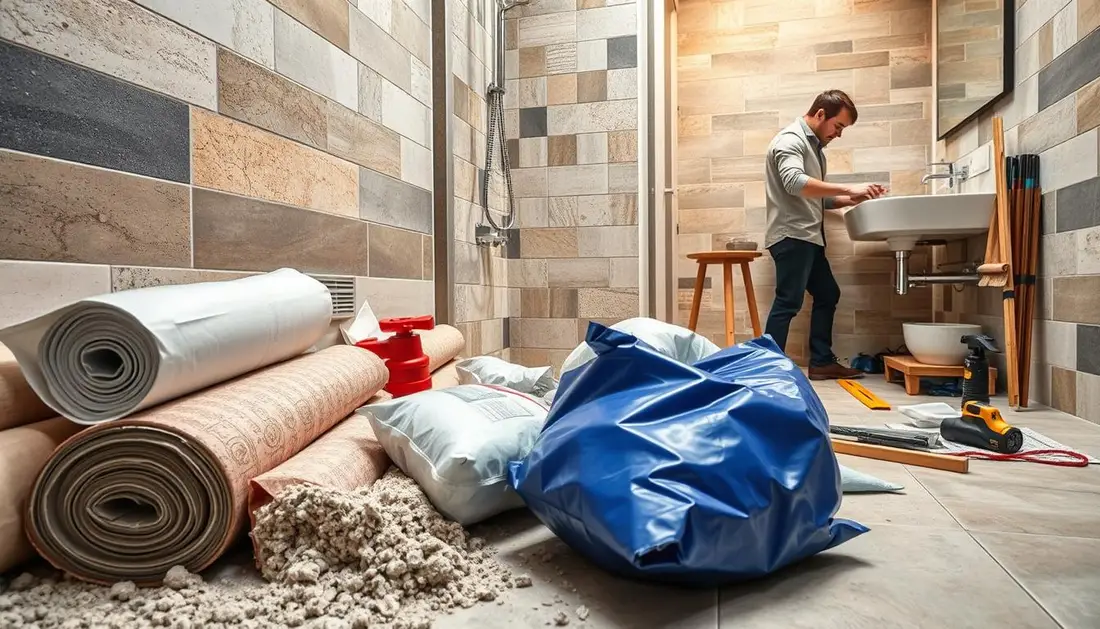
Labour rates for general work typically sit between R350 and R700 per hour locally. You must factor in plumbing, tiling, waterproofing and sanitaryware when setting a realistic budget.
Use our quote request process to connect with independent professionals who will assess your space and provide site-specific prices. This keeps your plan honest and helps protect the quality of the finished room.
Understanding Bathroom Renovation Costs South Africa
Estimating what a typical bathroom overhaul will cost starts with the room’s size and the exact scope — and the bathroom renovation order of work you follow, since doing things out of sequence is where budgets unravel.
Guest facilities can be very small — sometimes under two square metres — yet still need full wet-room protection and durable fittings. The biggest cost swing, though, is layout: what moving bathroom plumbing involves can add tens of thousands if you shift the toilet or shower across the room.
Our pricing guidance helps you set a realistic budget: weigh replacing a single vanity and taps against a full refit, since small updates often give a strong visual lift for far less. If space is tight, planning a small bathroom renovation carefully matters even more, because every fitting has to earn its place. For the full set of cost guides, see our building price guides.
“Measure the space, define the work and prioritise durable products — that makes the budget predictable.”
Regional labour rates and material selection drive final figures, so where you live matters — renovation rates in KZN, for instance, differ from the inland metros. Use the platform data to compare prices and decide whether to renovate the whole room or target specific items first. This pairs naturally with kitchen renovation costs.

A bathroom is rarely a standalone project, so it helps to compare project costs across your whole plan and read this alongside the wider home renovation costs guide. Our guide to planning a small bathroom renovation covers what’s involved.
Essential Factors Influencing Your Budget
Your fixture selections and any change to the room layout drive more of the final spend than most homeowners expect. We break down the two biggest levers so you can set realistic allowances and compare quotes with confidence.
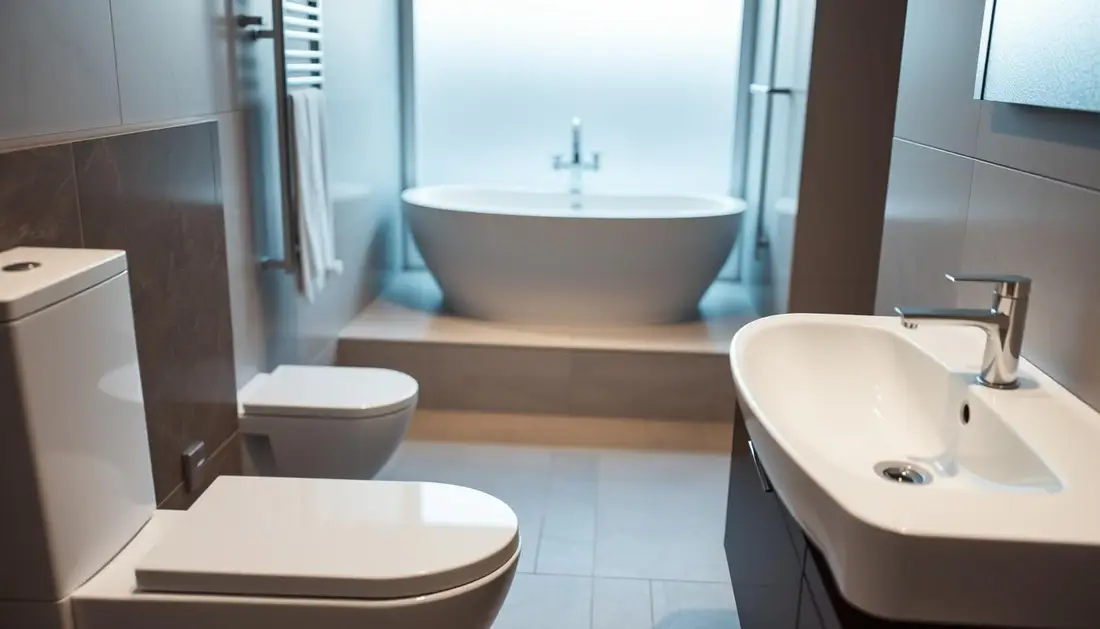
Sanitaryware PC Sums
PC sums for sanitaryware give you a clear allowance for items such as a toilet, basin or shower. Picking a recognised brand can lift the price but often increases longevity and reduces call-backs.
- Toilets: R800–R8,000; basins and taps: R500–R5,000.
- Showers: from about R1,500; standard baths R2,000 up to luxury stone tubs at R20,000.
- Set realistic PC sums in your brief so suppliers quote to the same standard.
Structural and Layout Changes
Moving walls or rerouting plumbing is the most costly change to your plan. These works extend labour time, increase material needs and often require approvals.
Tiles and the room size also matter. Larger areas need more tiles and longer installation time, which changes the final price.
- Design and layout: keep existing plumbing runs to limit budget increases.
- Confirm inclusions: ask for a written list of fixtures, brands and installation labour before you accept a quote.
“Set PC sums, confirm inclusions in writing and avoid moving services unless necessary.”
Typical Cost Breakdown for Bathroom Upgrades
Understanding how much of your spend goes to labour versus materials makes budgeting easier. We show typical splits and real figures so you can compare options and avoid common mistakes.
Labour Versus Material Split
Labour usually claims a large share. General labour sits between R350 and R700 per hour, while specialised artisans often charge above R700 per hour.

Example: material purchases for a project might total R20,000, yet professional labour for plumbing and installation can double that amount.
| Category | Typical Range | Share of Total |
|---|---|---|
| Materials & fixtures | R20,000 | 30–45% |
| Professional labour & installation | R20,000–R50,000 | 55–70% |
| Total professional project | R40,000–R70,000 | — |
When you hire professionals you pay for quality, safety and fewer mistakes. For a DIY approach expect R20,000–R30,000, but factor in risks and time.
- Compare material options and labour quotes to match your budget to the scope.
- Confirm the price for tiling, plumbing and shower installation in writing.
- Remember that size, access and finishes are key factors that change final prices.
The Professional Renovation Sequence
A disciplined work sequence—from demolition to fit-off—protects your budget and guarantees quality. Waterproofing is the step never to rush: skip or skimp it and you will soon learn why showers leak and what the repair costs.
Demolition and Site Preparation
Work begins with a full strip: tiles, fittings and affected walls are removed to expose the substrate. This makes it easier to check services and access the floor structure.
After demolition the screed is re-laid where needed. A correct screed gives a stable base for waterproofing and tiling.
Waterproofing and Pressure Testing
Waterproofing is essential in all damp areas. The degree of sealing will depend on local regulations and the room’s exposure to water.
Note: showers with floor-level entries must be installed with at least a 2% slope for reliable drainage and to avoid pooling.
Before tiling, teams conduct pressure testing on the plumbing to confirm there are no leaks. This prevents concealed failures after finishes are applied.
Tiling and Final Fit-off
Tiling follows successful pressure testing. Larger tiles can make the area feel bigger and usually reduce maintenance time.
The final fit-off completes the project: vanities, shower fixtures, electrical work and final plumbing connections are installed and tested.
“Quality waterproofing is the most important factor in a successful project.”
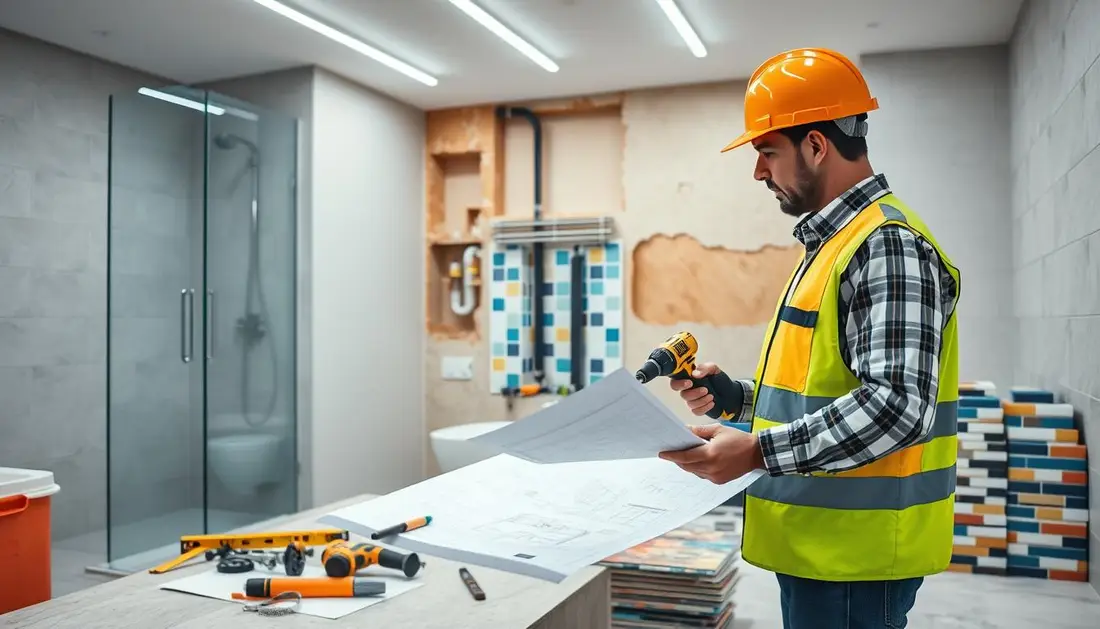
| Stage | Key Action | Why it matters |
|---|---|---|
| Demolition & screed | Remove old finishes; re-do screed where required | Exposes services and provides flat base for waterproofing |
| Waterproofing | Apply membranes and seal wet areas | Prevents water ingress; aligns with regulations |
| Pressure testing | Test new plumbing under pressure | Detects leaks before tiling and finishes |
| Tiling & fit-off | Install tiles, fixtures and electrical work | Finishes the installation and makes the space usable |
Navigating DIY Versus Professional Labour
The choice between DIY and hiring professionals hinges on time, skill and risk appetite.
Do-it-yourself work can reduce immediate labour outlay and help you control the budget. But DIY carries higher risk for complex tasks such as waterproofing and electrical work. Mistakes in these areas often lead to larger repairs later.
Professional contractors provide defined warranties and the right tools for safe installation. They also follow local regulations for plumbing, shower and vanity connections. That protects your long-term investment.
- Assess your skills and available time honestly before you start.
- Use professionals for plumbing, tiling and electrical installation to reduce risks.
- Ask for written warranties and a clear scope to compare price and quality.
“When a project includes waterproofing or service relocations, hiring licensed trades often saves money over time.”
| Option | Pros | Cons |
|---|---|---|
| DIY | Lower immediate labour price; control over materials | Higher risk of mistakes; longer completion time |
| Professional | Warranties; compliant plumbing and electrical work; faster installation | Higher upfront labour charge; requires budget allocation |
| Hybrid | Save on simple tasks; hire pros for critical work | Requires clear task division and supervision |
Environmental Considerations for Coastal Properties
Living near the coast changes the technical brief for any bathroom project. High humidity and salt air increase the risk of damp and mould. You must plan for this at design stage.
Addressing Coastal Damp and Mould
In regions such as KZN and the Western Cape, raise your waterproofing specification. Use premium membranes and tanking systems designed for higher moisture exposure.
Choose materials that resist mould and salt corrosion. Cement-based backer boards, epoxy grout and stainless sanitary fittings reduce long-term maintenance.
- Ventilation: install extract fans sized to the room to remove water vapour quickly.
- Materials: specify mould-resistant paint and moisture-stable tiles near showers.
- Contractor experience: request evidence of coastal projects when you ask for quotes.
“Investing in superior waterproofing saves significant money on future repairs caused by damp and mould.”
| Issue | Recommended response | Budget impact |
|---|---|---|
| Damp and mould | High-spec membrane; mould-resistant finishes | Moderate increase |
| Salt corrosion | Stainless fixings; epoxy grout | Small to moderate |
| Poor ventilation | High-capacity extract fan; passive vents | Low |
Securing Your Investment and Finalising Plans
Before trades begin, confirm every inclusion, exclusion, timeline, payment milestone and warranty in writing with your chosen contractor. This reduces misunderstandings and helps protect your budget and the value of your home.
Use our quote request process at buildingpricessouthafrica.co.za to connect with independent professionals. Ask for itemised quotes that list fixtures, labour and installation so you can compare options fairly.
Plan your layout and style to suit the available space and avoid common mistakes. Verify that each professional has the right experience and insurance to deliver the quality you expect.
Final tip: sign a clear scope of work and keep records of payments and warranties to secure the success of your project.
FAQ
How much should I budget for a full bathroom overhaul including waterproofing, plumbing and tiling?
For a full overhaul expect a wide range depending on scale and finishes. A small entry-level refit with basic sanitaryware and tiles can start from the mid-range price bracket, while a high-end, larger suite with bespoke fittings and structural changes will sit in the upper band. Labour typically accounts for 40–60% of the total, with waterproofing, plumbing and tiling among the cost-driving items. Get itemised quotes for materials, installation and pressure testing so you can compare like-for-like. For the how-to, see prime cost items in building quotes.
What are sanitaryware PC sums and how do they affect my budget?
A PC sum (provisional cost) is an allowance for fittings such as basins, toilets, taps and showers. Contractors use PC sums when the exact products aren’t chosen before work starts. If you select higher-spec brands or larger vanities, the final invoice will exceed the PC sum. Confirm the allowance in writing and include a contingency for upgrades.
When do I need structural or layout changes and what extra costs should I expect?
Structural or layout changes are needed when you move walls, alter drainage lines or change the location of fixtures. These works increase costs for demolition, new framing, plumbing re-routing and possibly tiled floor adjustments. Expect engineers’ fees, higher labour input and permits if you change load-bearing elements. Always budget for unforeseen findings once demolition begins.
How is the typical cost split between labour and materials?
On average labour accounts for roughly 40–60% of the total project, with materials and fixtures making up the remainder. Waterproofing, tiling and plumbing labour are labour-intensive, while premium tiles and taps lift the materials share. Ask contractors to show labour hours and material allowances so you can see where savings are possible.
What sequence do professionals follow when carrying out a refit?
Professionals normally follow a clear sequence: demolition and site preparation, repair of substrate and any structural adjustments, waterproofing and pressure testing, plumbing and electrical rough-ins, tiling and wall finishes, then final fit-off of sanitaryware and accessories. This order protects newly finished surfaces and ensures water-tightness before tiling and fixtures are installed.
Why is waterproofing and pressure testing essential and how much extra does it add?
Waterproofing and pressure testing prevent leaks that cause long-term damage. Proper tanking and a pressure test on waste and supply lines identify faults before tiling. The added cost is modest compared with the expense of fixing concealed leaks later. Insist on full certification or a signed workmanship guarantee.
Can I DIY parts of the project to save money?
You can save on simple tasks like painting or removing old fittings, but leave waterproofing, plumbing alterations, electrical work and final tiling to professionals. Mistakes in these areas lead to higher repair costs. If you plan DIY, confirm which parts the contractor will accept as client-supplied or client-completed in the contract.
What extra measures should coastal property owners consider?
Coastal properties need corrosion-resistant fittings, stainless-steel or suitable alloys for brackets and taps, plus enhanced ventilation to limit condensation. Address coastal damp and mould with breathable paints, adequate extraction fans and regular maintenance. These measures cost more up-front but extend the life of the installation.
How do I protect my investment and finalise plans before work starts?
Protect your investment by agreeing a detailed scope of work, a written schedule, itemised prices for labour and materials, warranty terms and a payment schedule. Get at least three itemised quotes from independent contractors, check references and confirm who handles site disposal, permits and final inspections.
What mistakes should I avoid when planning fittings and finishes?
Avoid under-sizing extraction, picking tiles without checking slip ratings and not matching floor falls to waste locations. Don’t choose sanitaryware before confirming plumbing layouts. Also, underestimating storage and lighting leads to disappointing results. Confirm dimensions, drainage falls and service access in writing.
How long does a typical upgrade take from start to finish?
Timeline depends on scope. A basic refit often takes two to three weeks. Full overhauls with structural work, waterproofing, tiling and custom joinery can take four to eight weeks. Delays can arise from product lead times, unexpected structural issues or permit approvals. Build a buffer into your schedule and contract.
What should I check in writing when accepting a quote?
Ensure the quote includes a clear scope of work, start and completion dates, itemised material and labour costs, provisional sums, warranty details, payment milestones and who is responsible for permits and inspections. Confirm product brand names or allowances for sanitaryware and tiles so the final cost matches expectations. It reads well alongside house extension costs.
Are there regional price differences I should expect within the country?
Yes. Labour rates and material availability vary by region and urban area. Metro areas often offer competitive labour but higher material mark-ups on imported fittings. Remote locations may incur travel and delivery charges. Factor regional differences into your budget and request localised quotes. This pairs naturally with granny flat building costs.
Read & compare builder quotes with confidence
Before you weigh up prices, get fluent in what a building quote actually contains — inclusions, exclusions, provisional sums and the red flags that change the real cost.
- How to Read a Builder Quote
- Provisional Sums in Building Quotes
- Building Quote Red Flags
- How to Avoid an Underquoted Building Project
- Questions to Ask Before Hiring a Builder
- Building Snag List Before Final Payment
- How to Compare Building Quotes Properly
- South African Building Terms Glossary
- Building Cost Inflation in South Africa
- Builder's Guarantees in South Africa
- Builder Payment Schedules and Deposits
- Building Contract Essentials
- When a Building Project Goes Wrong
Ready to compare?