How Many Bricks Per Square Metre?
Counts, coverage and waste – the quick maths behind ordering right
Quick answer
How many bricks per square metre – single and double skin counts, maxi conversions and the waste allowance to order with.
7 min read
On this page
How many will you truly need for that 2 m by 5 m wall — and can a simple calculation stop costly over-ordering?
Accurate counts matter. A 2 m high by 5 m long wall equals 10 square metres of area. With a standard brick sized 230 mm x 76 mm x 110 mm, the number of masonry units per area depends on the mortar joint and the chosen bond.
Our platform gives clear pricing guidance to help you plan a budget and avoid mid-project shortages. Visit buildingpricessouthafrica.co.za to connect with independent contractors who can check site specifics and provide quotes.
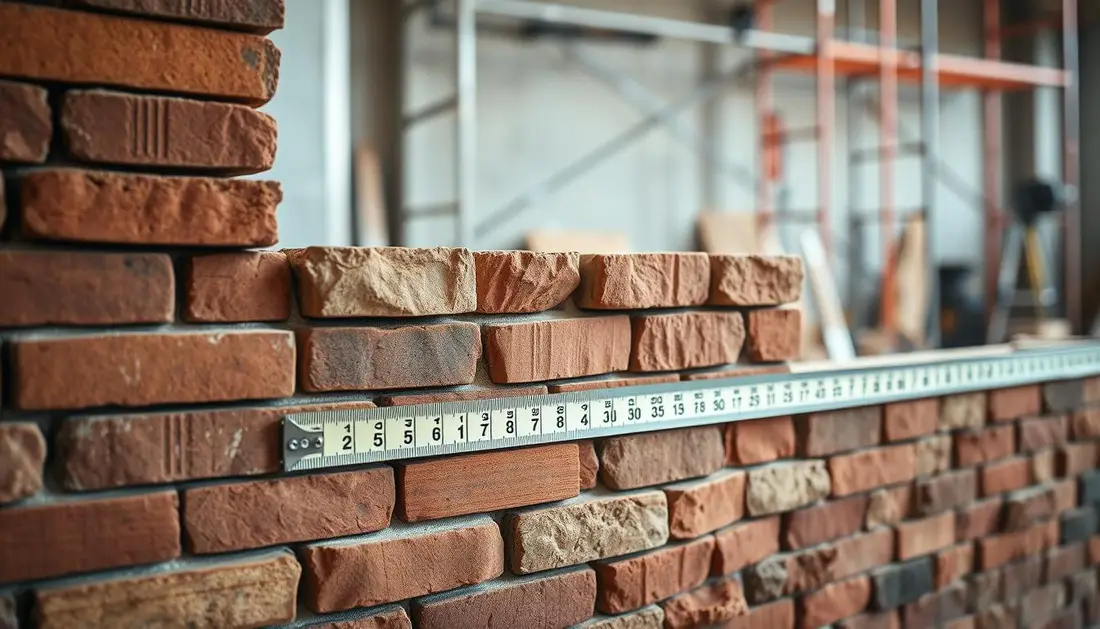
This short guide shows how to calculate the total wall units you need, so you know many bricks are required before you order. Follow the steps that come next for a quick, reliable estimate for your South African building project.
Understanding the Basics of Bricks Per Square Metre
Start by checking the basic measures: the brick size and how it affects coverage for your wall.

Standard clay units commonly measure 230 mm x 76 mm x 110 mm. These give an easy rule of thumb: about 50 units cover one square metre when standard mortar joints are used.
Maxi variants are larger — typically 290 mm x 140 mm x 90 mm — and so reduce the number of units needed for the same area. The exact count changes with mortar thickness and the chosen bond.
Coverage data for common types
| Type | Dimensions (mm) | Approx units / m² | Notes |
|---|---|---|---|
| Standard clay | 230 x 76 x 110 | 50 | Most common reference size |
| Maxi | 290 x 140 x 90 | ≈30–35 | Used in coastal areas; lower unit count |
| Concrete (typical) | Varies | Check supplier | Manufacturer specs dictate coverage |
Confirm the exact size with your supplier and allow for mortar and wastage when planning. Our platform helps South African homeowners check quotes and quantities before ordering.
Calculating Your Total Brick Requirements
Begin your calculation by multiplying the wall height by its length to find the total area in square metres.
Use the area figure to work out how many units you need. For a typical stock brick with a 10mm mortar joint, 1000 units will cover roughly 20 square metres.

- Take exact measurements of width and height to get area.
- Multiply that area by the number of units you use for one square metre for your chosen brick size.
- Or divide total area by the coverage rate (for example, 20 m² per 1000 units) to find the number of units required.
Remember to deduct openings such as doors or windows. If you select a different brick type, adjust the calculation for its specific coverage.
“Accurate measurements stop repeat deliveries and save money on labour and transport.”
Measure well, calculate carefully, and you’ll know many bricks are required before you place your order. This prevents costly top‑ups during construction and keeps your project on budget.
Accounting for Mortar, Wastage, and Structural Variables
Allowances for mortar, cuts and damage change the final count you need. Before you order, add a short margin for joints and on-site losses so your project stays on schedule.
The Role of Mortar Joints
Mortar thickness matters. SANS specifies joints of approximately 10mm to ensure stability and good adhesion between courses.
In coastal locations, use suitable mixes and confirm workmanship so the salt air does not weaken the brick wall over time.

Factoring in Wastage Percentages
Allow for 5–10% wastage to cover breakages, cutting and site damage. This small buffer prevents repeat deliveries and delays.
- Choose 5% for simple layouts with few openings.
- Use 10% for complex cuts, corners or uneven ground.
Adjusting for Wall Thickness
One-skin walls need far fewer units than double-skin walls. A double-skin will require roughly double the number of units for the same total area.
Verify your measurements and mortar thickness before finalising your order so you know how many bricks need ordering for the whole build.
Finalising Your Order for a Successful Project
Confirm your totals and order details so colour and size stay consistent across the whole wall.
Order your bricks in one batch to avoid shade differences and batch mismatch. Use our platform and our pricing guidance to check quantities and costs before you pay.
Get up to three quotes from independent contractors who will verify measurements, mortar thickness and any site variables. Allow for wastage in your calculation so the number you order covers the full area and cuts.
Visit buildingpricessouthafrica.co.za to request quotes, compare prices and finalise your order with confidence. Confirm inclusions, exclusions and warranties in writing before work starts on site.
Set your budget using bricklaying labour costs and boundary walling costs. For what this typically costs, see bricklaying per thousand costs.
FAQ
How many bricks will I need for one square metre of wall?
The number depends on the block size and mortar joint thickness. For a common South African clay unit (220 x 105 x 73mm) laid stretcher bond with a 10mm mortar joint, expect about 60 units for one square metre of single-leaf wall. Use this as a starting point, then adjust for your specific unit size and joint width.
What are the standard brick sizes I should plan for?
Standard sizes include the common clay unit (220 x 105 x 73mm), engineering or face-brick variants and larger paving or cavity units. Confirm the exact size from your supplier or their product data sheet so you can calculate coverage precisely.
How does coverage vary between common types of units?
Smaller face-bricks require more units per area than larger cavity blocks. For example, standard clay units need roughly 55–65 per square metre depending on joint thickness. Larger cavity or concrete units will need fewer. Always check the manufacturer’s coverage figures.
How do I calculate total units for my wall?
Measure the wall area (height × length). Subtract openings like doors and windows. Choose the unit size and mortar joint you’ll use, then multiply area by the units-per-area figure for that unit. Add allowances for corners and bonds specific to your build. This pairs naturally with what good brickwork looks like.
How much mortar should I allow for joints?
Mortar volume depends on joint width and thickness. Typical 10mm joints need roughly 0.03–0.04 cubic metres of mortar per tonne of units for an average wall. Ask your mason or supplier for a mix ratio and order a small surplus to avoid stoppages.
What percentage should I add for wastage?
For straight, uncomplicated walls add 5–7% as a contingency. For walls with many cuts, arches, columns or unusual bonds, add 10–15%. Always round up to the next full pallet or bag quantity when ordering.
How do I adjust counts for wall thickness or double-leaf construction?
Double-leaf or thicker walls require roughly twice the units of a single leaf. For cavity walls, calculate each leaf separately and include additional units for ties, returns and bonding. Confirm with your engineer if the wall has structural requirements. This pairs naturally with drywall vs brick wall.
Should I order exactly the calculated number or more?
Order a modest surplus to cover breakages, cutting and site losses. Suppliers often sell by pallet or pack; account for that and for potential delivery mixes. Getting a little extra on site avoids work stoppages and costly urgent deliveries.
What other cost factors should I check before ordering?
Confirm unit price, delivery fees, pallet handling, regional availability and any minimum order. Factor in labour, scaffolding, access, demolition or disposal and local approvals. Get written quotes from suppliers and up to three contractor quotes where available.
How can I make sure my order matches on-site needs?
Verify unit dimensions on the product spec, confirm the mortar joint you intend to use, check the wall area and openings on measured drawings, and ask your contractor to review quantities. Keep suppliers’ batch numbers for colour and texture matching on follow-up deliveries. It reads well alongside plaster cracks.
Related building cost guides
Ready to compare?