
When a Building Project Goes Wrong
Abandonment, defects and disputes – the recovery playbook when prevention wasn't enough
Quick answer
When a building project goes wrong in South Africa – abandonment, serious defects and the NHBRC complaint route, step by step.
16 min read
On this page
Have you ever wondered what your next step should be when a once-promising building task suddenly grinds to a halt?
The 2026 South African construction market shows a clear dip in the residential sector. This change has raised the risk of abandonment and left many homeowners facing unfinished homes and added costs.

At buildingpricessouthafrica.co.za our platform offers a practical guide and pricing guidance to help you weigh your options. We explain how to assess damages, confirm what a contractor must still deliver and estimate realistic costs to move forward.
You will find clear steps to regain control, from assessing legal routes to comparing quotes. Our approach is pricing-first and aimed at helping cost-aware South African owners and investors make confident decisions.
Immediate Triage for an Abandoned Site
A sudden halt to on-site work demands quick, practical triage to protect the structure and your investment.
Site risk assessment
Site Risk Assessment
Start with a calm, thorough walk-through to spot hazards like open trenches and exposed live wires. Note unstable scaffolding and loose materials that could harm people or cause further damages.
The Stop and Document Rule
Stop any permanent repairs until you have full records. Use your phone to take time-stamped photos of every elevation, opening and stored material. This visual evidence is vital for insurance or a claim against the contractor.
- Secure the site against intruders and weather to protect finishes and materials.
- Do temporary weatherproofing to prevent rain damage to incomplete brickwork.
- Contact professional builders for advice before any remedial work.

| Action | Purpose | Who |
|---|---|---|
| Walk-through and hazard log | Identify immediate safety risks | Owner or appointed inspector |
| Photographic record with phone | Preserve evidence for insurer/contractor | Owner |
| Temporary weatherproofing | Protect materials and reduce further damages | Local builders or handyman |
Understanding Why a Builder Abandoned Project
Knowing why the team stopped work helps you decide whether to enforce the agreement or move on.
Contractors often stop for clear reasons: cash flow problems, late or withheld payments, supply delays or internal financial trouble at their firm. These causes affect your next steps and the viability of the contract.
Review the terms of your agreement immediately. Look for clauses on payment schedules, notice periods and remedies for non-performance under South African law. That check shows if a breach has occurred.

Ask focused questions of the remaining site staff or manager to learn whether the stoppage was planned, due to supply issues or financial strain.
- Document all messages, invoices and missed payments in a clear paper trail.
- Confirm whether scope changes or unpaid claims caused the dispute.
- Protect your money by identifying the root issue before hiring anyone new.
Understanding cause and collecting evidence gives you leverage. It also speeds realistic cost estimates and helps when you seek quotes to finish the job or pursue a legal remedy.
Securing the Property Against Further Damage
When work stops, your first action should be to protect finished surfaces and stored materials.
Emergency Weatherproofing
Quick action can prevent water ingress that causes damp and added structural repairs. Protecting the site is a priority action to stop damage to materials and the integrity of the home.
Use reinforced polyethylene tarpaulin and sandwich its edges with lengths of lumber to hold it firm against wind and rain. This method keeps flashings, openings and exposed brickwork dry until repairs resume.
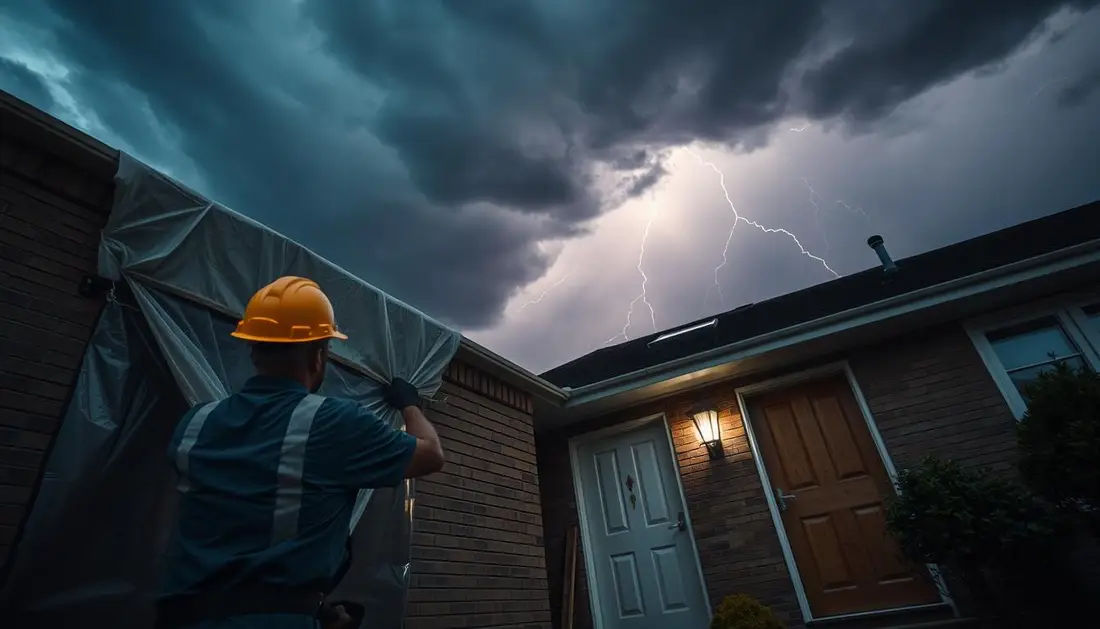
- Secure the tarpaulin with timber battens and nails or ratchet straps to create a tight seal.
- Contain hazards such as loose scaffolding or open trenches to prevent further damages.
- Protect the work already done so a future contractor can resume efficiently.
- If the site poses a public risk, contact your local municipality and follow advice from professional builders.
Practical note: even if the original builder has vanished after abandonment, these measures maintain property value and reduce repair costs while you decide next steps.
Creating a Legally Sound Snag List
Detailing each defect by location and remedy gives you a strong base for any construction dispute.
Start by listing every issue in plain language. Note the exact location, describe the defect, and state the remedial work you expect.
Follow SANS 10400 when you record standards and required fixes. That makes your list usable in formal correspondence with a contractor or in court.
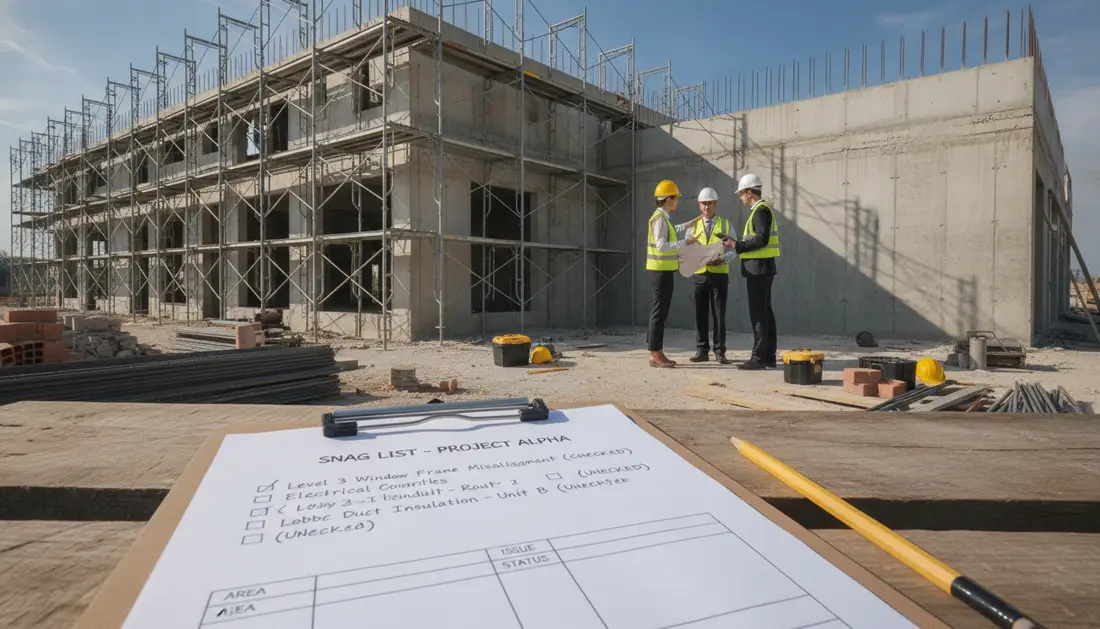
Use dated entries and timestamped photos as evidence. Keep copies of quotes, emails and all communication. The 90-day rule lets homeowners lodge claims for non-compliance after occupation, so act fast within those days.
- Be methodical: room, elevation, defect, suggested remedy.
- Attach cost or time estimates where possible for completion clarity.
- File all correspondence and invoices to support any dispute.
This snag list becomes a practical tool. Professional builders and assessors use it to scope work, and courts use it as evidence of damages. Make it clear, dated and signed to preserve your legal rights.
Leveraging the Housing Consumer Protection Act
The Housing Consumer Protection Act now explicitly covers renovations, alterations and repairs, giving you clearer legal rights when things go wrong.
This law makes small-scale construction contracts and renovation work subject to consumer protections. That means a written contract for alterations can no longer slip past regulatory checks. You gain formal rights to demand standards and timing from a contractor.
Use the Act to hold a builder accountable for mid-way abandonment or poor workmanship. Cite the law in formal notices to seek remedies and, where justified, claim damages to restore your home.
Practical actions: lodge a written complaint, attach your dated snag list and photos, and state which clauses in the contract the builder breached. The Act strengthens your negotiating position during the first few months after works stop.
- Confirm which clauses in your contract fall under the Act.
- Seek quotes to repair the defects while preserving evidence for any legal step.
- Contact our platform for guidance on costing and next steps.
Navigating the NHBRC Complaint Process
Raising a formal NHBRC complaint can protect your rights and start a recovery process for serious defects.
Begin with a formal demand. Lodge a clear written notice, attach your snag list and dated correspondence, and include proof of payments. The NHBRC requires organised evidence to accept a registered complaint for enrolled construction work.
The Escalation Ladder
Follow the ladder: formal demand, registration of a complaint, inspection, and adjudication. Keep a log of every phone call and written communication to support your position during inspection.
Realistic Timelines for Resolution
Expect months rather than weeks. The NHBRC warranty covers a 3-month snag list, a 1-year roof-leak period and 5 years for major structural defects.
- Supply full correspondence and proof of payment when you submit the complaint.
- Maintain a clear file of photos, dates and communication for each step.
- Use the NHBRC as a specialist route for remedies not always available through general consumer law.
Assessing Financial Losses and Damages
A clear, itemised money audit helps you see how much the stalled build has cost so far.
Start by listing every payment made to the contractor and the remaining work, including materials and labour. This simple ledger shows the cash already spent and the cost to finish the building.
Engage a Quantity Surveyor to produce an objective damage assessment report and a detailed cost-to-repair estimate. Their report is essential when you need to claim damages or seek recovery of money paid.
- Calculate the cost of materials and labour to complete the work.
- Document all payments, invoices and variations to support your claim.
- Use the professional report to avoid overpaying for remedial works during disputes.
Accurate assessment strengthens your legal strategy and speeds a realistic resolution. We recommend keeping all records in one file and getting at least one independent estimate before offering further payment to any builders.
Engaging Professional Legal Counsel
A timely legal appointment can frame your rights and outline realistic remedies under South African law.
When to instruct a lawyer — retain an attorney who specialises in contract and construction law to protect your position. Legal counsel is essential where financial loss is clear or the contractor refuses to return to site.
When Attorneys Earn Their Fee
Engaging a professional lawyer is often necessary to enforce your rights and seek remedies for abandonment. They guide you through disputes and draft formal notices that carry legal weight.
Your lawyer will gather evidence, prepare a claim to recover damages from the original builder’s insurance and explain realistic options for resolution.
- They negotiate and, where needed, represent you in court.
- They advise on the viability of a claim and the costs of litigation.
- They set a clear timeline and next steps for settlement or trial.
| When to Instruct | Purpose | Expected Outcome |
|---|---|---|
| Non-response after formal demand | Draft and serve legally compliant notice | Builder responds or legal proceedings start |
| Significant financial loss | Gather evidence and quantify damages | Clear claim to claim damages and settlement talks |
| Complex contract or multiple builders | Clarify contract terms and liabilities | Practical options for remedy or replacement |
Sourcing a Reliable Replacement Contractor
When you need someone to take over, the right contractor will protect your money and speed completion.
Sourcing a reliable replacement contractor is a critical step to get building work back on track. Expect new contractors to charge a premium to fix others’ mistakes and to account for unknowns and delays.
Ask direct questions about their experience with takeover jobs, registration status and warranties. Request references for similar jobs and confirm whether they carry professional indemnity or works insurance. This pairs naturally with questions to ask before hiring a builder.
Insist on a detailed quote that maps to your snag list. A good quote separates labour, materials, allowances for unforeseen issues and a realistic timeline for completion.
- Vet contractors thoroughly to avoid repeating prior mistakes.
- Make sure the new contract clearly defines scope, payments and who is liable for remaining damages.
- Choose the professional who demonstrates clear answers to your questions and shows a practical plan for the job.
Defining the Scope of Work for Rescue
A precise scope of work turns uncertainty into measurable tasks and clear outcomes.
Write the SOW as the reference for every contractor who will quote and work on site.
List each repair by location, describe the required materials, and state the exact acceptance criteria you will use at handover. Include tests such as flood tests for waterproofing, load checks for structural repairs and paint adhesion checks for finishes.
Be explicit about timings, tolerances and what constitutes completion. A clear scope reduces delays and ensures all contractors price the same job.
- Detail materials, brand or spec, and acceptable substitutes.
- Define measurable acceptance criteria (e.g. no leaks after a 24‑hour flood test).
- Include who inspects and signs off at completion.
This document becomes the foundation of your new contract. It protects you from further poor performance and helps attract reliable contractors willing to take on a rescue job.
Implementing Secure Payment Structures
Tying payments to verified milestones protects your cash and enforces timely completion.
Milestone Payments
Set clear milestones in the contract and link each payment to a measurable stage of work on site.
Release funds only after independent or mutually agreed verification of completion. This stops large upfront sums leaving you exposed.
- Define each milestone clearly (e.g. roof watertight, electrics signed off).
- Require photographic evidence and a signed handover at each stage.
- Cap initial mobilisation at a modest percentage to preserve leverage.
The Retention Fund
Hold back a retention fund of between 5% and 10% of the contract sum as security for defects and final completion.
This reserve gives the builder a financial incentive to return and fix snags listed at practical completion. Record the retention terms in your agreement.
Use standard-form contracts such as the JBCC or a simple written contract that states payment terms, retention release triggers and remedies for abandonment.
Vetting Future Contractors for Stability
Vet each contractor’s finances and references before you invite them to quote.
Financial checks should be step one. Ask for proof of Contractor’s Liability Insurance and recent financial references. This reduces the risk of another abandonment and protects your cash.
Request referees from previous remedial or takeover work and contact them. Ask about timelines, final costs and how disputes were handled.
Review the terms of their earlier contracts when available. Contract clauses on payments, delays and liabilities show how they manage risk and client relations.
- Confirm NHBRC registration and professional indemnity where relevant.
- Verify capacity on site so the team is not overcommitted to other projects.
- Ask direct questions about cashflow, subcontractor relationships and warranties.
Take time to vet contractors thoroughly. A stable contractor with clear contracts, insurance and good references is the best defence for your home and the work you still must complete.
Moving Forward with Our Pricing Guidance
Moving ahead starts with cost clarity and a step‑by‑step plan that protects your money and rights.
Use our pricing guidance to check fair market rates before you sign any new contract. Accurate costs reduce the risk of further delays and give you leverage in negotiations under South African law.
You can use our quote request process at buildingpricessouthafrica.co.za to connect with independent contractors for rescue work and completion of the project.
Follow clear communication, a structured SOW and staged payments. This guide gives you a practical step to protect your home, seek remedies and choose the best options to finish building with confidence.
FAQ
What should I do first when a construction site is left without ongoing work?
Stop any further payments and secure the site. Do a quick safety sweep for exposed wiring, open excavations and unstable scaffolding. Photograph everything and keep written notes of dates and conversations. Notify the contractor in writing (email and registered post) asking for an immediate response and a plan to resume or hand over the work.
How do I assess immediate risks on site?
Conduct a site risk assessment focusing on weather exposure, theft risk, structural instability and unfinished services (water, electricity). Mark hazardous areas and limit access. If there’s a danger to people or neighbouring property, arrange temporary protection such as fencing, covers, or bracing and record receipts for any emergency spend.
What is the “stop and document” rule and why use it?
Stop further unauthorised work and document the situation thoroughly. Take dated photos, keep all invoices, texts and emails, and log phone calls. This record supports claims for loss, damages or incomplete work and strengthens your position with the NHBRC, insurers or a court.
Why might a contractor walk off site mid-job?
Common reasons include cashflow problems, disputes over unpaid invoices, material shortages, permitting delays or personal illness. Sometimes contractors are overcommitted or lose access to labour. Understanding the cause helps you choose the right remedy — negotiation, replacement or legal action.
How do I protect the property from further weather or theft damage?
Arrange emergency weatherproofing — tarpaulins, boarding up openings, and securing loose roofing. Fit temporary locks or alarms, and remove or secure valuable materials. Keep invoices for these interventions; they may be recoverable as damages.
What is a legally sound snag list and how do I create one?
A snag list is a clear, itemised record of incomplete or defective work. Walk the site with a checklist, photograph each defect, note locations and estimate urgency. Use simple language and group items by trade (roofing, plumbing, electrical). Ask a professional quantity surveyor or contract manager to verify major defects if needed.
Can the Housing Consumers Protection Act help me recover losses?
Yes. The Housing Consumers Protection Act and the NHBRC scheme provide protection for certain housing works and set obligations for home builders. If the work falls under the Act, you can lodge complaints and claim warranty cover where applicable. Check the scope and time limits in the Act and keep your documentation ready.
How do I start a complaint with the NHBRC and what outcomes are realistic?
Lodge a formal complaint with the NHBRC online or by post, including your contract, correspondence, photos and snag list. The process follows an escalation ladder — mediation, inspection, and possible enforcement or referral. Realistic timelines range from weeks for mediation to several months for full resolution, depending on complexity.
What evidence does the NHBRC or a court expect from me?
Provide the contract, payment records, site diary, photos dated clearly, text/email threads and the snag list. Include quotations for completing or repairing work and receipts for emergency mitigation. The stronger your documentary trail, the better your claim for completion costs or damages. It reads well alongside building snag list before final payment.
How do I calculate financial losses and claimable damages?
Tally direct costs: additional contractor quotes to finish the job, emergency repairs, material losses and any storage or security expenses. Add consequential losses such as rent for alternate housing if applicable. Keep professional estimates from a quantity surveyor or contractor to support the figures in a claim.
When should I engage a lawyer, and what will they do?
Consult a construction lawyer when the contractor refuses to cooperate, funds are significant or you need urgent enforcement. A lawyer will review your contract, advise on contract remedies, draft demand letters, represent you in dispute resolution or court, and help quantify damages. Use a specialist with local building law experience.
How do I source a reliable replacement contractor for rescue work?
Request up to 3 quotes, or up to 5 where available, from independent contractors. Check the contractor’s registration, references, past projects and NHBRC or professional body membership. Ask for a written scope, timeline and fixed-price quote where possible. Verify public liability and workman’s compensation cover.
What should a rescue scope of work include?
The scope must list all outstanding and remedial tasks, materials specification, workmanship standards, preferred finishes and approvals or inspections required. Specify provisional sums and exclusions. A clear scope prevents scope creep and enables reliable pricing and scheduling. Compare the figures across our building price guides.
What secure payment structures reduce my risk going forward?
Use milestone payments linked to completed work and verified by independent inspections. Hold a retention fund (typically 5–10%) until final handover and snagging are complete. Avoid large upfront payments and insist on detailed invoices for each stage.
How do milestone payments work in practice?
Agree specific, measurable milestones (foundation completed, roof on, windows fitted, etc.) and the payment due for each. Require photographic evidence and sign-off by a contract administrator or engineer before release. This aligns cashflow with real progress.
What is a retention fund and why is it important?
A retention fund is withheld money (often 5–10% of the contract value) paid only after completion and satisfactory snagging. It incentivises the contractor to finish and provides you with leverage to ensure defects are fixed. It reads well alongside owner-builder vs turnkey contractor.
How can I vet contractors to reduce the chance of future problems?
Check company financial stability, trade references, evidence of completed jobs, time on similar projects and insurance certificates. Visit current sites if possible and ask for contactable referees. Prefer contractors with solid local reputations and written guarantees.
How do I use pricing guidance to plan recovery costs?
Use realistic pricing based on labour, materials, finishes, site access and the remaining scope of works. Obtain multiple quotes and compare detailed line items. Consider approvals, specialist inspections and contingency for unforeseen issues when budgeting to complete the build. For what this typically costs, see how our cost guidance works.
Ready to compare?