Asbestos Roof Removal: Rules & Process
Licensed removal only – the law, the process and the disposal paper trail
Quick answer
Asbestos roof removal rules in South Africa – licensed contractors, the safe-work process, disposal certificates and replacement planning.
8 min read
On this page
Are you certain your building is safe when an old, hazardous sheet is still in place?
Finding reliable asbestos roof removal South Africa services is essential for maintaining structural integrity and safety.
We at buildingpricessouthafrica.co.za connect you with a professional company that understands the complexities of safe asbestos removal and modern roofing standards.

When you spot an ageing sheet on your roof, engage a qualified team to manage the removal process under strict regulation.
Proper management prevents the release of hazardous fibres and keeps your property compliant with local safety laws.
We offer clear guidance so you can compare quotes and choose trusted services without guesswork.
Key takeaways:
- Use qualified professionals to protect occupants and the structure.
- buildingpricessouthafrica.co.za helps you request up to three quotes from independent contractors.
- Correct handling avoids environmental and legal risk.
Understanding the Legal and Health Risks of Asbestos Roof Removal South Africa
Homeowners must treat damaged fibre-based materials as a regulated hazard, not a DIY task.
Research from the 1980s showed clear links between airborne fibres and severe illness. Inhaling microscopic dust can cause agonising conditions such as Mesothelioma and lung cancer, even after short exposure.
The dangers of amateur handling are real. Attempting DIY work can release fibres and create long‑term exposure for occupants and neighbours.
The Dangers of DIY Removal
- DIY attempts risk releasing invisible fibres that cause serious disease.
- Symptoms often appear years after initial exposure, so the hazard is not immediately obvious.
- Damaging old materials during renovations turns them into a major health threat.
Legal Framework and Compliance
The Department Labour requires registered teams to handle hazardous materials. This protects public safety and site personnel.
Property owners in South Africa must follow legal requirements. All projects need documented procedures and proven competence to meet safety requirements.
| Requirement | Who | Why it matters |
|---|---|---|
| Registered contractors | Qualified team | Minimises airborne exposure and legal risk |
| Controlled work plans | Site manager | Ensures safe sequencing and containment |
| Certified disposal | Licensed facility | Prevents environmental contamination |

The Professional Removal Process and Safety Standards
We advise that a formal survey and written plan start every project that involves hazardous sheet materials.
Steps for Controlled Strip and Disposal
Professional asbestos removal begins with a site survey and a risk assessment. The survey records access, condition of materials and health controls.
Next, the contractor drafts a formal removal plan that meets Department Labour requirements. The plan covers sequencing, containment and staff safety measures.
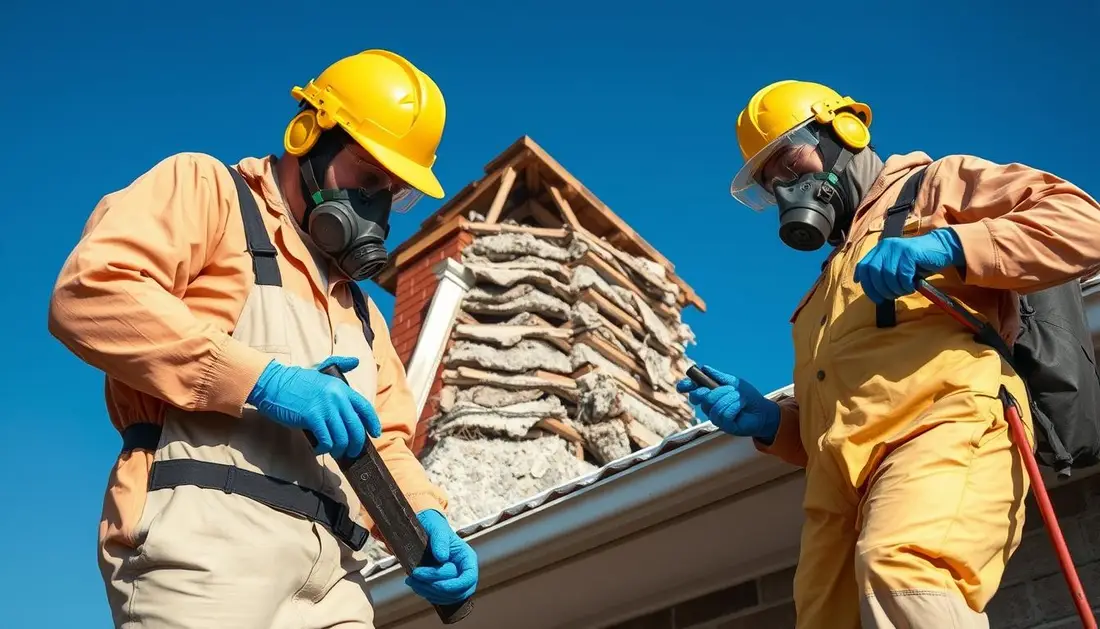
A controlled strip seals the work area to prevent fibre exposure. Teams use specialist wrap and labelled bags for secure disposal.
Before work starts, demand proof of contractor registration and a disposal certificate for your property. Note the Department of Employment and Labour letter of 11 November 2022 that limits solar work on these surfaces.
Final checks: the team carries a final air-quality check three days after completion and issues certification when the site meets safety requirements.
Obtaining Accurate Pricing Guidance and Contractor Quotes
Get clear pricing before you book work: costs vary by site access, material volume and structure complexity.
Use our pricing guidance to understand the main cost drivers for safe asbestos removal projects. Always use a registered asbestos-removal contractor with a trained team and the correct safety accreditation.
Requesting quotes through our quote request process connects you with independent contractors who supply transparent, written estimates. Check that each company provides a breakdown of site preparation, disposal fees and safety certifications.
- Compare quotes for scope, labour, disposal and compliance.
- Confirm inclusion of air‑quality testing and disposal certificates.
- Note that prices depend on region, quantity and labour needs after a site visit.
| Cost factor | What it covers | What to confirm in writing |
|---|---|---|
| Site access | Scaffolding, lifts, safe working space | Access plan, extra charges for difficult sites |
| Material volume | Removal time, waste bags, transport | Estimated tonnes, unit rates and disposal fees |
| Complexity | Steep pitches, fragile structures, containment | Sequence of works and containment methods |
| Certification | Air tests, disposal receipts, contractor registration | Copies of certificates and disposal manifest |
Clients can rely on our platform to find reputable contractors who combine technical standards with clear pricing. Visit buildingpricessouthafrica.co.za to request up to 3 quotes from independent professionals who specialise in compliant disposal and safe project delivery.

Coordinating Safe Disposal with New Roofing Installations
Scheduling disposal and replacement work together reduces exposure windows and speeds up handover.
Specialist asbestos removal and roofing contractors offer full-service solutions for residential and commercial property in Cape Town.
When you plan both disposal and the new covering at once, contractors manage sequencing and containment in one programme. This keeps the site tidy and lowers health risk for occupants.

Clients benefit from a single project team that handles waste permits, transport and certified disposal before any new materials go down.
- Streamlined timeline means less time on site and fewer interruptions to daily life.
- Registered contractors ensure compliance and full documentation for your records.
- Our platform helps you find a company that manages both disposal and installation to deliver a quality finish.
“Planning removal and replacement together is the most efficient and safest approach for your property.”
Practical step: confirm in writing that the team will clear all fibres and issue final air-test and disposal certificates before new roofing work begins.
Conclusion
**,**For lasting peace of mind, rely on qualified teams and written certificates rather than guesswork.
Verify a registered contractor and insist on clear disposal certificates and post‑works air‑quality proof. Keep written quotes and scope so you know what the price covers.
Use our platform to compare realistic pricing and request up to three quotes from independent specialists. We help you match with teams that follow legal processes and provide documented evidence.
Never attempt to handle hazardous materials yourself. Fibre inhalation causes severe, often irreversible harm. Proper planning and coordination between removal and new installations keeps your property safe and sound for years to come.
The numbers are in roof replacement costs and demolition costs.
FAQ
What immediate health risks do I face if I disturb old cement sheets on my property?
Disturbing friable cement sheets can release fibres that irritate lungs and raise long-term risk of serious disease. If fibres are released, anyone nearby can breathe them in. Keep people and pets away, avoid sweeping or using power tools, and seal the area. Contact a licensed removal contractor and a health professional if exposure is suspected.
Can I remove hazardous roofing myself to save costs?
No. DIY removal of bonded cement sheeting carries significant risk and is restricted by regulation. Accredited teams use controlled methods, specialised personal protective equipment (PPE), and approved disposal routes. Attempting to remove sheets yourself can result in contamination, legal penalties and higher long‑term costs.
What legislation and approvals apply to licensed teams undertaking strip-out work?
Removal work must comply with sections of the Occupational Health and Safety Act and relevant Department of Labour guidelines. Contractors should follow an approved method statement, risk assessment and permit-to-work system. Ask your contractor to show proof of training, registration, compliance with local municipal waste rules and the waste disposal docket for final landfill acceptance.
What steps do professional teams follow during a controlled strip and site clean-up?
A compliant team will: set up exclusion zones and signage; wear certified respiratory and protective clothing; wet and remove sheets intact where possible; bag and seal waste; decontaminate tools and footwear; complete air monitoring if required; and transport waste to an authorised hazardous-waste landfill with paperwork. They should also leave a clearance certificate or written confirmation of safe completion.
How do contractors price a removal and replacement project?
Pricing depends on scope, sheet area, complexity of access, condition of supporting timbers, labour rates, disposal levies and new materials chosen. Expect separate costs for removal, testing, transport and landfill dockets, plus the replacement covering materials and installation. Ask for an itemised quote and confirm exclusions such as structural repairs or asbestos testing. It reads well alongside asbestos in older homes.
What should I confirm in writing before work starts?
Get a written quote and scope that lists work hours, waste-handling procedures, PPE standards, type of new covering, project timeline, payment terms, and proof of contractor training and licences. Ensure the contractor will supply waste dockets and a clearance statement on completion.
How is hazardous cladding transported and disposed of legally?
Waste must be double-bagged or sheet-wrapped, labelled and moved in covered vehicles to an authorised hazardous-waste landfill. Contractors must provide a waste manifest or docket from the receiving site. Improper disposal risks fines and environmental contamination — never burn or bury sheets on site.
Do we need an air clearance certificate after removal?
For larger or high‑risk projects, independent air monitoring and a clearance certificate are advisable and sometimes required. The certificate confirms that fibre levels meet occupational limits and the site is safe to re‑occupy for follow‑up work, such as installing new covering.
How many quotes should I request and how do you help with that?
We recommend getting up to three written quotes, or up to five where available, from independent contractors. Compare itemised costs for removal, transport, disposal and new materials. Verify contractor credentials and ask for references from similar jobs in your area before you commit.
What extra costs might appear during the project?
Unexpected costs include deteriorated timber replacement, additional air monitoring, longer access equipment hire, higher landfill levies, and remedial cleaning. Confirm a provisional sum for contingencies in the contract and request approval before extra work proceeds.
How should I manage the site while work is underway to protect occupants and neighbours?
Keep people and pets away, close windows and vents facing the work, and notify neighbours of the schedule. Follow contractor instructions for exclusion zones and dust control. For rentals or multi-unit sites, provide written notices to tenants and arrange safe temporary relocation if recommended.
Which materials are commonly used for replacement covering and how do they affect cost?
Common replacements include galvanised sheeting, corrugated steel, fibre‑cement alternatives and metal profiles with insulation. Costs vary by profile, gauge, insulation and finish. Discuss durability, warranty and energy performance with contractors to balance upfront cost and long‑term value.
Ready to compare?