
Asbestos in Older Homes: Where It Hides
Ceilings, eaves and roofs – where pre-1990 homes hide it and what to do
Quick answer
Asbestos in older homes – where pre-1990 houses hide it, how to confirm it safely, and the rules for removal and disposal.
13 min read
On this page
Does hidden legacy material in your home threaten your budget and health?
Finding hazardous material during a renovation can change a job from tidy to costly very fast.
At buildingpricessouthafrica.co.za we focus on pricing and value so you can plan sensibly.
Many homes built before the 1980s used cement sheets, floor tiles, insulation and pipe covers that may release dangerous asbestos fibers when disturbed.
Visual checks alone are unreliable. Professional assessment is the only way to confirm presence and to estimate remediation costs.
Key concerns are the condition of materials, the risk of fibres air release and the impact on project scope and timelines.
We offer clear pricing guidance and practical steps so you can budget for tests, safe removal and regulatory compliance without surprises.

Understanding Asbestos in Old Houses
Many South African homes still carry remnants of mid‑century building practice that matter to both budgets and health.
What it is: The term refers to natural mineral fibres that are microscopic. You cannot identify them by eye.
Why it was used: Builders prized these fibres for fire resistance, thermal performance and added strength. They were mixed into many building materials from the 1920s through the 1970s.
- Asbestos in old houses is a legacy issue tied to widespread use across floor, wall and roof products.
- It was processed into durable materials that now become hazardous when they deteriorate or are disturbed.
- Properties built before the 1980s are statistically more likely to contain such historic products.
What you should do: Treat mid‑century items with caution. Any renovation can release fibres and change a safe home into a hazard. We recommend professional laboratory testing before work starts so you can budget for safe removal and comply with local rules.

Why Asbestos Remains a Hidden Hazard
Hidden legacy materials can remain harmless for decades — until renovation disturbs them.
The latency period of disease
Some diseases linked to these materials take 20 to 60 years to show symptoms. That long delay means you can be exposed now and only see illness much later.
Why age matters
There is no known safe level of exposure, so even minor work on insulation or drywall can release microscopic asbestos fibers into the air.
- Regulation note: Asbestos has been prohibited in South Africa for well over a decade, yet legacy products remain in many older homes.
- Materials usually pose low risk when in good condition, but damage, wear or renovation raises the hazard quickly.
- Prolonged exposure can cause aggressive diseases such as mesothelioma and lung cancer, often diagnosed decades after first contact.
What to do
Use the age of your home as a practical risk indicator. Treat suspect products with caution and arrange professional testing before you start work.

Common Locations for Asbestos in South African Properties
Renovation sites often expose hidden fibres found in ceiling panels, roof sheeting and pipe lagging. We list typical spots so you can plan tests and quotes before work starts.
Ceilings and Eaves
Ceilings frequently contain cement sheet panels or textured finishes that may contain asbestos. Look for small square vinyl floor tiles below as a classic indicator.
Roof Sheets and Cladding
Roof sheets and external cladding were common products that used fibre‑reinforced cement. Weathering can make these materials brittle and release asbestos fibers into the air.
Pipe Lagging and Insulation
Pipe lagging, boiler wraps and some attic insulation (notably vermiculite) are high‑risk zones. Old pipe insulation and plumbing enclosures may hide asbestos-containing materials.
- Key points: disturbing ceilings, roof sheeting or pipe insulation can create immediate risk for everyone in the home.
- Materials may also hide behind wall panels or around boiler systems — treat such areas as suspect until tested.
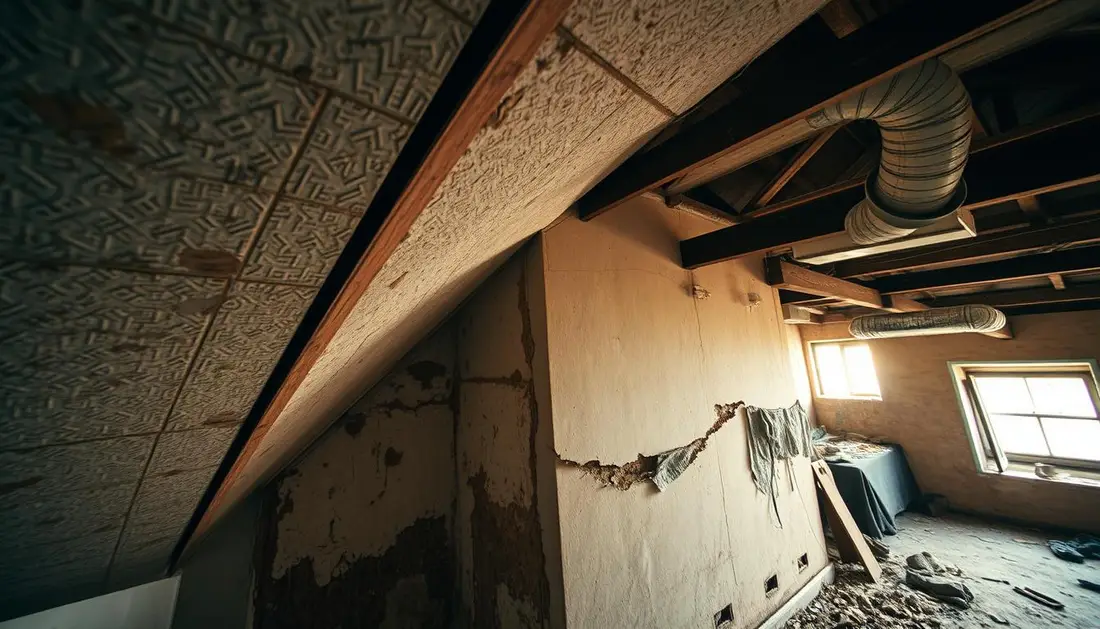
Visual Cues and Material Identification
You cannot rely on sight alone — many processed materials look like ordinary panels, tiles or insulation.
What to watch for: natural fibres may be brown, blue, white or green, but once mixed into building products they resemble standard cement sheets, vinyl floor tiles or ceiling panels.
Signs of concern include dimpling, fraying or small fuzzy fibres that resemble worn fabric. Water damage or abrasions on pipe lagging, ceilings or floor tiles is a clear cue to stop work and restrict the area.
Visual checks cannot confirm whether a product contains asbestos. Only laboratory testing gives a definitive answer. Do not touch suspect materials or try to remove them yourself — disturbance can release fibres into the air and increase exposure risk to everyone in your home.
- Do not sand, break or drill suspect cement sheets or tiles.
- Treat damaged insulation, pipes or ceilings as hazardous until tested.
- Call a licensed assessor to sample and quote so you can budget for safe handling and removal.

The Golden Rule of Asbestos Management
Never disturb suspect building products; leaving them alone is often the safest action. Keeping suspect items in good condition is the simplest way to lower risk and prevent fibres air release during renovation.
The Importance of Professional Testing
Professional inspection is essential. Laboratory analysis is the only reliable method to confirm whether materials contain asbestos-containing materials. A proper inspector uses training and specialised equipment to collect samples safely.
Typical inspection pricing ranges from about R3,500 to R9,000, depending on property size, access and the scope of sampling. Final costs vary by region, materials, labour and contractor assessment.
- Rule: do not touch damaged ceilings, insulation, roof sheets, floor tiles or pipe lagging.
- Safer sampling: licensed teams reduce the chance of releasing asbestos fibres into the air.
- What to confirm: get inclusions, exclusions, timelines and warranties in writing before work starts.
- Avoid DIY kits: collecting your own sample can raise exposure risk where none existed before.
Health Risks Associated with Fibre Exposure
Microscopic fibres disturbed during DIY or contractor work may begin a slow, cumulative harm to your lungs.
What this can cause: Inhaling these fibres can lead to serious health problems such as asbestosis, lung cancer and mesothelioma. Mesothelioma is a particularly aggressive cancer of the lung lining, abdomen or heart.
Symptoms often take a long time to appear. Shortness of breath, a chronic cough and chest pain may not show for decades. That delay makes prevention vital.
- Inhaling fibres from insulation, ceiling panels or floor tiles raises your long-term health risk.
- The danger grows with the duration and intensity of asbestos exposure to airborne asbestos-containing materials.
- Even short-term disturbance during a renovation can have life-long consequences for people in the home.
What to do now: Treat suspect materials as hazardous, restrict the area and seek professional testing. If you think you were exposed, see a medical professional for screening such as X-rays or CT scans.
Navigating the Legal Requirements for Removal
Legal compliance is not optional when a renovation may disturb hazardous products. You must understand the rules before work starts to avoid fines, delays and health risks.
Key legal points to note:
- Removing hazardous materials is a highly regulated process; failing to follow regulations can trigger severe penalties and criminal charges.
- Non-compliant asbestos removal carries heavy penalties under South African occupational health and safety law — a costly risk for DIY removal or non‑compliant contractors.
- Professional abatement contractors must hold permits, follow strict safety protocols and use appropriate training and equipment to prevent airborne fibres from spreading through the area.
An accredited inspector must provide a written assessment before major works proceed. That report is often a legal prerequisite for renovation and helps you plan cost and scope.
Practical steps for homeowners:
- Hire a licensed inspector to confirm whether materials contain asbestos-containing materials and to define the work scope.
- Verify contractor permits, training and disposal arrangements for regulated products and roof work.
- Require written protocols for containment, air monitoring and final clearance before you release payment.
Planning Your Renovation Safely
A clear pre‑renovation plan protects your budget and the people who live in the home.
Plan early: before any work begins, run a quick walkthrough and identify areas that may contain asbestos-containing materials such as pipe insulation, floor tiles or old ceilings. Stop work immediately if you see suspect material; do not drill, sand or scrape it.
Pre‑Renovation Checklist
- List likely risk zones: ceilings, roof cavities, floor tiles, plumbing enclosures and insulation.
- Restrict access: close off the area, keep children and pets away and post clear signage.
- Budget for testing and abatement: include fixed costs for sampling, lab analysis and possible removal.
Managing Contractor Assessments
Require proof of contractor training and permits before engagement. Ask for a written assessment that details containment, equipment, air monitoring and clearance criteria.
Remember: never attempt removal yourself. Proper equipment and training are essential to avoid harmful fibers air release and long‑term exposure that may affect health.
| Cost factor | Typical range (ZAR) | What to confirm in writing |
|---|---|---|
| Sampling & lab tests | R2,500 – R8,000 | Items sampled, lab method, turnaround time |
| Containment & labour | R5,000 – R25,000 | Work hours, equipment, training certificates |
| Removal & disposal | R7,500 – R45,000 | Waste route, permits, final clearance report |
How Our Platform Facilitates Expert Connections
Our platform helps you request quotes from specialists so you can compare costs and choose confidently.
Price guidance and quote comparison: request up to three quotes, or up to five where available, to compare scope, labour and material costs. Use side‑by‑side quotes to spot variations in containment, testing and disposal fees.
Independent experts: we link you to trained inspectors and accredited laboratory services that deliver clear reports on suspect materials and air samples. That helps you budget properly and avoid surprise exposure risk during work.
No sales pressure: our service is information-first. You get independent contractor options so decisions remain yours, not a contractor’s upsell.
- Compare pricing and confirmed scope before site visits.
- Check training, permits and quality documentation for each inspector.
- Confirm what the laboratory method, turnaround time and clearance criteria will be.
Final Thoughts on Protecting Your Home Investment
Know the likely risk zones and budget for testing before you sign any contractor quote. A short inspection and a lab test can show whether materials may contain asbestos and what follow‑up is needed.
Keep suspect items in good condition and restrict the work area to limit any air release. Professional testing reduces unexpected costs and lowers long‑term exposure risk to your family.
Our platform at buildingpricessouthafrica.co.za helps you compare quotes from specialists and plan sensible budgets for insulation, tiles or other suspect materials.
Prioritise health over shortcuts. Early action protects your home value, reduces disease and lung cancer risk later, and keeps your household safe.
Get the detail from strip-out & demolition costs and what renovations cost.
FAQ
Where is asbestos most likely to be found in older South African properties?
You’ll often find asbestos-containing materials in ceilings and eaves, roof sheets and cladding, cement products, pipe insulation (lagging) and around boilers or hot-water cylinders. Floor tiles, textured coatings and some external wall panels may also contain asbestos materials. Check areas that were rarely disturbed during past renovations.
How can I tell if a material contains asbestos by sight?
Visual cues alone are unreliable. Asbestos fibres are microscopic. Look for older cement sheets, fibrous insulation, brittle lagging or brittle floor tiles; these are warning signs but not proof. The only reliable method is a professional inspector who will take samples and send them to an accredited laboratory for analysis.
If materials look intact, is there still risk of exposure?
Materials in good condition usually pose low risk because they don’t release fibres into the air. Risk rises when materials are damaged, drilled, sanded or removed. If you plan renovations or suspect deterioration, stop work and arrange testing or removal by a licensed contractor to avoid airborne fibres.
What health risks come from fibre exposure?
Inhalation of asbestos fibres can cause long-term conditions such as asbestosis, mesothelioma and lung cancer. Symptoms often take decades to appear. The severity depends on type of fibre, concentration in the air, duration of exposure and individual factors like smoking.
Should I test or remove suspected asbestos myself?
No. Never try to remove or sample suspect materials without training and the correct safety equipment. Disturbing materials can release dangerous fibres. Use a trained inspector to sample and, if removal is required, hire a licensed asbestos removal contractor who follows South African regulations and disposes of waste at approved sites.
What does professional testing involve and how much does it cost?
A certified inspector will assess the site, take small samples with safe methods, and send them to an accredited laboratory for fibre analysis. Typical costs vary by region, scope and number of samples—expect from roughly R800 to R2 500 per sample depending on accessibility and turnaround. Our platform can help you request quotes from accredited inspectors.
When is removal legally required versus when can materials be managed in place?
Removal is required if materials are damaged, friable, or will be disturbed by demolition, renovations or plumbing work. Intact, undisturbed materials can sometimes be managed in place with a documented management plan. Confirm requirements with a licensed contractor and local municipal regulations before work begins.
How should I budget for safe asbestos removal during renovation?
Pricing depends on scope, materials, labour, access, waste disposal and whether air testing and clearance certificates are needed. Small, localised removals can start from a few thousand rand; full roof or extensive internal removal costs much more. Get itemised quotes that include testing, PPE, isolation measures, transport and landfill fees.
What should I include in a pre-renovation checklist to avoid accidental exposure?
Include a site inspection by a qualified inspector, lab testing, a documented asbestos management plan, confirmation of licensed removal where needed, contractor proof of training and insurance, and written clearance certificates after removal. Ensure contractors use appropriate equipment and follow waste-handling rules. It reads well alongside asbestos roof removal south africa.
How does your platform help connect me with qualified inspectors and removal contractors?
We facilitate up to three independent quote requests, sometimes up to five where available, from independent asbestos inspectors and removal contractors across South Africa. Contractors handle site visits, final quotes, timelines and warranties. Use our service to compare costs and ask for written scope and clearance reports before work starts.
What paperwork should a reputable contractor provide before and after removal?
Ask for a written quote detailing scope, labour and material costs, evidence of licensing and training, a health-and-safety plan, and proof of waste disposal arrangements. After work, request air-quality test results, clearance certificates from an accredited lab and an itemised final invoice.
Can simple maintenance like plumbing or roof repairs be done without testing first?
No. If work may disturb suspected materials—roof sheets, pipe insulation, ceiling panels—you should have those areas inspected and sampled first. If testing isn’t feasible before emergency repairs, use contractors trained in asbestos-safe work methods and isolate the area until testing is completed.
What signs should prompt immediate action from a homeowner or landlord?
Immediate action is needed when materials are crumbling, damaged by water, being cut or sanded, or if you notice visible dust or debris that could be fibres. Also act if occupants develop respiratory symptoms after disturbance. Stop work, restrict access and arrange an inspection without delay.
Are there approved products for replacing removed materials?
Yes. Non-fibrous alternatives such as fibre-cement that’s certified asbestos-free, metal roof sheeting, PVC cladding and modern insulated lagging are commonly used. Confirm product specifications and warranties, and factor material and installation costs into your renovation budget.
How can I reduce long-term liability as a landlord or property investor?
Keep accurate records of inspections, test results and removal work. Include asbestos risk disclosure in tenant agreements, maintain a management plan for any remaining materials, and ensure contractors provide clearance certificates. Regular condition checks and prompt repairs reduce future liability and protect tenants’ health.
Ready to compare?