
Demolition Permits and Neighbour Rules
Permits, notices and disconnections – the paperwork before the breaker
Quick answer
Demolition permits and neighbour rules – when permits apply, who must be notified, and the service disconnections that come first.
8 min read
On this page
Could one oversight on site cost your project time, money and neighbour relations?
Before you start any demolition work, you must check the national building regulations that govern how a building or solid structure is removed. Part E and Part F of the national building set the standards for basements, dangerous methods and site operations to protect the public and nearby structures.
Our platform, buildingpricessouthafrica.co.za, gives clear pricing guidance and an easy quote request process to connect you with independent contractors. We help you budget for labour, waste removal, hazardous materials such as asbestos, and materials handling.
Local authority conditions and the national building requirements shape the demolition process. Good planning keeps construction safe, limits disturbance to neighbours and ensures compliance with site operations and building regulations.
Understanding the Legal Requirements for a Demolition Permit South Africa
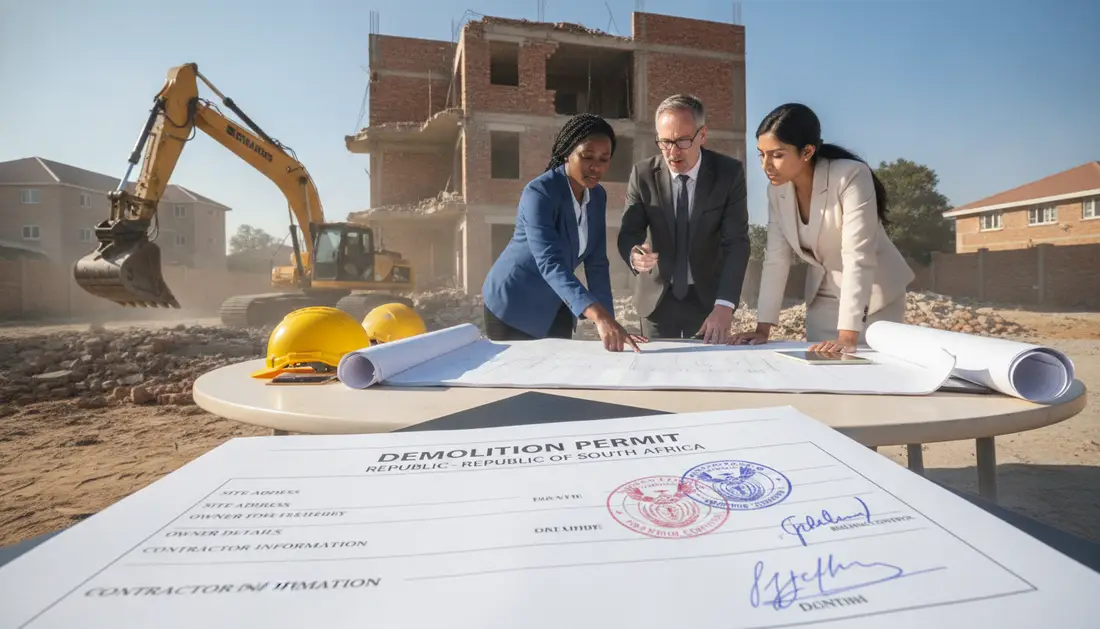
Knowing the rules first saves you delay and cost. You must get permission from your local authority before you remove any building structure. The national building regulations set the standards you must meet.
National Building Regulations and Compliance
Part F covers site operations and explains the conditions to protect health, safety and the convenience of the public during work. Part E bans dangerous methods and keeps basements and nearby buildings stable.
The Application Process and Documentation
Submit a Notice of Intention to Commence Demolition (NBR A22) to the District Building Inspector at least 10 days before you start work.
- Local authority permission is mandatory before any removal begins.
- If the local authority finds the site dangerous, they can issue a notice to make the area safe immediately.
- Authorities may add conditions to prevent damage to property and protect neighbouring buildings.
We provide pricing guidance so you can budget for labour, access, waste and any extra conditions your local authority may require. Confirm what must be in writing before you sign a contract.
Essential Site Operations and Safety Protocols
A controlled service disconnection sequence reduces risk to people, property and underground services. Before any demolition work begins, isolate electricity, water and gas in that order. This simple step creates a safer site and lowers the chance of accidental injury or property damage.
Service Disconnection Sequence
Follow a written sequence and confirm cut-offs with your utility suppliers. Heavy machinery must only operate after services are declared isolated. Trained operators prevent strikes on buried cables and pipes.
Hazardous Material Handling and Disposal
Asbestos and other hazardous materials need registered contractors to identify and remove them. Disposal must comply with the National Environmental Management Waste Act, No 59 of 2008. A licensed facility should receive all hazardous waste to protect the public and the environment.
Safeguarding Basements and Structural Integrity
Protect lateral support for basements and adjacent structures to keep neighbouring buildings stable. The local authority can restrict any method that risks collapse in built-up areas. Proper waste management and dust, vibration and noise controls help ensure safety for nearby residents and properties.
Managing Neighbour Relations and Property Protection
A clear neighbour notification plan protects property and keeps complaints to a minimum.
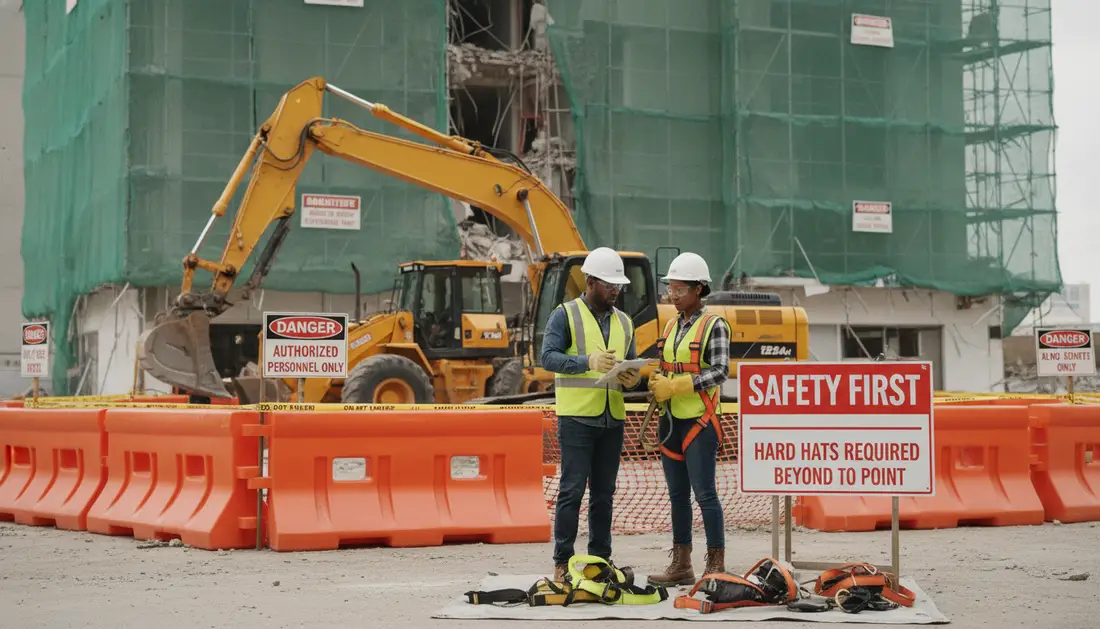
Maintaining good relations matters because demolition work creates noise, dust and vibration that affect adjacent owners.
You must secure lateral support for basements and nearby structures to prevent damage property to other buildings. Building regulations do not allow leaving a site in a dangerous condition.

“Notify neighbours of your site operations early and document agreed safety steps.”
- Tell neighbours about site operations and the expected schedule.
- If you find asbestos, contact a registered contractor immediately for removal.
- Use insurance and physical protection to reduce the risk of flying debris.
Confirm all safety protocols and neighbour notification steps in writing with your contractor before work starts. Our platform helps you budget and request quotes so you can plan for waste, materials and compliance with national building regulations.
Securing Professional Guidance for Your Demolition Project
Accurate quotes and clear contracts reduce risk for your building project. Use our quote request process at buildingpricessouthafrica.co.za to connect with independent contractors and request up to three quotes.
Prices vary with scope, site access, regional labour, materials and the method needed to demolish building structures. Confirm inclusions, exclusions, timelines, payments and warranties in writing.
Our platform helps you find professionals who know asbestos removal, waste management and hazardous materials disposal. Always check compliance documentation and that the local authority and building inspector have been notified before work starts.
Use our pricing guidance to plan for safe removal, disposal and the full cost of professional demolitions.
Get the detail from demolition cost guide.
FAQ
What approvals do I need to demolish a building and who issues them?
You must obtain written permission from your local authority under the National Building Regulations. This usually involves submitting a formal application with drawings, method statements, a waste management plan and proof of appointment of a competent contractor. The municipal building control officer issues the approval once the submission meets regulatory requirements.
What documents are typically required with the application?
Applications commonly include site plans, structural drawings showing the proposed removal, a demolition method statement, a health and safety plan, proof of sewage and electrical disconnection arrangements, and a hazardous‑materials report if asbestos or other contaminants are present. Confirm exact local requirements with your municipality before lodging documents.
How should I handle disconnection of services before work starts?
Follow a clear service disconnection sequence: notify and book disconnections with the electricity utility and water authority, arrange gas isolation by the supplier, and organise sewer/civil connections where necessary. Keep written confirmation from each supplier to show the building control officer at inspection.
What steps are required for asbestos or hazardous material removal?
If suspect materials are found, engage an accredited assessor to sample and report. Licensed removal contractors must handle asbestos, using containment, negative‑pressure systems and suitable PPE. Waste must be packaged, transported and disposed of at approved hazardous-waste facilities, with manifests kept on file.
How do we protect neighbouring properties and the public during site works?
Implement protective measures such as scaffolding with sheeting, debris nets, hoardings, and exclusion zones. Erect signage and site lighting, control dust and noise, and monitor vibration. Maintain open communication with neighbours about start dates, working hours and site access to reduce disputes.
Who checks structural safety for adjacent buildings and basements?
A structural engineer should assess impact on neighbouring foundations and basements and prescribe monitoring or temporary shoring if needed. The engineer’s recommendations form part of the method statement and are used by the building control officer to approve works that might affect structural integrity.
What are the main health and safety duties on site?
The principal contractor must prepare a health and safety plan, provide trained supervisors, enforce PPE, and manage access controls. Risk assessments, daily toolbox talks and an emergency response plan are essential. Local inspectors may visit to verify compliance.
How is waste managed and what are the disposal obligations?
Waste must be segregated on site (recyclables, inert rubble, hazardous waste). Use licensed transfer stations and registered landfill sites for disposal. Keep waste manifests and receipts to demonstrate lawful removal and to satisfy municipal requirements.
Do I need neighbour consent to demolish my property?
Formal neighbour consent is not usually required to obtain approval, but you must prevent damage to adjacent property and public areas. Where works impact shared structures, party‑wall agreements or written notifications may be needed. Take photographs and record pre‑existing conditions to avoid disputes.
When should I hire an engineer, and what do they provide?
Appoint a structural engineer early for site assessment, demolition sequencing, temporary works design and supervision where required. Their reports and drawings often form part of the application and are relied on during inspections to ensure safe execution. For what this typically costs, see demolition costs.
How long does approval typically take and can timelines vary?
Approval times vary by municipality and project complexity — expect anywhere from a few weeks to a couple of months. Complex sites, hazardous materials or incomplete submissions prolong the process. Plan for inspections and potential revisions to avoid delays.
What insurance and indemnities should I confirm before works start?
Ensure the contractor holds public liability and construction all‑risk insurance. Confirm professional indemnity cover for design and engineering consultants. Verify policy limits, expiry dates and that policies name the property owner where appropriate.
Can contractors begin work before written approval is issued?
No. Commencing work before receiving written municipal approval risks enforcement action, fines, stop orders and costly rectification. Always secure the required authorization and keep it on site for inspections.
How do I find suitable contractors and obtain quotes?
Request written quotes that break down costs for scope, labour, plant, waste removal and provisional items. Check contractor references, licences, safety records and insurance. Where available, we allow you to request up to three quotes, or up to five quote options where the service permits, from independent contractors for competitive comparison. This pairs naturally with rubble removal, skips and salvage.
What cost factors should I expect when budgeting for works?
Major cost drivers include site access, structural complexity, hazardous‑material removal, volume of waste, temporary works and the need for specialist plant. Regional labour rates and municipal application fees also influence the total. Always confirm exclusions and payment schedules in writing.
Ready to compare?