
Rubble Removal, Skips and Salvage
Skips, loads and salvage credits – clearing the site without burning the budget
Quick answer
Rubble removal, skips and salvage – how site clearing is priced, what can be sold or reused, and the dumping rules that apply.
9 min read
On this page
Curious how to clear a site quickly, affordably and with no hidden costs? Our platform helps you compare realistic prices and book a trusted team for the job.

At buildingpricessouthafrica.co.za we connect you with independent contractors who have more than ten years’ experience in the local industry. Our pricing guidance makes it simple to understand how fleet, labour and access affect costs.
When you need reliable removal services, use our quote request process to get competitive rates for garden clearances or full site works. We focus on clear fees and what you must confirm in writing.
Expect practical advice, transparent comparisons and a straightforward way to request up to three quotes. That means less guesswork and more confidence when you hire a local waste removal service.
Understanding Rubble Removal Options in South Africa
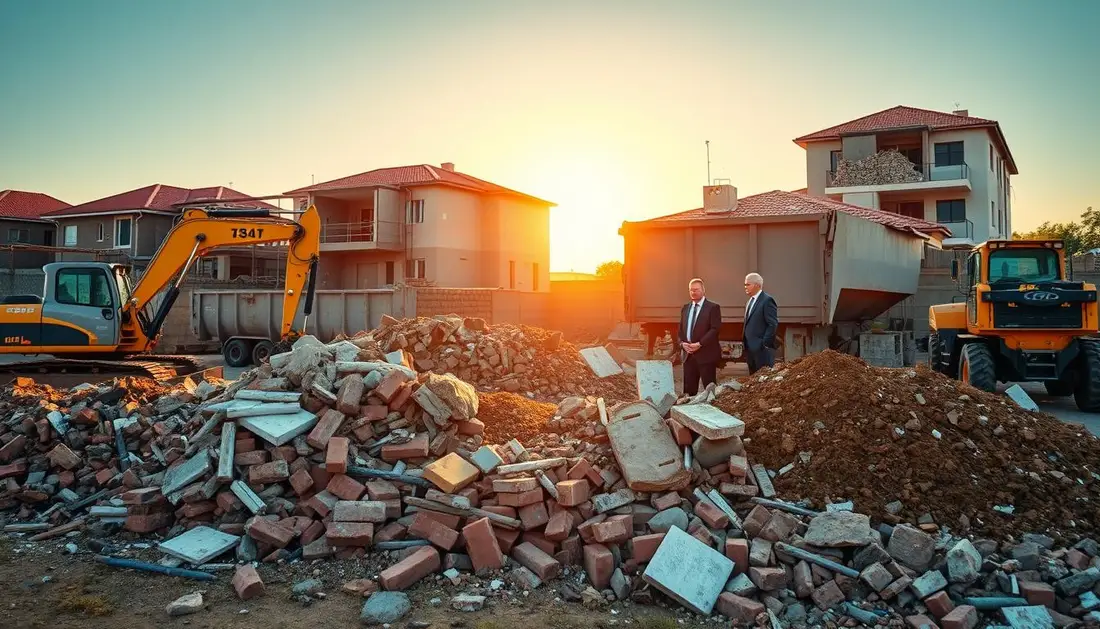
Start by sorting your items — household clutter and garden cuttings need a different approach to construction debris.
Residential waste
Typical household waste includes broken furniture, old appliances, food scraps and plastic bottles.
Garden waste covers grass clippings, branches from tree work and general garden refuse after a tidy-up.
Tip: Clear separation of household junk and garden material lowers collection costs and speeds up disposal.
Commercial debris
Business sites usually generate paper, cardboard and office equipment. Large volumes call for an organised team and regular collection.
Building rubble from renovations — bricks and concrete — needs specialist handling to meet local disposal rules.
- Home clearances: small loads, mixed items.
- Garden projects: branches, soil and green waste.
- Construction work: heavy masonry and bulky materials.
| Type | Common items | Suggested service |
|---|---|---|
| Residential | Furniture, appliances, household junk | Local collection or scheduled uplift |
| Garden | Branches, grass, tree cuttings | Garden refuse collection or composting |
| Construction | Bricks, concrete, building rubble | Specialist haulage and licensed disposal |
We outline clear definitions and pricing factors so you can request up to three quotes with confidence.
Comparing Skip Hire and Per-Load Hauling
Choosing between a hired skip and a per-load haul depends on time, volume and site access.
Skip hire suits long renovation projects where building rubble collects over weeks. It gives flexibility and steady collection while you work.
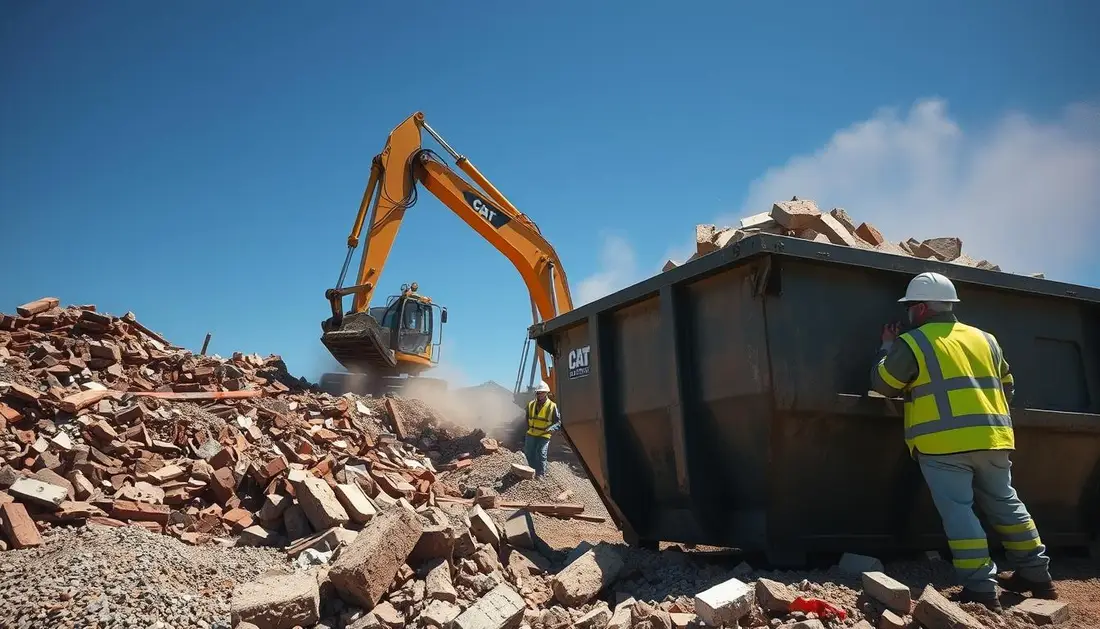
Per-load hauling is best for fast clearances. A professional team can clear garden refuse, household junk or construction debris in one visit using 1.2-ton long-wheelbase bakkies, 4-ton flat-beds and 14-ton tippers.
- Consider job length: short jobs favour per-load collections; long projects may favour a skip.
- Think volume: large amounts of building rubble often suit a skip; mixed household items can be moved by truck.
- Check access: narrow streets may restrict larger trucks, so a bakkie or smaller skip can help.
Our platform compares both approaches and connects you with independent contractors who have over ten years’ experience. Use our pricing guidance to pick the most cost-effective service and request up to three quotes.
Factors Influencing Your Waste Removal Quote
Quotes vary because of scope, site access and the make-up of the waste to be moved.
Labour and access
Labour costs make up a large part of the final price. If the team must carry material more than 10 metres to reach trucks, you may see an additional R300 charge.
Site location
Where the job is affects cost. Remote areas or narrow streets slow work and may need smaller trucks or extra staff. Expect higher fees where specialised equipment is required.

Material composition
The mix of heavy bricks and concrete versus lighter household junk shapes the quote. Garden refuse and construction debris often need different handling and disposal routes.
- Confirm in writing: inclusions, exclusions, timelines and payment terms before work starts.
- Assess types: accurate assessment of debris helps produce a fair quote for business or home projects.
- Check for fees: ask about dumping or site-specific regulations that could change costs.
Our platform helps you compare realistic quotes by showing how scope, region, access and materials affect price.
Maximising Salvage Value from Construction Debris
You can recover value from construction sites by spotting materials that are fit for reuse or resale. A clear sorting plan helps you and contractors agree how salvaged items will be credited against the final quote.
Common Salvageable Materials
Look for durable, reusable items:
- Face brick, concrete blocks and loose bricks — often worth reclaiming for re‑use or resale.
- Roof tiles and salvageable timber — can offset waste costs when cleaned and stacked.
- Steel, nails and metal fixtures — high recycling value that contractors can separate on collection.
- Garage items, old furniture and usable fixtures — these reduce household junk sent to landfill.
By separating building rubble from household junk and garden refuse you make it easier for the team to sort on-site. Our platform gives pricing guidance so you can discuss salvage credits and make sure recovered value appears in your quote.
Practical tip: Photograph salvaged items before collection and agree terms in writing. Efficient salvage reduces waste, helps the environment and lowers your net disposal cost.

Legal Responsibilities and Safe Disposal Practices
You are accountable if material from your property is dumped illegally — so verification matters.
Always confirm that your contractor takes waste to a certified site. We recommend authorised facilities such as the Marie-Louise Landfill for building rubble and the Pikitup Boksburg Depot at 198 Malibongwe Dr.
Fly-tipping is a serious offence. If material from your site is dumped, you can be held liable. Ask for written proof of disposal before work starts and again when the job finishes.
- Choose certified contractors: look for members of the Institute of Waste Management Southern Africa (IWMSA).
- Verify e-waste handling: pick businesses aligned with the E-Waste Association of South Africa (EWASA).
- Safe handling: separate garden and construction debris to meet local regulations and reduce risk.
“Ensure your contractor provides written proof of disposal — it protects you from future liability.”
Our platform helps you find lawful solutions and trusted services. By following these simple steps you protect your project, support the industry and keep communities clean.
Scheduling Tips for Efficient Site Management
Plan site clearances so trades never wait on the next visit; timing keeps projects on track.
Book your waste collection to follow key milestones—after demolition, before plastering, or once garden work finishes. This avoids delays and keeps the next trade working on time.
Confirm arrival windows with the removal team and the contractor. Clear access routes so deliveries and labourers move freely.
Tip: in busy areas, book early. Popular teams fill fast and late bookings can stall your job.
- Align collections with project phases to reduce site congestion.
- Photograph piles before collection and confirm what stays and what goes.
- Tell contractors your timeline so the service arrives when needed.
| Plan | When to book | Benefit |
|---|---|---|
| Major demolition | Immediately after phase end | Prevents blocking trades |
| Garden clearance | On completion of cut-back | Keeps access clear for deliveries |
| Final site tidy | Before next trade starts | Safe, organised property handover |
“Clear scheduling prevents costly downtime and protects your project timeline.”
Securing Professional Assistance for Your Property Clearance
Get clear, comparable quotes from experts who have worked in the industry for years. Use buildingpricessouthafrica.co.za and our platform to connect with independent contractors who offer reliable rubble removal services for home and business projects.
Our pricing guidance helps you request up to three quotes so you can compare fair rates for waste and site cleanup. Confirm timelines, payments and any warranty in writing with your chosen team before work starts.
We link you to certified experts — members of the Institute of Waste Management Southern Africa (IWMSA) and the E-Waste Association of South Africa (EWASA). These professionals bring the right trucks and crew for safe disposal and efficient service.
Visit buildingpricessouthafrica.co.za to start your quote request and find a trustworthy rubble removal service that protects your project and clients.
See the live figures in demolition costs.
FAQ
What is included under Rubble Removal, Skips & Salvage Explained?
We explain practical solutions for clearing building rubble, garden refuse, household junk and construction debris. The guide covers skip hire, per‑load haulage, salvageable materials, safe disposal and typical costs. It helps you decide between a skip, a truck collection or a salvage-first approach for home renovations, garden clearance and small building jobs.
How do I know whether I need residential waste or commercial debris services?
Residential waste typically covers household items, garden branches, furniture and small amounts of bricks or concrete from DIY projects. Commercial debris involves larger volumes from construction sites, demolition, or business renovations and usually needs larger trucks, more labour and a permit in some areas. Confirm volume and access before you request quotes. It reads well alongside demolition permits and neighbour rules.
Which is cheaper — skip hire or per‑load hauling?
Cost depends on volume, time on site and access. Skips suit steady small-to-medium loads and short projects; pricing is usually a day‑rate plus delivery and collection. Per‑load hauling works better for one‑off large loads or where skips won’t fit. Compare total price including disposal fees, possible permit costs and labour for loading.
What labour and access factors affect my waste removal quote?
Labour hours, number of crew, stair or long‑carry access, and required loading equipment increase cost. Tight access or high lifts slow work and may require extra staff. Always confirm if the crew will handle dismantling items like sheds or taking appliances apart—this affects the final charge.
How does site location change pricing?
Region affects travel time, tolls and disposal site fees. Inner‑city jobs with restricted loading zones or peak‑time restrictions often cost more. Remote areas add travel surcharges. Ask for a travel fee breakdown and the contractor’s nearest disposal site when getting quotes.
What is material composition and why does it matter?
Different materials attract different disposal fees. Mixed loads with concrete, bricks and inert fill cost differently from green waste, timber, mixed household junk or e‑waste. Hazardous items such as asbestos or certain batteries require specialist handling and separate permits—declare these up front to avoid surprise charges.
What common salvageable materials should I set aside to maximise value?
Salvageable items often include bricks, timber in good condition, metal, doors, windows and certain fixtures. Clean, sorted materials fetch better prices from reclaim yards or salvage dealers. Separating metals and clean timber lowers disposal costs and can partially offset your clearance bill.
Are there legal responsibilities for safe disposal in South Africa?
Yes. The National Environmental Management: Waste Act and local municipal bylaws set standards for handling and disposal. Contractors must use licensed landfill sites and follow hazardous‑waste rules. You remain responsible for illegal dumping if you hire a contractor that does not follow regulations—always ask for disposal receipts.
How should I schedule site clearance to keep my renovation on track?
Coordinate removals with key milestones: demolition completion, prior to follow‑up trades and before delivery of new materials. Allow buffer days for unexpected delays and get a written schedule from your contractor. Early bookings secure better rates and help avoid downtime for builders or plumbers.
When should I hire professional assistance for property clearance?
Hire professionals for large volumes, restricted access, hazardous materials, or where time is limited. A team with trucks and skips speeds up work and reduces risk. For small tidy‑ups, a per‑load collection may suffice. Request up to three quotes or up to five where available to compare pricing, scope and disposal methods before you appoint a contractor.
Ready to compare?