
Provisional Sums in Building Quotes
Why flexible allowances can make a quote look cheaper than the final project cost
Quick answer
Provisional sums in building quotes explained – why they make quotes look cheaper, who carries the risk and how to cap them.
10 min read
On this page
provisional sums building quotes in South Africa can change your overall project cost more than you expect. Are you sure a single allowance won’t push your budget over the line?
At buildingpricessouthafrica.co.za we use clear, cost-first guidance to help you spot where a quote may hide extra charges. Our platform and our pricing guidance guide you through what to confirm in writing before you sign a contract.
Knowing the true price of your home renovation or construction project saves time and stress. We show how to compare a quote from an independent builder and check labour, materials and approval costs.

Use our pricing guidance to evaluate whether a quote is competitive or masking future cost increases. This short intro sets you up to ask the right questions and protect your budget.
Understanding Provisional Sums in Building Quotes
You will see a provisional sum on a quote when certain elements of the work cannot be defined yet.
What it means: a provisional sum is an estimated allowance for work that is unclear at tender stage. It acts as a placeholder so your builder can present a complete price for the rest of the project.
These terms are common in construction, but they often create confusion about final cost. Each provisional sum can change once the actual scope is set.

How we help: our pricing guidance explains the difference between a fixed price and a variable estimate. Treat every allowance as a potential cost risk and check how the sum will be finalised.
- Builders use allowances when finishes or site conditions are not yet decided.
- Ask how each sum will be measured and what approval is needed to fix the price.
- Factor these sums into your overall budget to avoid surprises late in the project.
Why Builders Use Allowances for Uncertain Work
Builders add an allowance when the true scope cannot be fixed from the tender alone. This most often happens because the site hides unknowns or services are not yet located.
The role of site conditions
Ground conditions, drainage and unseen services force a provisional sum for excavation or remedial work. The 2006 Midland Expressway Ltd v Carillion Construction Ltd ruling confirms these entries mark work that is undefined or truly provisional.

Scope gaps arise when structural details or essential services are missing from tender information. Follow a recognised standard method of measurement to demand clear information about the extent of any listed sum.
- Common examples include drainage, earthworks and specialist services that are hard to price before site inspection.
- Ask how each sum will be converted to a final price and what approval the contract requires to change cost.
- Identifying gaps early reduces reliance on vague allowances and helps protect your project budget.
Distinguishing Between Provisional Sums and Prime Cost Items
Sorting prime cost items from broader allowances is one of the easiest ways to protect your budget. A prime cost is an allowance for supply of specific materials or fittings you have not yet selected, like taps, tiles or appliances.

In contrast, a provisional sum covers both labour and materials for work that is not yet fully defined in your contract. That makes a sum prime allowance wider in scope than a prime cost item.
Understand the difference because both can change the final price of your construction project. When you review a quote, ask the builder to list prime cost provisional items separately from any general provisional sum prime entries.
- Prime cost: allowance for fittings, appliances and finishes you will choose later.
- Provisional sum prime: allowance for undefined site works that include labour and materials.
- Clear separation in the contract helps you track actual costs versus provisional estimates.
“Always require that prime cost provisional items are itemised so your contract matches spending expectations.”
Real World Impact of Unmanaged Allowances
Hidden site conditions can turn a tidy allowance into a major cost headache. Treat every listed allowance as a risk, not a fixed figure.
A Worked Example of Budget Creep
Consider a R60,000 provisional sum for excavation that swells to R110,000 after unexpected rock and services are found on site.
The R50,000 difference shows how a single allowance can push your final cost well beyond the headline price on a quote.
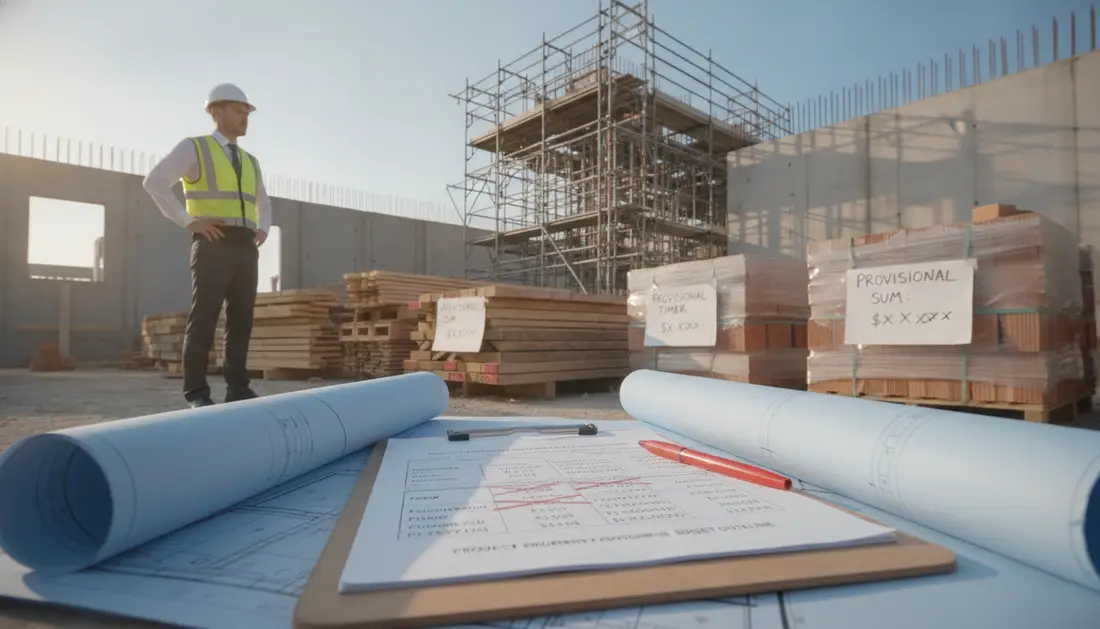
When a builder gives a quote with large allowances, the initial figure may look attractive. The actual costs for works like groundworks and drainage often exceed early estimates.
- Risk: unmanaged allowances cause severe budget creep and stress.
- Example: excavation and hidden services commonly increase the amount required.
- Action: demand a detailed breakdown of every cost provisional item before you sign the contract.
“Always ask for itemised figures so your home project budget matches reality.”
Strategies to Cap and Clarify Costs Before Signing
Small clarifications now can prevent large cost surprises later in your project. Take a pro-active approach to the estimate and require written details for anything unclear. This saves time and protects your budget.
Providing Detailed Specifications
Provide clear specifications for materials, appliances and fittings before you sign a contract. That reduces the number of prime cost items and keeps the final cost nearer the quoted figure.
Tip: list exact products, finishes and brands where possible. This stops a sum being converted into a higher amount later.
Requesting Updated Quotes
Ask your builder for an updated quote when missing details are confirmed. An updated estimate shows the difference between an allowance and the true price.
Request the updated quote in writing and include a deadline to limit delays and additional time-related costs.
Verifying Inclusions and Exclusions
Verify every inclusion and exclusion so you do not pay twice for the same work. Check whether the contract covers labour, materials and approvals.
“Demand itemised prices and written confirmation before work starts.”
- To cap your costs, follow our 5-way checklist: count the allowances, check their size, demand clear explanations, request updated quotes, and verify all inclusions in writing.
- Always ask whether the amount allowed is low, mid or high specification to avoid budget surprises.
Managing Risk Through Professional Quote Review
A careful quote review highlights omitted site risks and unclear item descriptions before you sign.
Count every provisional sum entry and check whether the builder has allowed for site conditions and project risks. Note each sum and ask for the information that will firm up the price.
Request specific questions from your builder: why is an item still provisional, what details are missing, and which tests or drawings are needed to finalise the figure.
Compare quotes from different builders but check the prime cost entries closely. A low headline figure can hide under-estimated prime cost items that raise the final cost later. This pairs naturally with our guide to prime cost items in building quotes.
- Use our platform to spot omitted details that could inflate the final cost.
- Review contract terms to confirm the amount for appliances and related work is realistic.
- Professional oversight lets you see the risk behind each allowance, not just the total figure.
“A targeted review turns vague allowances into clear, manageable risks.”
Securing Your Project Budget with buildingpricessouthafrica.co.za
A short review of each provisional sums entry can stop costly surprises during construction. Start by having a professional check every allowance so your budget stays realistic.
Before you sign the contract, confirm exactly what work each allowance covers. That clarity keeps the final cost in line with the initial figure.
Visit buildingpricessouthafrica.co.za to access clear information and compare a detailed quote from an independent builder. We show how to list items and spot risks in any construction or home estimate.
If you have questions about current figures, our guides can help. Do not leave your budget to chance — verify every item and protect your project.
FAQ
What are provisional sums in a building quote and what should I check?
Provisional sums are allowances in a contract for work or items not yet fully specified. Check the description of the work, the assumed quantity, the unit rate basis, whether the sum is for supply only or supply-and-install, and whether VAT and contractor overheads are included. Ask for the basis of value and examples of likely fittings or materials so you can compare like-for-like when you get final prices.
How do provisional sums differ from prime cost (PC) items?
A prime cost item is an allowance for a specified product or fitting that still needs selection — for example, a kitchen hob labelled at a provisional amount. A provisional sum usually covers an activity or unknown scope such as excavation or specialist groundwork. Verify whether a PC item covers the product only or includes installation, and confirm how any shortfall or surplus is handled in the final account.
Why do builders include allowances for uncertain work?
Builders add allowances to manage unknowns that affect price and programme — site conditions, hidden services, or client selections still pending. This protects both parties: the contractor avoids underquoting and you avoid an overly optimistic lump sum that will be adjusted later. Still, the clearer the initial scope, the smaller and better defined the allowances should be.
How can site conditions affect those allowances?
Unseen ground conditions, established foundations, drainage routes and access constraints change labour, plant and material needs. If a quote includes an allowance for excavation or rock removal, ask for the assumed depth, type of soil and required disposal. That way you can compare the builder’s assumptions with a site inspection or geotechnical report.
What are common scope gaps that lead to cost increases?
Scope gaps include missing detailed drawings, incomplete schedules of finishes, undefined structural changes, and unconfirmed services locations. These gaps force contractors to make assumptions and put sums in the quote. Close those gaps by providing detailed specifications and by confirming items such as windows, sanitaryware, and floor finishes before you sign.
Can unmanaged allowances cause budget creep? Any examples?
Yes. For example, a R50 000 allowance for landscaping might assume basic turf and simple drainage. If you later choose paving and irrigation, the final cost could be R120 000. Another common example: a R30 000 allowance for electrical work expanded when feature lighting and additional circuits were added, doubling the final bill. Document assumptions to avoid surprises.
How do I cap or clarify costs before I sign a contract?
Ask for firm maximums or more detailed breakdowns for each allowance. Request written clarifications of scope, ask the contractor to confirm unit rates for likely variations, and set an agreed approval process for any extra work. You can also request provisional sums be converted to fixed prices once you finalise selections.
What should I include when providing detailed specifications?
Include product make and model, dimensions, finishes, performance standards, and installation method. For trades, include drawings, section details and acceptance tolerances. The clearer your schedule of finishes and appliances (for example, specific brands for sanitaryware or kitchen appliances), the fewer allowances you’ll need.
When should I request updated quotes during the project?
Request updated pricing whenever selections change, when site information becomes available (for example, a soil report), and before any provisional sum is converted to a final price. Also ask for a revised final account after major milestones so you can track variations against the original budget. It reads well alongside what builders need to quote.
How do I verify inclusions and exclusions in an allowance?
Get the contractor to list what the sum covers and what it excludes — labour, materials, scaffolding, waste removal, plant hire, permits, and testing. Insist on a clear variation clause that sets rates and approval steps for extras, and keep those items in the contract annexure so both parties have a single reference point.
Should I get a professional review of a quote before signing?
Yes. A professional review from a quantity surveyor, experienced architect or an independent estimator helps spot under- or over-priced allowances, missing scope, and unfair contract terms. They can also recommend specific cost caps and changes to the variation process to protect your budget. For what this typically costs, see how the quote process works.
How does using buildingpricessouthafrica.co.za help secure my budget?
The platform helps you compare multiple independent contractors and obtain clearer quotes. Use the service to request up to three quote options, or up to five where available, and match contractors who will provide site inspections and written detail on allowances. Independent contractors manage final pricing, programme and warranties; the platform helps you start with better, more comparable information. This pairs naturally with building cost calculator accuracy.
Ready to compare?