
Countertop Materials Compared
Granite, engineered stone, wood and laminate – living with each, not just buying it
Quick answer
Countertop materials compared – granite, engineered stone, wood and laminate – heat, stains, joins and long-term care explained.
11 min read
On this page
Which surface will best lift your kitchen and your property’s value? That question matters if you plan a serious renovation in South Africa. Choosing between natural and man‑made options affects appearance, maintenance and cost.
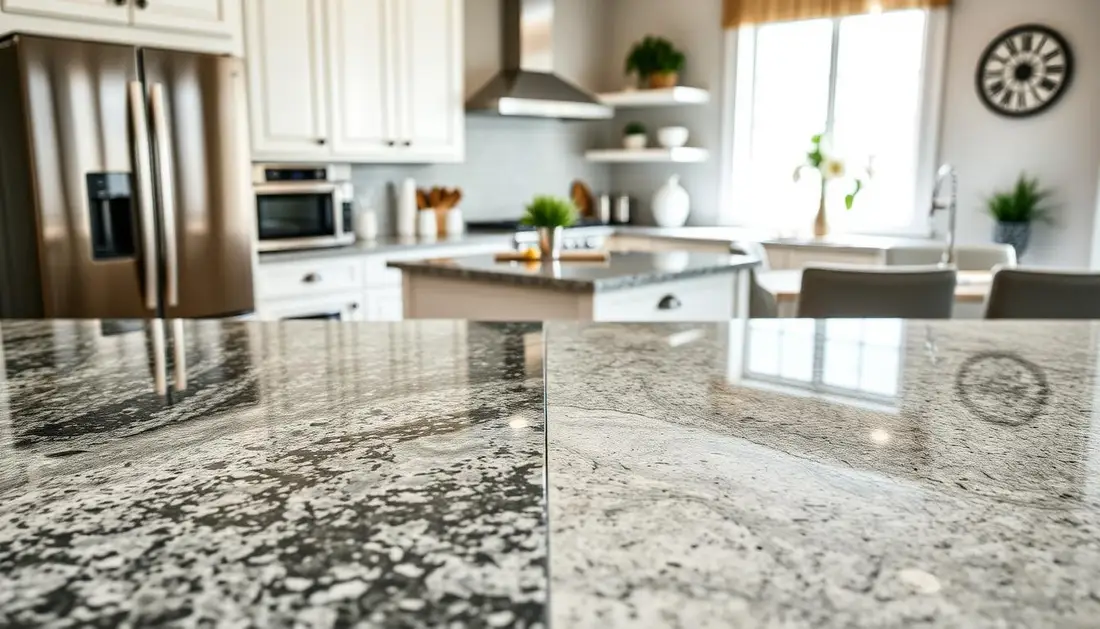
Granite is a 100% natural rock formed from molten magma long ago. Engineered alternatives use about 93% crushed quartz bound with resin for a consistent look suited to modern kitchens.
Our platform gives the clear information you need to compare these options before you commit. Use our quote request process to reach independent contractors across South Africa and get realistic pricing.
We focus on cost, durability and finish so you can choose with confidence. Read on to see how each option suits your lifestyle, budget and the long‑term worth of your home.
Understanding Granite vs Engineered Stone Countertops in South Africa
Many South African renovators ask whether a mined slab or a crafted quartz surface better suits daily kitchen use. The choice affects look, upkeep and resale value.
How they are sourced and supplied: Natural slabs are cut from large blocks at quarries, then polished and sent to local suppliers. Popular imported quartz brands available here include Caesarstone, Quarella, HanStone and Traffic Stone.
Practical trade-offs: Natural options give one‑of‑a‑kind patterns that suit classic kitchens. Manufactured quartz offers consistent colours and predictable maintenance for busy households.
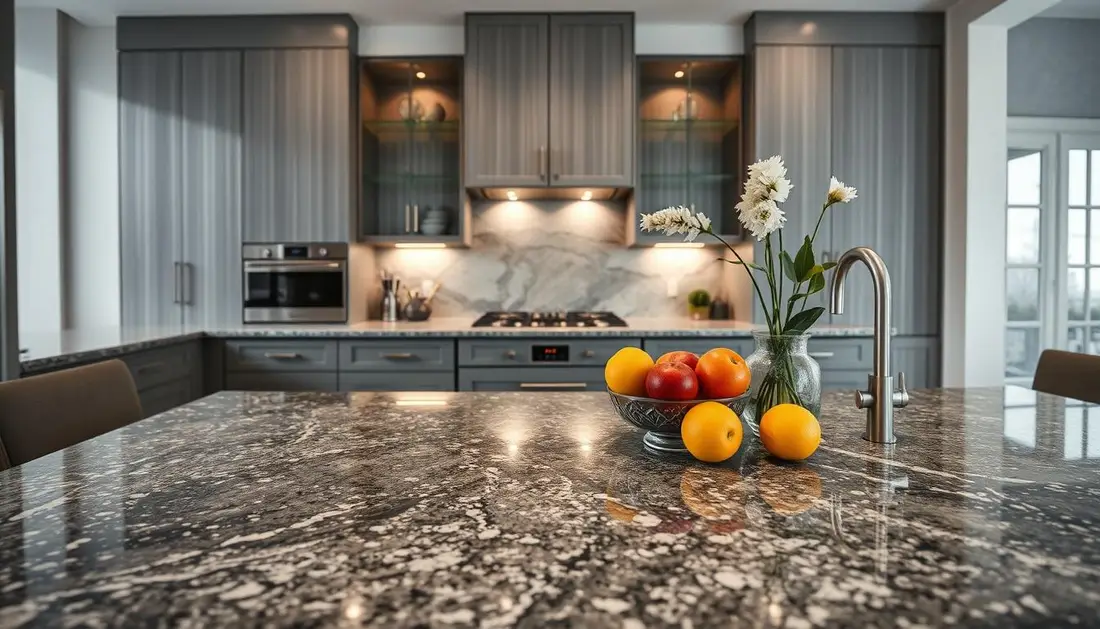
| Feature | Natural slabs | Quartz brands | Why it matters |
|---|---|---|---|
| Appearance | Unique veining | Uniform patterns | Design match and resale appeal |
| Supply | Quarry blocks, local cutting | Imported slabs, brand ranges | Lead time and selection |
| Suitability | Premium finishes | Low-variation kitchens | Daily use and maintenance |
- Both granite countertops and quartz countertops rank as high-end choices in South Africa.
- Consider pattern, upkeep and your cooking habits when choosing material types.
Composition and Natural Origins

The minerals and the making matter. Deep geological forces produce natural slabs with interlocking crystals of quartz, feldspar and mica formed over hundreds of millions of years. That slow formation gives each slab unique movement and veining.
Natural rock characteristics
Unique patterning: Natural materials show irregular colours and veining that vary from piece to piece. This creates a one‑off appearance that many homeowners prize.
Long formation: Geological pressure over many years makes dense, hard surfaces. The age and mineral mix determine appearance and durability.
Manufacturing of engineered surfaces
Manufactured slabs use about 93% crushed quartz and roughly 7% resin. The process binds quartz with pigments and polymers in a controlled environment.
Consistent colour and design: The factory process gives predictable colours and repeatable patterns. That makes planning easier for busy kitchens and repeat installations.
- Natural slabs: cut from rock, variable veining and texture.
- Manufactured slabs: blended quartz, non‑porous, consistent finishes.
- Other materials like marble and solid surface have distinct formation or composition and different care needs.
| Aspect | Natural slab | Manufactured slab | Why it matters |
|---|---|---|---|
| Composition | Interlocking quartz, feldspar, mica | ~93% crushed quartz + resin | Affects hardness and maintenance |
| Appearance | Unique veining and colours | Uniform colours and repeatable patterns | Design predictability vs natural beauty |
| Production | Quarry cut from a single slab | Manufactured in controlled plants | Supply consistency and lead times |
Performance Metrics and Durability
How a surface handles heat, scratches and spills tells you how it will perform over years. We compare practical metrics so you can judge suitability for a busy South African kitchen.
Heat and Scratch Resistance
High heat: Natural slabs tolerate hot pots well, but we advise using a trivet for all installations to avoid thermal shock or resin damage.
Scratch resistance: Natural materials are very hard and resist daily wear when sealed and maintained. Quartz compositions offer strong scratch resistance too, though heavy impacts can chip any slab.
Stain Resistance and Hygiene
Stains and sealing: Porous surfaces need regular sealing to block oils and acidic spills. Follow a sealing schedule to protect colour and finish.
Hygiene: Non‑porous quartz slabs score higher for bacterial resistance because they prevent moisture and mould in joints.
“Durability is unmatched, but no material is wholly impervious to heavy impacts — correct installation makes the difference.”

Comparison Table
| Metric | Natural slabs | Manufactured quartz | Why it matters |
|---|---|---|---|
| Heat resistance | Very high; tolerates hot pots | Good to 120°C; avoid direct hot pans | Affects use with pots, cooktops and kettles |
| Scratch resistance | Excellent when sealed and maintained | High resistance; can chip under heavy impact | Daily durability in busy kitchens |
| Stain resistance | Moderate; needs regular sealing | High; non‑porous and low absorption | Long‑term colour and maintenance effort |
| Hygiene | Good if sealed; pores can harbour bacteria | Superior; non‑porous surface reduces bacteria | Important for food prep and family homes |
- Installation quality and correct sealing extend the life and beauty of any slab.
- Use trivets for hot pots and avoid dropping heavy items to prevent damage.
Maintenance Requirements and Daily Care
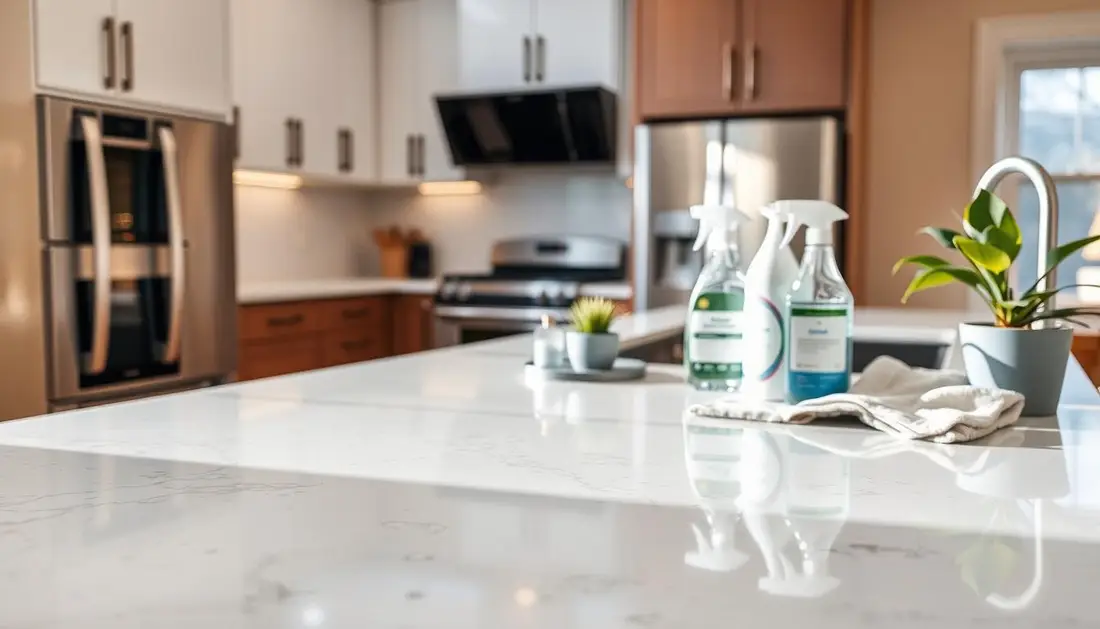
Daily upkeep decides how long your kitchen surface keeps its look. Clean spills straight away. Use mild soap and water and a soft cloth to remove food and oils. This lowers bacteria risk and prevents long-term stains.
For natural slabs, clean every day and schedule sealing at least once a year. Annual sealing fills pores and reduces liquid absorption. That step preserves colour and reduces damage from acidic spills.
For engineered stone, wipe with a damp cloth for most dirt. These quartz surfaces need less maintenance, but avoid placing hot pots directly on them. Extreme heat can harm the resin binder and cause cracking.
“A simple routine and quick clean-ups protect your investment and keep your kitchen hygienic.”
| Task | Natural slab | Manufactured quartz |
|---|---|---|
| Daily cleaning | Mild soap and water; dry after cleaning | Damp cloth; mild detergent if needed |
| Sealing | At least once a year | Not required |
| Heat care | Use trivets for hot pots | Avoid direct hot pans |
| Stain prevention | Wipe spills immediately | Wipe spills immediately |
Pro tip: Invest in a professional care plan if you want scheduled maintenance and stain protection. Proper care keeps quartz countertops and other kitchen countertops functional and attractive for years in your home.
Pricing Dynamics and Installation Factors
Pricing reflects slab size, cutouts and the local supply chain, not just the material listed on a price sheet. Our pricing guidance shows that quotes are normally given per linear metre and will vary with slab thickness and the number of hob and sink cutouts.
Site access, labour rates and chosen finishes also affect the final price. Tight access or complex kitchen layouts increase installation time and cost. Confirm whether the quote includes delivery, handling and protective packing for heavy slabs.
Sizing and Cutout Mechanics
Precise measurement matters. The installation process requires accurate templates for sink and hob cutouts. These work into the total, and miscuts can add cost during fitting.
- Our pricing guidance helps you see how supply and demand change the cost of granite and quartz options.
- Use our quote request process and ask contractors to list inclusions, exclusions and warranties in writing.
- Both granite countertops and quartz countertops need professional handling during transport to avoid damage to the slab.
Compare several quotes to balance budget and quality. Always verify that site assessment and professional sealing for natural slabs are included if required. That step protects your finish and reduces risks from stains and heat exposure.
Making the Right Choice for Your Kitchen
Making the Right Choice for Your Kitchen
A clear brief about use, design and maintenance cuts through choices and narrows the best option for your home.
Choosing between granite and engineered stone depends on your lifestyle, design tastes and the time you can give to care.
Granite offers natural beauty and unique veining for one‑of‑a‑kind patterns; quartz gives consistent colours and low upkeep for busy households.
Visit buildingpricessouthafrica.co.za to request quotes from independent contractors and compare installation, timelines and warranties in writing.
Confirm scope, lead times and guarantees before you sign. That simple step protects your budget and ensures lasting beauty and function.
Turn this into a budget with kitchen remodel costs. It reads well alongside kitchen renovation order of work.
FAQ
What are the main differences between granite and engineered stone for kitchen surfaces?
The natural option is quarried and cut into slabs with unique veining and mineral patterns. The manufactured option combines crushed quartz with resin and pigments to create consistent colours and fewer variations. Natural material often needs periodic sealing and shows more variation; the manufactured material offers uniformity, lower porosity and easier routine upkeep. Consider appearance, sealing needs, and long-term value when choosing.
Which material is more heat resistant when placing hot pots and pans directly on the surface?
Natural rock tolerates brief exposure to heat better than most resin-based surfaces, but sudden thermal shock can still cause cracking. The manufactured surface resists everyday heat but can discolour or scorch under direct contact with very hot cookware. We recommend using trivets or hot pads for both to protect the finish and avoid warranty issues.
How do the two options compare for scratch and chip resistance?
Both are durable, but hardness varies. The quarried option is hard and resists scratching, though edges and thinner areas may chip on impact. The engineered option is also hard thanks to quartz content and tends to chip less at edges because slabs are engineered for uniform strength. Avoid cutting directly on any surface; use a chopping board.
Which surface is easier to keep hygienic and free of stains?
The manufactured surface is less porous and therefore resists stains and bacterial harbouring better without frequent sealing. The natural surface typically requires sealing on installation and periodic reseals to maintain stain resistance. Regular cleaning with a mild, pH-neutral cleaner keeps either surface hygienic.
How often do natural slabs need sealing and what does that cost in South Africa?
Most natural slabs need sealing on installation and then every 12–24 months depending on use. A professional reseal in South Africa can cost from about R300 to R900 per linear metre depending on access and finish. DIY sealants are cheaper but may not achieve the same coverage or warranty compliance.
What affects the price difference between the two options?
Price depends on slab grade, rarity, finish, and supply chain. Natural slabs with dramatic veining or imported provenance cost more. Manufactured slabs vary by brand, pattern and quartz percentage. Installation factors — slab size, cutouts for sinks and hobs, edge profiles, access and region — add labour and transport costs. Always get itemised quotes for material and installation.
Are there size or installation limits for each material?
Natural slabs come in large single pieces but may need seams for long runs. Manufactured slabs are available in large formats too and often allow longer runs with fewer seams. Both need professional templating and careful handling for large islands, cutouts for sinks/hobs and complex edge profiles. Confirm transport access and whether seams will be visible before signing a quote.
How should I care for my surface day to day to keep it looking new?
Wipe spills promptly with a soft cloth and mild detergent. Use cutting boards; avoid abrasive cleaners and bleach. Use mild descalers for lime-scale near kettles and a specialised stone cleaner occasionally. For the natural option, check the seal annually and reseal as needed. For the manufactured option, follow the manufacturer’s care sheet to preserve the warranty.
Can either option be repaired if damaged or stained?
Minor chips, scratches and stains can often be repaired by a professional. Natural slabs can be patched and colour-matched, though repair seams may be visible. Manufactured surfaces can be filled and polished; success depends on damage depth and colour. Get a repair quote before deciding on replacement.
Will either choice add value to my home in South Africa?
Both choices are popular with buyers and can enhance resale appeal when installed neatly and maintained. Natural surfaces may attract buyers who value unique, high-end finishes. Manufactured surfaces appeal for consistent style and low maintenance. Match your choice to the market in your suburb and the overall specification of the home.
Do warranties differ between natural and manufactured slabs?
Yes. Manufactured brands often include a product warranty (commonly 10–15 years) covering defects when installed by an approved fabricator. Natural stone suppliers rarely warranty the stone itself beyond obvious defects but fabricator workmanship may carry a limited guarantee. Always request written warranty terms and check exclusions such as damage from hot pans or improper sealing.
How should I compare quotes from fabricators and installers?
Ask for itemised pricing: slab cost per square metre, labour for templating, cutting and installation, edge profiling, sink and hob cutouts, and sealant or polish. Confirm the number of seams, transport, site access charges and warranty details in writing. We recommend requesting up to 3 quotes, or up to 5 where available, from independent contractors to compare scope and price. For what this typically costs, see what kitchen renovation costs.
Are there environmental or sustainability differences to consider?
Natural quarrying has a higher immediate landscape impact and energy cost for transport, but natural slabs are long-lasting. Manufactured slabs use resin and core materials; some brands offer recycled-content options and lower waste during production. If sustainability matters, ask suppliers for environmental data sheets or recycled-content certification. This pairs naturally with kitchen cupboard materials compared.
Which option offers more design flexibility for colours and finishes?
Manufactured slabs offer the widest palette and consistent patterns, including marble-look designs. Natural slabs provide unique, one-off veining and mineral depth that can’t be perfectly duplicated. If you need repeatable batches for a multi-unit development, manufactured material may be more practical.
Ready to compare?