
Stock, Face and Maxi Bricks Explained
Stock, face and maxi – what each brick is for and how it lays
Quick answer
Stock, face and maxi bricks explained – where each belongs, lay-rate differences and the buying checks that protect your quality.
10 min read
On this page
Are you sure the units you choose today will still suit your building tomorrow?
Welcome to our platform. We offer clear, pricing-first guidance to help you compare bricks and assess clay products for your next project.
Understanding the size and shape of masonry units matters. These details shape the final look and help you plan labour and materials accurately.
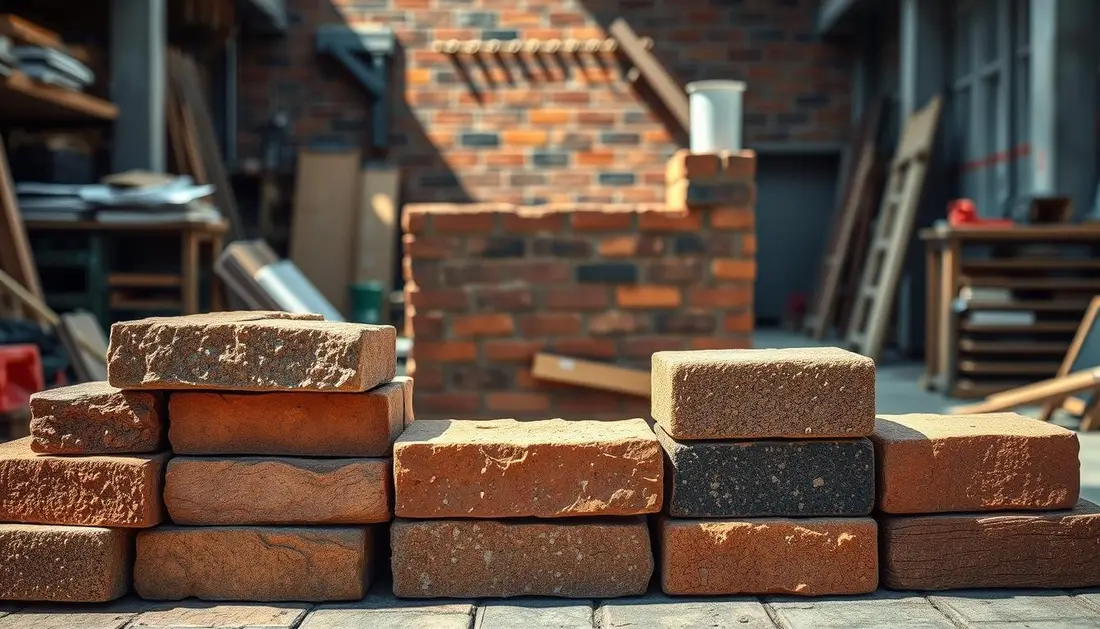
We explain how clay quality and unit standards influence durability and cost. The SANS 227:2007 framework guides classification of burnt clay face units used in construction.
Use buildingpricessouthafrica.co.za to request quotes and connect with independent contractors. Our pricing guidance simplifies choices so you can keep your project on track and within budget.
Understanding Brick Types South Africa and Market Costs
Knowing how different masonry units affect cost and labour helps you plan a realistic budget.
For a standard residential house, clay bricks and plaster bricks usually make up about 6%–8% of total construction cost. This is a useful rule of thumb when you set your budget.
On larger commercial projects, such as factories or office blocks, the share for face bricks and plaster bricks drops to roughly 2%–3%. Scale and finish change the numbers.

- Our pricing guidance explains why domestic builds carry a higher bricks percentage than commercial projects.
- Use our quote request process to compare suppliers and confirm the cost per unit and delivery terms.
- Confirm scope, site access, region, timelines, payments and warranties in writing with your contractor before work starts.
- Builders and homeowners can manage budgets better by checking realistic standard cost factors for each project.
Practical estimates and clear quotes reduce surprises and help you choose the right materials for your home.
Technical Classification of Clay and Concrete Masonry
Knowing how clay and concrete units differ makes it easier to match materials to climate and budget.
Clay units are made from a mix of clay and additives. They are extruded, cut to size and fired in a kiln. This process gives good thermal properties and long-term durability.
Concrete masonry units use aggregate, cement and water. The mix is vibrated into a mould to form the required shape and profile. SANS 1215 sets the standard for controlled production of these units.

Clay performance and thermal benefits
Clay offers natural insulation. Its thermal mass helps keep interiors cool in summer and warmer in winter, which can lower energy use.
Fire resistance and strength also make clay a reliable choice for solid and cavity walls if installed correctly.
Concrete standards and dimensional notes
The standard imperial size of 222mm × 106mm × 73mm remains a common baseline for many projects. Remember that the main difference between a brick and a block is size; bricks usually range from 190mm to 220mm in length.
| Characteristic | Clay units | Concrete units | Relevant standard |
|---|---|---|---|
| Primary materials | Clay + additives | Aggregate + cement + water | SANS 1215 (concrete) |
| Thermal behaviour | High thermal mass, good insulation | Moderate thermal mass; depends on mix | SANS 10400 (wall requirements) |
| Typical size note | 190–220mm length range | Often larger blocks for speed | 222×106×73mm common baseline |
- Consider texture and shape: these affect final face and plaster needs.
- Check weather exposure and regional climate when choosing materials.
- We recommend confirming strength and thickness requirements with your contractor before work starts.
Economic Advantages of Maxi Bricks and Specialised Units
Maxi formats offer a practical route to lower on-site cost and faster walls.

Maxi 90 units measure 222mm × 90mm × 114mm, while Maxi 140 measure 290mm × 140mm × 114mm. Their larger size means fewer bricks per square metre and quicker laying rates on site.
Fewer units lowers handling time and often reduces labour cost for a house. Larger units normally need less mortar by volume, which trims material spend and waste.
Maximising Efficiency with Larger Masonry Units
These units retain required strength and durability for internal and external walls when specified to SANS 10400 thickness and installation rules.
- Speed: faster wall construction with Maxi 140 reduces on-site hours.
- Cost: fewer units and less mortar can cut total material and labour cost.
- Compliance: thickness and shape are designed to meet building standards.
We recommend you discuss specialised units with your contractor to confirm structural needs and the right cement bricks or clay bricks mix for your project.
Essential Quality Checks and Delivery Standards
A quick site inspection on delivery saves time and prevents costly delays.
Visual inspection for chips and cracks
On arrival, check pallets for chips, cracks or misshapen units. Small damage can signal poor handling or lower quality and will affect mortar coverage and finish.
Verifying colour batch consistency
Face units must match across batches. Confirm colour and texture before you start laying, especially for visible walls. Ask the supplier to hold matching stock if your order arrives in two or more deliveries.

Assessing crushing strength basics
Strength is measured in MPa. Blocks usually need at least 3.5 MPa and bricks 7 MPa. Request test certificates or lab results with your delivery.
- Order +10% wastage to cover offloading breakages so work continues without hold-ups.
- Confirm standards in writing — size, uniformity, texture and expected degree of colour match.
- Match material to climate so the mix and thickness offer the necessary resistance for wet winters and hot summers.
We recommend recording any defects immediately and asking suppliers for replacements before signing the delivery note.
Securing Your Project Success with Professional Guidance
Accurate pricing and the right supplier reduce risk across every wall you build.
Seek professional guidance from architects or local manufacturers when selecting special shaped units and face bricks. This helps match size, shape and texture to your design and weather conditions.
Use our platform to obtain reliable cost guidance and connect with independent builders. Visit buildingpricessouthafrica.co.za to request up to five competitive quotes for your project and to compare order details.
Confirm scope, material inclusions, strength and warranties in writing so your house or renovation proceeds with clear expectations and lasting durability.
Check current pricing in bricklaying rates. For what this typically costs, see bricklaying per thousand costs.
FAQ
What are stock, face and maxi bricks, and how do they differ?
Stock units are the standard masonry blocks used for general walls and structures. Face bricks are higher-grade clay or concrete units made for exposed walls where finish and colour matter. Maxi bricks are larger-sized units that cover more area per unit, reducing laying time and labour. Choose face bricks for exterior appearance, stock for internal or hidden walls, and maxi for speed and cost-efficiency on large projects.
How should I budget for different brick types in South African projects?
Expect price variation by material, finish and unit size. Clay face bricks cost more per unit than standard stock or cement (concrete) units because of firing and colour control. Maxi bricks usually lower labour cost per m² but may increase freight or handling charges. Include material, mortar, plaster, scaffolding, delivery and contractor labour in your budget and get up to three written quotes to compare.
What are the key technical differences between clay and concrete masonry?
Clay masonry is fired, giving stable colour, good weather resistance and solid thermal mass. Concrete (cement) units are cast from a mix and can vary in density and strength. Clay tends to have better face appearance and longevity; concrete offers consistent shape and often lower cost. Check unit strength (crushing strength), absorption and mortar compatibility for structural work.
How durable are clay bricks and how do they perform thermally?
High-quality clay units show excellent durability against weather, freeze–thaw cycles and abrasion when correctly specified. They store heat during the day and release it at night, improving thermal comfort and reducing energy for heating and cooling. Look for low water absorption and tested crushing strength for long-lasting walls.
What standards apply to concrete masonry in South Africa?
Concrete masonry should conform to SANS standards covering unit dimensions, compressive strength and water absorption. Verify certificates or test reports from manufacturers for compliance. Use approved cement mixes, correct curing and certified mortar to meet structural and durability requirements.
When do maxi bricks make economic sense for a project?
Maxi units cut laying time and labour cost on large external or boundary walls and multi-unit housing. They reduce per-m² material wastage and speed up delivery of a shell. They are less suitable where fine detailing, tight curves or heavy finishes are required. Balance unit cost savings against handling, transport and finish needs.
How do larger masonry units improve efficiency on site?
Fewer units per m² mean fewer bed joints, less mortar and faster laying. That lowers labour hours and often reduces scaffolding time. Larger units also reduce transport volume and can simplify stock control. Ensure contractors are experienced with larger units to avoid jointing or structural issues.
What visual checks should I make on delivery for chips and cracks?
Inspect random samples from several pallets on arrival. Look for chips at corners, hairline cracks and broken frogs or perforations. Reject batches showing systemic damage. Note delivery condition on the driver’s paperwork and photograph defects before acceptance.
How important is colour batch consistency and how do I verify it?
Colour consistency is vital for face work. Bricks from different kilns or production runs can vary. Ask the supplier to supply from the same batch or check several pallets for uniformity before signing off. For large façades, order a slightly larger quantity from one batch to allow for cutting waste and future repairs.
What is crushing strength and what minimum should I expect?
Crushing strength measures how much compressive load a unit can carry. Requirements depend on wall function and building class; for general external walls expect minimums specified in SANS or by your engineer. Request test certificates from the manufacturer and confirm the unit’s grade before purchase. This pairs naturally with drywall vs brick for internal walls.
What basic quality checks should I add to a delivery acceptance checklist?
Check unit dimensions and tolerances, colour and texture, visible damage, and water absorption where relevant. Confirm the number of units matches the delivery note and that packaging prevents damage. Record any deviations and refuse or quarantine suspect pallets for supplier inspection.
How do weather and climate affect choice of masonry units for my region?
In coastal or high-rain areas choose low-absorption units with suitable salts resistance. In cold regions or where freeze–thaw cycles occur, specify frost-resistant units. For hotter inland climates consider units with good thermal mass to improve comfort. Discuss local conditions with your contractor before ordering.
What should I confirm in writing with suppliers and builders before work starts?
Confirm unit type, size, colour, quantity, delivery dates, pallet stacking and transport cost. Get test certificates for strength and absorption, warranty terms and a written scope of work from the contractor covering labour rates, workmanship guarantees, scaffold and plastering scope. Keep all approvals and the final quote in writing.
Can I use cement (concrete) units for loadbearing walls?
Yes, provided the units meet required compressive strength and the wall is designed by an engineer. Concrete units can be reinforced and used for loadbearing work when correctly specified and constructed with appropriate mortar, curing and lintel detailing.
How do I decide between plastering face bricks or leaving them exposed?
Exposed face bricks give a low-maintenance finish with character, but cost more up front for quality units. Plastering lowers unit cost but adds labour, materials and maintenance over time. Consider desired finish, budget and long-term running costs when deciding. It reads well alongside what good brickwork looks like.
Ready to compare?