
Roof Tiles vs Sheeting Compared
Weight, noise, lifespan and look – choosing the covering before the colour
Quick answer
Roof tiles vs sheeting compared – weight, noise, lifespan, maintenance and looks – to choose the right covering for your build.
8 min read
On this page
Are you sure the most obvious option gives the best long‑term value?
At buildingpricessouthafrica.co.za we help you weigh price, performance and maintenance so you can make a clear decision for your home.
Steel sheets can cost from R180 to R600 per m2 depending on coatings and insulation. Standard concrete tiles work out at roughly R1,200 for 60 units.
That wide range changes the total cost of ownership over the years. Labour, access, finishes and warranties all affect final pricing.
We connect you with independent contractors who can assess your building and offer up to three quotes to compare metal and tile options.
Read on to learn which choice suits your budget, appearance and maintenance needs.

Understanding the Roof Tiles vs Sheeting Debate in South Africa
For most South African projects the choice of covering shapes the budget and the building’s appearance.
The debate often comes down to initial cost versus long‑term maintenance for your home. Concrete roof tiles commonly win on aesthetic appeal and are viewed as cost‑effective for many spans and pitches.
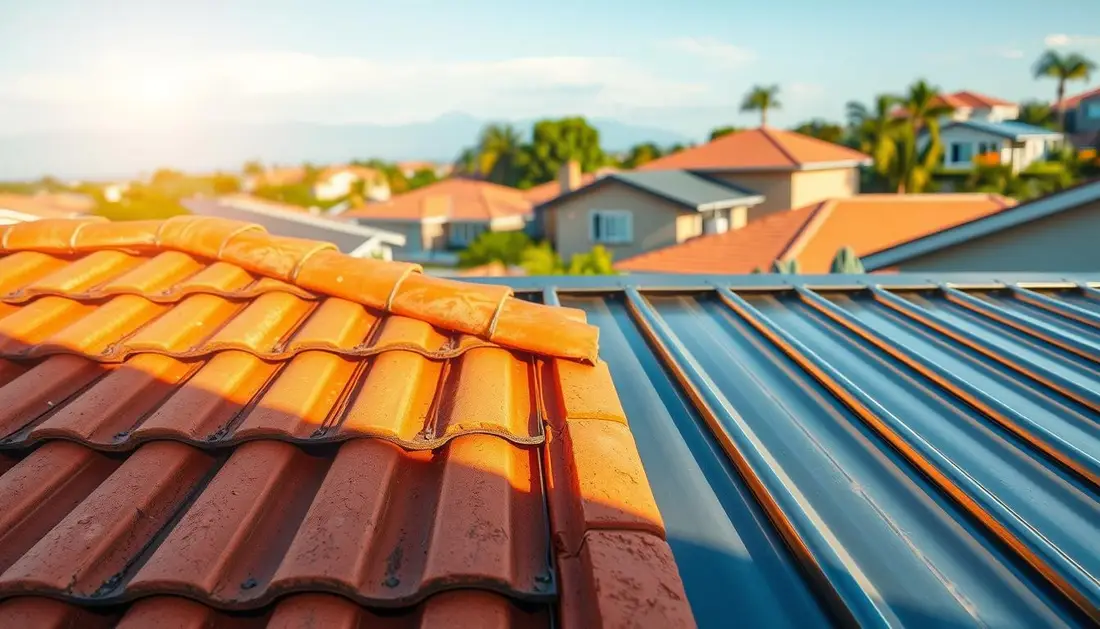
“Independent surveys, including work by V.R. Booth Pr. Eng., show concrete tiles remain popular for many buildings due to their look and value.”
Steel and modern metal sheets offer a lighter, contemporary finish and can reduce labour on some builds. However, material availability and regional labour costs influence final costs.
When comparing options, confirm scope, labour, finishes and warranties in writing. That ensures you weigh upfront spend against maintenance needs over the years and pick the right option for your property.
- Cost factors: materials, labour, access and regional supply.
- Performance: durability, maintenance and appearance over time.
- Decision tip: request independent quotes to compare realistic costs and types.
Structural Implications and Retrofit Considerations
Before you change coverings, confirm the truss capacity and likely reinforcement costs. The dead weight of materials alters framing needs and total project costs.

Truss capacity and weight
Concrete roof tiles are heavy and usually need truss spacing at 760 mm to carry the load safely.
By contrast, steel metal sheets are much lighter, allowing wider spacing of 1200 mm and lower material demands.
Installation and labour requirements
Tile installation is precise and slower because each unit is fixed separately. That drives up labour time and costs.
Sheets install as large panels, so labour is often faster but requires cranes or mechanical handling on larger buildings.
Practical checklist
- Confirm truss spacing and capacity with a contractor or engineer.
- Factor in reinforcement if you move from metal to tile; that adds weight and costs.
- Plan insulation to control heat and reduce noise from heavy rain.
| Feature | Concrete roof tiles | Steel sheets | Typical impact on costs |
|---|---|---|---|
| Truss spacing | 760 mm | 1200 mm | Closer spacing raises timber and labour costs |
| Dead weight | High | Low | Higher weight may need structural upgrades |
| Installation time | Slower (individual units) | Faster (panel installation) | Labour costs differ over project duration |
| Insulation need | Essential for heat control | Essential for heat and noise | Insulation affects long-term maintenance costs |
Always ask for a written assessment of truss capacity before you commit to any change. We can help you request independent quotes so you compare the true costs for your home.
Performance Comparison Across Key Metrics
Compare how each covering performs under South African weather to decide what keeps your home comfortable and low‑cost — both feed into the re-roofing costs when it is time to replace.
Lifespan and maintenance
Metal sheets commonly last 40–70 years when coated and maintained. They resist heavy rain and high winds and need only periodic inspections.
Concrete roof tiles can easily pass 50 years with good care. Repairs usually involve swapping a few damaged units rather than whole sections.
“Choose the material that matches expected lifespan to reduce surprises in future maintenance budgets.”
Noise and thermal insulation
Insulation is essential. Modern metal systems use blanket insulation with R‑ratings around 1.3–2.0 to limit heat and dampen rain noise.
Tile systems add thermal mass that helps regulate indoor heat but may need extra underlay for noise control in heavy downpours.
Aesthetic versatility
Metal offers a wide range of profiles and colours for contemporary designs. It is lighter in weight and suits steeper and shallower pitches.
Tiles provide a textured, traditional appearance that suits many suburban and heritage homes. Balance appearance against long‑term maintenance and cost.

- Durability: metal 40–70 years; concrete 50+ years.
- Maintenance: metal generally easier; tiles need occasional unit replacement.
- Insulation: proper installation is key for both.
Environmental Suitability and Climate Resilience
Salt air, strong sun and heavy storms demand that you match materials to local conditions.
Coastal exposure often accelerates decay. Salt can corrode sarking under tiled coverings, so many coastal homeowners prefer metal systems that resist salt-induced breakdown.

Be cautious with concrete units produced during building booms; some batches became brittle and failed within 5–7 years. That increases long-term maintenance and replacement cost for owners.
Proper insulation reduces heat gain under metal roofs and limits rain noise. Insulation choice affects comfort, energy use and how often you must service the covering.
- Arrange annual inspections to spot corrosion, cracked units or loose fixings early.
- Confirm truss and frame capacity for the added weight if you choose heavier coverings.
- Choose impact‑resistant profiles in hail‑prone zones; metal may dent while concrete can crack.
- Ask contractors for local references who understand coastal and inland climate risks.
We connect you with independent contractors who know regional challenges and can provide written scope, cost estimates and practical advice for your building project.
Making the Right Choice for Your Property
Deciding on the best covering means matching budget, climate and long‑term maintenance for your property.
Balance appearance and costs by comparing expected lifespan and service needs. Consider concrete and steel options, their insulation needs and the likely upkeep over the next few years.
Request independent quotes to see realistic totals. Use buildingpricessouthafrica.co.za to request up to three written quotes from local contractors and compare inclusions, exclusions, timelines and warranties before you commit.
Whether you favour traditional tiles or contemporary metal panels, regular maintenance protects your investment. Make your decision with clear quotes and local advice to match design, site access and long‑term costs.
FAQ
Which covering is lighter: concrete roofing or metal sheeting?
Concrete roofing is significantly heavier. Steel or aluminium sheeting typically weighs under 10 kg/m², while concrete profiles can be 40–60 kg/m² or more. Check your roof truss capacity and ask a structural engineer if you’re unsure.
How do costs compare between concrete profiles and metal sheeting in South Africa?
Metal sheeting usually costs less upfront for materials and installation. Concrete profiles have higher material and labour costs and can increase roof framing expenses due to weight. Get written quotes that break down materials, labour, waste and any structural strengthening needed. It reads well alongside roof tie in extension.
Which option lasts longer and needs less maintenance?
Concrete profiles can last 40+ years with periodic maintenance like re-pointing and replacing broken units. Colour-coated steel can last 20–30 years depending on finish and corrosion protection. Both need regular inspections; steel needs attention to corrosion and fasteners, while concrete needs checks for cracks and sealant degradation.
What about insulation and thermal comfort?
Concrete has better thermal mass and can reduce daytime heat transfer, but it still benefits from insulation under the covering. Metal sheeting heats up faster and transfers heat unless you add insulation, reflective foil or a ceiling with insulation. Factor insulation cost into your budget for either option.
Are there noise differences during rain or hail?
Metal sheeting tends to be noisier in rain or hail unless you include acoustic insulation or a fully lined ceiling. Concrete profiles are quieter due to mass, but severe hail can still cause impact damage. Consider acoustic lining where noise is a concern. This pairs naturally with our guide to storm damage & roof insurance claims.
How do appearance and design options compare?
Concrete profiles offer traditional tiled looks and colour options, suiting period and suburban homes. Metal sheeting provides a sleek, contemporary aesthetic with many profiles and colour-coated finishes. Choose by architectural style, maintenance preference and resale considerations.
Can I retrofit a lighter covering over an existing heavy profile?
You can replace heavy concrete with lighter metal sheeting, but check truss attachment details, flashings and insulation. Removal of existing covering may reveal hidden defects. Retrofitting usually saves on long-term maintenance and can reduce loads, but get a contractor to inspect and quote.
Do I need council approval to change my roof material?
Many municipalities require approval for significant changes to roof form, height or material, especially in conservation areas or where stormwater run-off differs. Confirm requirements with your local council and get any approvals in writing before starting work. This pairs naturally with our guide to how roof design affects build cost.
How does climate affect the choice between concrete and metal?
In hot, dry regions concrete’s thermal mass helps reduce heat transfer. In coastal or industrial areas, choose highly corrosion-resistant steel or aluminium and premium coatings. For high-wind zones, ensure the profile and fixings meet local wind-load requirements.
What should I confirm in writing before hiring a contractor?
Ask for a written quote that shows scope, labour rates, material brands or grades, finish types, lead times, waste removal, timelines, site access requirements and warranty terms. Verify which contractor handles council approvals and who provides the final sign-off.
Which option gives better resale appeal in South African suburbs?
It depends on neighbourhood character. Traditional concrete profiles are preferred in established suburbs and heritage areas. Quality colour-coated sheeting suits modern homes and developments. Choose a durable finish and neat detailing to improve resale value.
Can local contractors provide multiple quotes through the platform?
You may request up to 3 quotes, or up to 5 quote options where available, from independent contractors on our platform. Contractors handle site visits, final pricing, timelines and warranties. We don’t guarantee a specific number of quotes. For what this typically costs, see roof replacement price guide.
Ready to compare?